
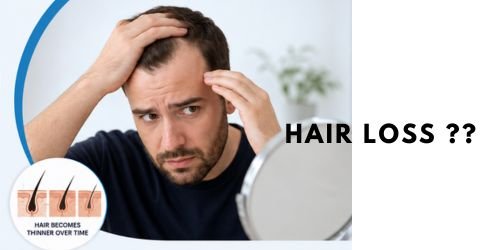
Male pattern hair loss, also called androgenetic alopecia, is the most common type of hair loss in men. It usually develops gradually, often starting with a receding hairline, thinning around the temples, or reduced hair density at the crown. Although it can be frustrating, male pattern hair loss can often be treated and managed, especially when treatment begins early.
The right treatment depends on the cause, stage of hair loss, age, medical history, and individual response. Two of the best-known medicines used for male pattern hair loss are finasteride and minoxidil. A healthcare professional can help determine which option is appropriate.
What Causes Male Pattern Hair Loss?
Male pattern hair loss is mainly linked to genetics and sensitivity to a hormone called dihydrotestosterone (DHT). In genetically susceptible men, DHT can gradually shrink certain hair follicles. This process is known as follicle miniaturisation.
Over time, affected hairs may become:
- Thinner and shorter
- Less pigmented
- Slower to grow
- More likely to fall out
Without treatment, the process can continue gradually. However, hair loss does not progress at the same rate in every man.
Can Male Pattern Hair Loss Be Treated?
Yes. While there is currently no guaranteed permanent cure for genetic male pattern hair loss, treatment can help slow further hair loss and, in some men, improve hair density.
The two commonly discussed medical treatments are:
- Finasteride – works by reducing the conversion of testosterone into DHT.
- Minoxidil – helps support hair growth and can increase the growth phase of hair follicles.
Treatment generally works best when started before substantial and permanent follicle loss has occurred.
Finasteride for Male Pattern Hair Loss
Finasteride is an oral prescription medicine commonly used for male pattern hair loss. Finasteride 1 mg is the dose specifically associated with treatment of male pattern hair loss in men.
Finasteride works differently from minoxidil. Rather than directly stimulating hair growth, it reduces the production of DHT, the hormone involved in follicle miniaturisation.
Some men may see reduced shedding and improved hair growth after several months of consistent treatment. However, individual results vary.
What About Finasteride 5 mg?
Finasteride 5 mg is a higher-strength formulation primarily used for benign prostatic hyperplasia (BPH), rather than being the standard dose for male pattern hair loss.
Men should not assume that a higher dose will provide better results for hair loss. The appropriate dose should be determined by a qualified healthcare professional.
Finasteride can cause side effects in some people, including sexual side effects and mood-related symptoms. Anyone experiencing concerning symptoms should speak with their healthcare provider.
Minoxidil for Hair Loss
Minoxidil is another established treatment for hair loss. It is available in topical forms and, in some circumstances, as oral medication.
Minoxidil pills are sometimes used under medical supervision, but oral minoxidil is not appropriate for everyone. Because minoxidil can affect blood pressure and the cardiovascular system, oral treatment should only be considered with appropriate medical guidance.
Products such as Minwin 5 mg and Minoxytop 2.5 tablet contain oral minoxidil and should be used only according to professional medical advice.
How Does Minoxidil Work?
Minoxidil is believed to improve the growth phase of hair follicles and may help some people maintain thicker, longer-growing hairs.
Treatment does not usually produce instant results. Hair growth is a slow biological process, so consistent treatment over several months may be necessary before changes become noticeable.
Some people may also experience increased shedding during the early stages of treatment. This can occur as the hair-growth cycle changes, but persistent or severe shedding should be discussed with a healthcare professional.
Minoxidil vs Finasteride: What’s the Difference?
Although both medicines can be used in the management of male pattern hair loss, they work through different mechanisms.
| Treatment | How it works | Common role |
| Finasteride 1 mg | Reduces DHT production | Helps slow hair loss and support regrowth |
| Minoxidil | Supports the hair-growth cycle | Helps promote and maintain hair growth |
| Oral minoxidil | Systemic effect on hair follicles | May be considered under medical supervision |
A healthcare professional may recommend one treatment or, in selected patients, a combination approach.
Is Earlier Treatment Better?
In many cases, starting treatment earlier can be beneficial. When a follicle has been miniaturised for a long period, restoring substantial hair growth may become more difficult.
Pay attention to early signs such as:
- A widening hair part or thinning hairline
- Receding temples
- Increased visibility of the scalp at the crown
- Gradually thinner hair
- A noticeable change in hair density
If these changes are occurring, getting an accurate diagnosis is more useful than simply trying multiple hair products.
How Long Does Hair Loss Treatment Take to Work?
Hair grows slowly, so patience is important. Most medical treatments for male pattern hair loss require consistent use over several months.
Results vary depending on:
- The severity of hair loss
- How early treatment begins
- The treatment selected
- Individual response
- Consistency of treatment
- Other underlying causes of hair loss
Stopping an effective treatment can result in the gradual return of hair loss because the underlying genetic process remains.
Are Minoxidil Pills Safe?
Oral minoxidil requires more caution than topical minoxidil because it affects the entire body. It was originally developed as a blood-pressure medicine and can cause effects such as fluid retention, increased heart rate, dizziness, or changes in blood pressure.
For this reason, minoxidil pills should not be self-started simply because they are marketed for hair growth. A healthcare professional should assess whether oral minoxidil is suitable and whether monitoring is necessary.
When Should You See a Doctor?
Not every type of hair loss is male pattern hair loss. Sudden, patchy, severe, or rapidly progressing hair loss may have another cause.
Consider seeing a dermatologist or qualified healthcare professional if you experience:
- Sudden or unexplained hair loss
- Bald patches
- Scalp inflammation, pain, or scaling
- Significant hair shedding
- Hair loss accompanied by other symptoms
- Hair loss that does not fit the typical male pattern
A professional can assess the scalp and medical history and determine whether additional testing is needed.
Frequently Asked Questions
Can male pattern hair loss be completely cured?
There is currently no guaranteed permanent cure for genetic male pattern hair loss. However, treatments such as finasteride and minoxidil may help slow progression and improve or maintain hair density in suitable patients.
Is Finasteride 1 mg better than Finasteride 5 mg for hair loss?
Finasteride 1 mg is the commonly used dose for male pattern hair loss, while finasteride 5 mg is primarily used for BPH. A higher dose should not be assumed to be better for hair growth.
Do minoxidil pills regrow hair?
Oral minoxidil may promote hair growth in some patients, but its use for hair loss requires medical supervision because it can cause systemic side effects.
Can I use finasteride and minoxidil together?
A healthcare professional may recommend using both because they work through different mechanisms. Whether combination treatment is appropriate depends on the individual.
What happens if I stop treatment?
If treatment is successfully controlling genetic hair loss, stopping it can allow the underlying hair-loss process to continue. Hair that was maintained because of treatment may gradually be lost.
The Bottom Line
Male pattern hair loss can often be treated, particularly when it is identified early. Finasteride and minoxidil are two important treatment options, but they work differently and are not suitable for everyone.
Finasteride 1 mg is commonly used for male pattern hair loss, while Finasteride 5 mg has a different primary medical indication. Oral products such as Minwin 5mg, Minoxytop 2.5 tablet, and other minoxidil pills require particular care because oral minoxidil can affect blood pressure and the cardiovascular system.
For the safest approach, confirm the cause of hair loss and discuss treatment options with a qualified healthcare professional before starting or changing medication.