Vibratory feeders are widely used devices to move and control the flow of material in industries like mining, cement, aggregate, food processing, and manufacturing. However, the smooth movement of material on a feeder depends on several dynamic factors.
In this guide, let’s understand what dynamic analysis of vibratory feeders is and how they affect feed particle speed.
What Are Vibratory Feeders?
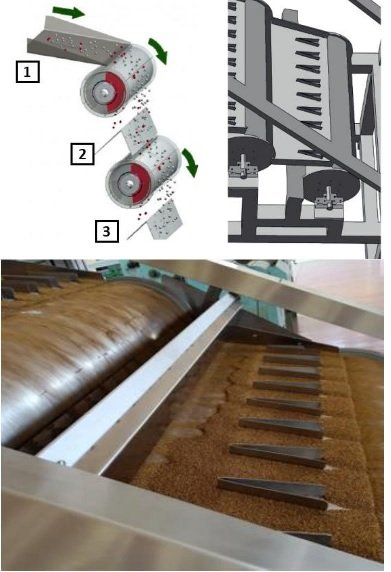
A vibrating feeder is a machine that uses controlled vibration to move and feed bulk material from a hopper or a bin to the other part of the processing. The vibration of the feeder tray creates controlled motion; that motion causes particles to move towards the discharge end.
Understanding this movement through dynamic analysis helps in designing feeders that provide the required conveying speed and material flow.
What is Dynamic Analysis of Vibratory Feeders?
Dynamic analysis is the study of how a vibrating feeder responds during operation and how that response affects the movement of material. This study looks at factors such as vibration frequency, amplitude, direction of motion, feeder mass, material load, and the interaction between particles and the conveying surface.
This study is done to find feeders that vibrate at an unsuitable frequency or amplitude that may not move material efficiently. On the other hand, feeders with properly selected operating parameters produce a more consistent conveying plan.
How Do Vibrations Move Particles on Conveying Surfaces?
Vibrations of feeders lead to controlled motion; when a feeder tray vibrates, the particles on its surface experience repeated acceleration and movement.
Depending on these vibration conditions, the particles may remain in contact with the conveyor surface and move forward with it. These particles may slide on it. They also may temporarily lose contact with the tray and move forward in air before landing again. Or lastly, there may be combined sliding and throwing motions during conveying.
The exact movement of particles depends on the vibration direction, acceleration, friction between the material and tray, and, of course, the characteristics of the particle.
This is why dynamic analysis is done, because particle speed cannot be determined simply by looking at the feeder’s vibration frequency. There are several factors that determine how quickly the material travels along the conveying surface.
Factors that Affect Feed Particle Speed
There are many factors that affect the feed particle speed on a conveyor surface of a vibrating feeder, such as:
- Vibration Frequency
How many vibration cycles a feeder makes in a given time period is called vibration frequency. Increasing frequency can increase the number of vibration cycles, but does not automatically increase the particle speed.
- Vibration Amplitude
The distance the feeder tray moves during each vibration cycle is called vibration amplitude. Greater amplitude means greater movement; however, it can also increase impact or unstable conveying.
- Direction of Vibration
The direction in which the tray moves affects the material movement. Hence, the direction and angle of vibration should match the tray movement according to how fast and smoothly you want the material to move.
- Acceleration
How quickly the feeder tray changes its speed and direction while vibrating is called acceleration. This acceleration affects how fast and smoothly particles move along the tray. But too much acceleration can make the material move aggressively.
- Friction Between Tray and Material
High friction causes the particles to move more closely with the tray, but with lower friction, particles may slide more easily. However, the particle’s characteristics and the tray material affect this friction between tray and material.
- Particle Characteristics
Every material type does not behave the same way on the feeder. Particle size, shape, density, moisture content, and surface properties affect how individual particles move.
Vibratory Feeder Solutions from Electro Flux Equipments
Electro Flux Equipments, a vibratory equipment manufacturer in India, provides robust and customised solutions for industrial applications. Their product range includes electromagnetic vibratory feeders, excavator electromagnet, and mechanical/brute-force vibro feeders, which are selected according to different requirements.
Conclusion
The particle speed on a conveyor surface of vibrating feeders is the result of several interacting factors. Frequency, acceleration, amplitude, vibration direction, etc., all influence the conveying behaviour.
Through dynamic analysis, we can understand this interaction behaviour and can select feeders best suited for your needs. Get in touch with Electro Flux Equipments to learn more about vibratory feeders.