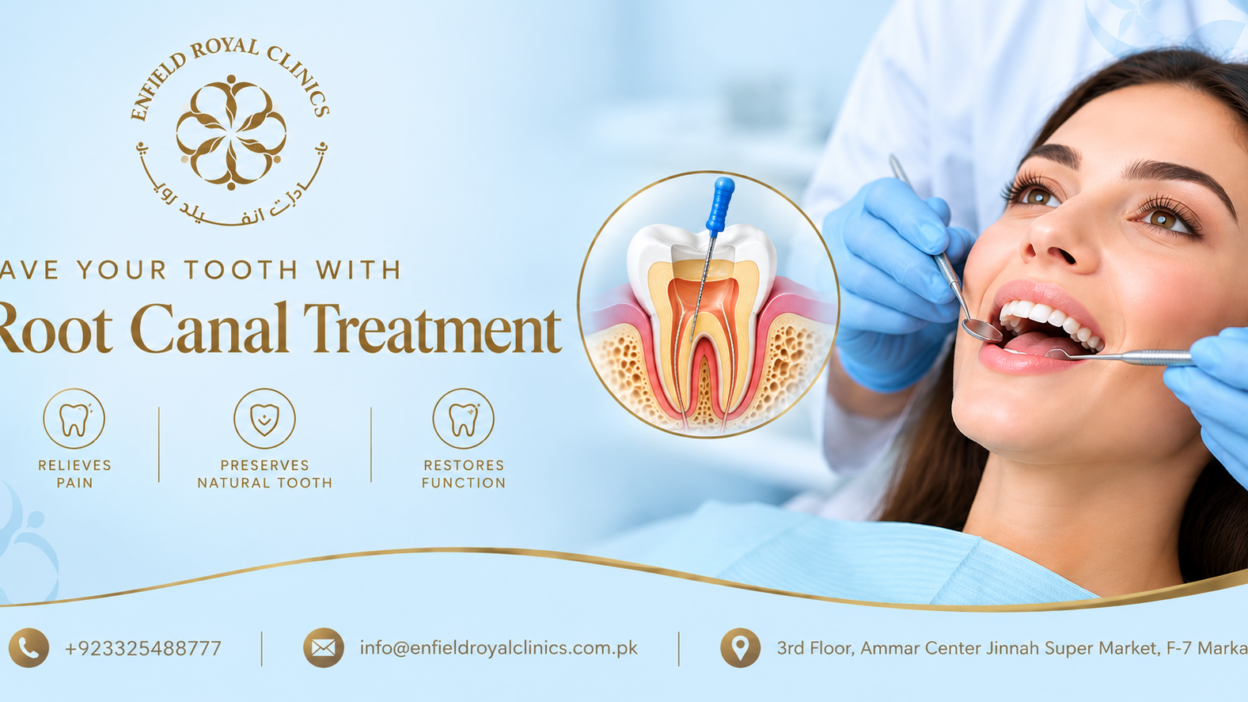
A natural tooth plays an important role in chewing, speaking, and maintaining a healthy smile. However, deep tooth decay, cracks, or dental injuries can damage the soft tissue inside a tooth, sometimes causing severe pain or infection. When this happens, extraction may seem like the only solution. In many cases, however, root canal treatment can help preserve the natural tooth and restore its function.
Root Canal Treatment in Islamabad is an option for patients whose dental pulp has become irreversibly inflamed or infected but whose teeth can still be restored. Rather than removing the entire tooth, this procedure cleans the infected inner space, seals the root canals, and allows the remaining tooth structure to be protected with a suitable restoration.
Understanding how root canal treatment works, when it is recommended, and how it supports long-term oral health can help patients make informed decisions about their dental care.
1. What Is Root Canal Treatment and Why Is It Needed?
Root canal treatment is a dental procedure that treats problems affecting the pulp inside a tooth. The pulp contains nerves, blood vessels, and connective tissue. It helps the tooth develop, but once the tooth has matured, it can continue to function without living pulp if its internal canals are properly treated and the tooth is restored.
Bacteria can reach the pulp through deep cavities, cracks, damaged fillings, or dental injuries. This may cause inflammation or infection, leading to persistent toothache, sensitivity, discomfort during chewing, or swelling around the affected area.
When the pulp becomes irreversibly damaged, it cannot reliably recover on its own. If the infection remains untreated, it may spread through the root tip and affect the surrounding bone and gum tissues.
Root canal treatment removes the damaged or infected pulp while preserving the outer structure of the tooth. This can help eliminate the source of pain and infection without removing the entire tooth.
Not every painful tooth needs a root canal. Some problems can be treated with a filling or another less invasive procedure. A dental examination, and sometimes X-rays and pulp tests, help determine which treatment is appropriate.
2. How Does Root Canal Treatment Save a Natural Tooth?
The main advantage of root canal treatment is that it focuses on preserving the tooth rather than extracting it. The procedure removes the unhealthy tissue inside the tooth while keeping the remaining natural structure in place.
During treatment, the dentist creates a small opening in the tooth to access the pulp chamber and root canals. The damaged tissue is removed, and the canals are cleaned and disinfected to reduce bacteria. They are then filled with a suitable material and sealed to help prevent reinfection.
Afterward, the tooth receives a filling or crown, depending on the extent of the damage and how much healthy structure remains.
This process allows the tooth to remain in the mouth and continue performing its role in chewing. Preserving the natural tooth can also help maintain the spacing of neighbouring teeth and avoid some of the complications associated with tooth loss.
For people considering Root Canal Treatment in Islamabad, it is important to know that successful treatment depends on more than removing the infected pulp. The tooth must also have enough healthy structure and supporting tissue to function reliably after restoration.
If the tooth has a severe fracture extending below the gum line or has lost too much supporting bone, saving it may not be predictable. In such cases, the dentist may discuss extraction and suitable replacement options.
3. What Dental Problems Can Root Canal Treatment Address?
Root canal treatment may be recommended for several conditions that affect the inner part of a tooth. The decision depends on the diagnosis, the severity of the damage, and whether the tooth can be restored.
Common situations include:
- Deep tooth decay: When a cavity extends through the enamel and dentin and causes irreversible pulp inflammation or infection, root canal treatment may be needed.
- Cracked teeth: Certain cracks allow bacteria to reach the pulp. If the tooth remains restorable, treatment may help preserve it.
- Dental trauma: A blow to the mouth may damage the pulp even when the tooth appears mostly intact. Some injuries require monitoring, while others eventually need root canal treatment.
- Repeated dental procedures: Extensive or repeated work on a tooth can sometimes irritate the pulp and lead to irreversible inflammation.
- Dental abscesses: An infection originating inside a tooth may spread toward the root and cause pus, swelling, or tenderness. Root canal treatment may control the source when the tooth can be saved.
Possible warning signs include lingering sensitivity to hot or cold, spontaneous toothache, pain when biting, gum swelling, or a pimple-like bump near the tooth.
These symptoms do not confirm that a root canal is necessary. A dentist must assess the tooth and distinguish pulp damage from other conditions that may require different treatment.
Prompt attention can improve the chance of treating the problem before further damage compromises the tooth’s ability to be restored.
4. Why Preserving a Natural Tooth Matters
Keeping a natural tooth can provide functional and practical benefits. Natural teeth work together to break down food, support clear speech, and maintain the arrangement of the dental arch.
When a tooth is extracted, neighbouring teeth may gradually shift into the empty space. This does not happen in every case, but tooth movement can affect the bite and make cleaning more difficult. Missing teeth may also reduce chewing efficiency, depending on their position and how many teeth remain.
Preserving a restorable tooth through root canal treatment may reduce the need for replacement procedures such as dental implants, bridges, or removable dentures. These options can be effective when a tooth cannot be saved, but they involve additional planning and maintenance.
Another benefit is retaining the natural appearance of the smile. A restored tooth can often blend with the surrounding teeth, particularly when the final restoration is carefully selected.
However, natural-tooth preservation is not always the safest choice. If a tooth is too damaged to restore, attempting to save it may lead to ongoing infection or repeated procedures. A dentist should explain the likely benefits, limitations, and alternatives so the patient can make an informed decision.
5. What Happens After Root Canal Treatment?
After root canal treatment, the tooth may feel tender for a few days, especially if the surrounding tissues were inflamed before the procedure. This discomfort generally improves as healing progresses.
The dentist may recommend avoiding hard or sticky foods on the treated tooth until the permanent restoration is complete. This is important because a tooth weakened by decay or previous damage may be more likely to fracture before it receives adequate protection.
Depending on the tooth’s condition, the final restoration may be a filling or a crown. Back teeth often require crowns when substantial tooth structure has been lost because they experience considerable chewing forces. The dentist will determine the most suitable option based on the remaining structure and the tooth’s function.
Patients should maintain their normal oral hygiene routine, including brushing twice daily with fluoride toothpaste and cleaning between the teeth. Regular dental checkups help identify new decay, cracks, or problems with the restoration.
Root canal treatment does not make a tooth immune to future problems. The treated tooth can still develop decay around a filling or crown, and its surrounding gums can still be affected by gum disease.
If pain becomes severe, swelling develops, or symptoms worsen rather than improve, the patient should contact the dentist for reassessment.
6. How Can Patients Improve the Long-Term Success of a Saved Tooth?
The long-term outcome depends on appropriate treatment, a well-sealed restoration, and consistent dental care. Patients can take several steps to protect a tooth after root canal treatment.
First, the recommended permanent restoration should be completed without unnecessary delay. A temporary filling is not always designed to withstand normal chewing for an extended period, and a damaged or leaking restoration can allow bacteria to enter the tooth again.
Second, patients should reduce the risk of new decay by brushing with fluoride toothpaste, cleaning between teeth daily, and limiting frequent sugary snacks and drinks. People who grind or clench their teeth may benefit from an assessment to determine whether a protective night guard is appropriate.
Third, routine dental visits allow the dentist to check the treated tooth and its restoration. Any unusual sensitivity, looseness, discomfort, or gum swelling should be evaluated rather than ignored.
For those researching Root Canal Treatment in Islamabad, choosing treatment based on a proper diagnosis and following the recommended restoration plan are important steps toward preserving a natural tooth. With suitable care, many root canal-treated teeth remain functional for years.
7. Is Root Canal Treatment Suitable for Every Damaged Tooth?
Root canal treatment can save many teeth, but it is not suitable for every case. The tooth must have enough healthy structure to support a filling or crown, and the surrounding tissues should provide adequate support.
A dentist may use X-rays, examine the tooth for cracks, assess gum health, and evaluate the extent of decay before deciding whether preservation is realistic. In some cases, additional treatment or specialist assessment may be appropriate.
When a tooth can be predictably restored, root canal treatment may offer an effective way to relieve pulp-related pain while maintaining natural chewing function. When damage is too extensive, extraction may be the more appropriate option.
The best decision is based on the condition of the individual tooth, the patient’s overall oral health, and the expected outcome of each available treatment.
Frequently Asked Questions
1. Can root canal treatment save a tooth that is badly decayed?
It can save some severely decayed teeth if the infection or damage can be treated and enough healthy structure remains to support a restoration. If decay has destroyed too much of the tooth or it cannot be restored reliably, extraction may be necessary.
2. Does a natural tooth remain functional after root canal treatment?
Yes. Once the infected pulp is removed and the root canals are properly sealed, the tooth can continue to function during chewing. A suitable filling or crown protects the remaining structure, and good oral hygiene helps maintain its condition.
3. Is root canal treatment better than extracting a tooth?
When a tooth can be restored predictably, preserving it with root canal treatment is often worth considering. Extraction may be more appropriate when the tooth is fractured beyond repair or has insufficient supporting structure. A dentist can explain the likely outcomes of both options.
4. How long can a tooth last after root canal treatment?
A root canal-treated tooth can remain functional for many years. Its longevity depends on the amount of remaining tooth structure, the quality of the treatment and restoration, and the patient’s oral hygiene. Regular dental checkups help detect problems early.