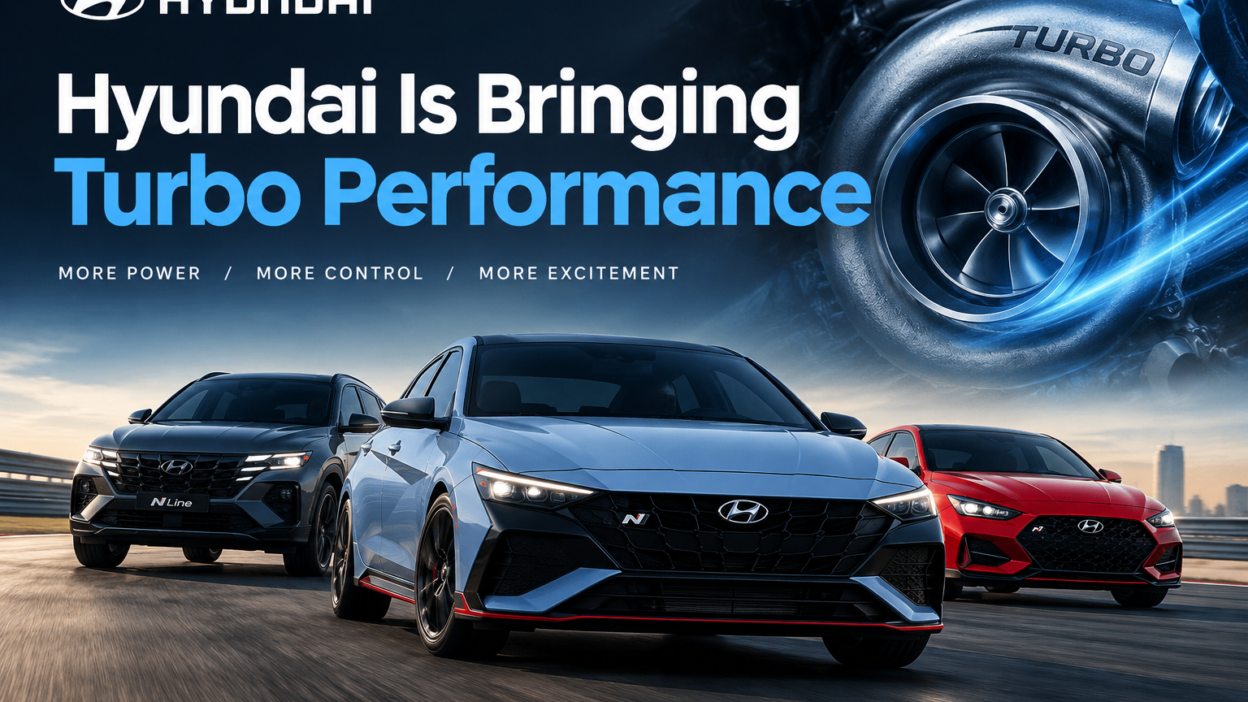
Overtaking a slow-moving vehicle on a highway or climbing a steep hill demands quick engine response. A turbocharged engine can help deliver the power needed in these situations. Once mainly associated with sports cars, turbo petrol technology is now available in hatchbacks, sedans and SUVs. Hyundai Turbo GDi cars bring this technology to different vehicle types, giving buyers more options to suit their driving needs. Understanding how these engines work and where they can help makes it easier to choose the right car.
What Does a Turbo GDi Engine Do?
Many buyers looking for a turbo petrol SUV in India want strong performance without choosing a larger engine. Hyundai’s Turbo GDi engines combine two technologies to deliver this.
- Turbocharging: A turbocharger sends more air into the engine, helping a smaller engine produce more power.
- Gasoline direct injection (GDi): The system sprays petrol directly into the engine’s cylinders, helping control how fuel mixes with air.
- In-cylinder cooling: The fuel spray helps cool the air-fuel mixture, supporting efficient combustion.
- Strong torque: These technologies help the engine deliver responsive acceleration across different driving conditions.
Together, they allow a compact engine to deliver strong performance when needed.
Why Are Turbo Engines Suited to Indian Roads?
Indian drivers face a mix of busy city traffic, open highways and steep hill roads. Turbo petrol engines can help in several everyday driving situations.
- Overtaking on highways: Strong pulling power helps the car accelerate when there is a safe opportunity to overtake.
- Driving uphill: Good torque helps the car maintain progress on steep roads.
- Travelling with passengers and luggage: The engine provides power for acceleration when the vehicle is carrying a heavier load.
- Driving in the city: Torque at lower engine speeds can make it easier to move through traffic.
This flexibility makes turbo engines suitable for both daily commutes and longer journeys.
What Does Hyundai’s 1.0-Litre Turbo GDi Engine Offer?
Hyundai’s 1.0-litre Turbo GDi petrol engine is designed for compact cars that need responsive performance. It powers models such as the Hyundai i20 N Line, Hyundai VENUE and Hyundai VENUE N Line.
Key details include:
- Power: Around 120 PS
- Torque: 172 Nm
- Transmission options: A 6-speed manual or a 7-speed dual-clutch transmission (DCT), depending on the model and variant
- N Line features: The i20 N Line and VENUE N Line offer sportier design details and model-specific driving features.
This engine suits buyers who want a compact car with lively acceleration for city driving and highway trips.
How Does Hyundai’s 1.5-Litre Turbo GDi Engine Perform?
For larger cars, Hyundai offers a 1.5-litre Turbo GDi petrol engine that delivers more power and torque. It is available in models such as the Hyundai VERNA, Hyundai CRETA, Hyundai CRETA N Line and Hyundai ALCAZAR.
Its main specifications include:
- Power: 160 PS
- Torque: 253 Nm
- Transmission options: The VERNA, CRETA N Line and ALCAZAR offer a 6-speed manual or 7-speed DCT, depending on the variant. The CRETA pairs this engine with a 7-speed DCT.
- Vehicle options: Buyers can choose from a sedan, a compact SUV or a three-row SUV.
This engine gives buyers more power options across different body styles and seating needs.
Which Gearboxes Help Manage Turbo Performance?
The transmission affects how a car delivers power and how it feels to drive. Hyundai offers different options to suit different preferences.
- 6-speed manual: Lets drivers control gear changes using the clutch and gear lever.
- 7-speed DCT: Uses two clutches to change gears quickly without a clutch pedal.
- Paddle shifters: Available on selected automatic variants, these let drivers change gears using controls behind the steering wheel.
- Drive Mode Select: Available on models such as the VENUE N Line and CRETA N Line, this feature adjusts vehicle responses according to the selected driving mode.
These options give drivers more choice, whether they prefer manual control or the convenience of an automatic transmission.
How Do Turbo GDi Engines Balance Performance and Efficiency?
Along with power, Hyundai highlights fuel efficiency and emissions control in its Turbo GDi engines.
- Fuel delivery: Direct injection helps control how petrol enters the cylinders, supporting efficient combustion.
- Combustion: The fuel-air mixture is designed to burn efficiently, helping manage emissions.
- Emission standards: Hyundai states that its applicable engines meet BS6 Stage 2 emission norms when equipped with the required emission-control systems.
Actual fuel economy and emissions depend on the vehicle, driving style, road conditions and maintenance. Buyers should check the specifications for the model and variant they are considering.
Which Hyundai Turbo Model Suits Your Daily Driving Needs?
The right model depends on where you drive, how many passengers you carry and the performance you prefer.
| Driving needs | Model to consider |
| Sporty city driving in a hatchback | Hyundai i20 N Line |
| Daily commutes with weekend highway trips | Hyundai VENUE or VENUE N Line |
| Long-distance travel in a sedan | Hyundai VERNA |
| Family travel and regular highway drives | Hyundai CRETA or CRETA N Line |
| Journeys with more passengers and luggage | Hyundai ALCAZAR |
Compare the available features, engine options, transmission and space before choosing a model. Specifications can vary by variant, so check Hyundai’s official website for the latest details.
Conclusion
Turbo performance is now available in hatchbacks, sedans and SUVs, not just sports cars. Hyundai Turbo GDi cars offer 1.0-litre and 1.5-litre engine options to suit different driving needs. Their responsive acceleration helps with highway overtaking, hill climbs and everyday travel. By comparing engine specifications, transmissions, features and vehicle space, buyers can find a model that fits their driving habits and family needs.