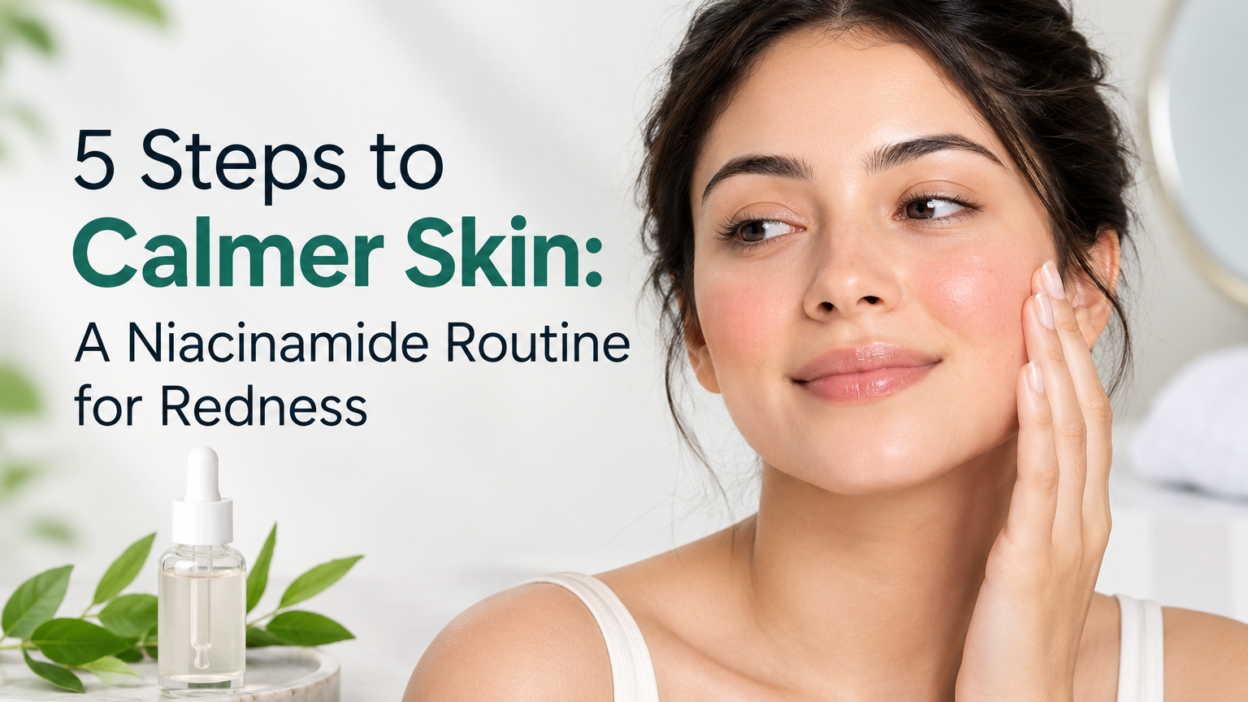
Redness usually settles when you repair your skin barrier first and then add one gentle active. Niacinamide at 2-5% is one of the best-studied options for this. Cleanse gently, apply niacinamide to damp skin, seal it in with a moisturizer, protect with sunscreen, and introduce new products slowly. Used consistently, this routine can visibly reduce redness within a few weeks.
Why Your Skin Looks Red in the First Place
Facial redness is not one problem. It is a symptom with several possible causes, and knowing which one applies to you changes what helps.
The most common cause in sensitive skin is a compromised skin barrier. The barrier is the outer layer of your skin, made of skin cells held together by lipids like ceramides, cholesterol, and fatty acids. When it is intact, it keeps water in and irritants out. When harsh cleansers, over-exfoliation, sun exposure, or cold, dry weather weaken it, irritants get in more easily. Your skin responds with inflammation, which shows up as redness, stinging, or tightness.
Other triggers include fragrance and alcohol in skincare, too many active ingredients used together, heat, stress, and conditions such as rosacea, eczema, or contact dermatitis. This is why the first rule of calming redness is simple: repair first, treat later.
Why Niacinamide Works Well for Redness
Niacinamide is a form of vitamin B3. It is popular in sensitive-skin care for a few reasons:
- It supports the barrier. Research suggests niacinamide helps skin produce more ceramides and other barrier lipids, which reduces moisture loss.
- It has calming properties. It may reduce inflammatory signals in the skin, which helps with the look of blotchiness and reactivity.
- It is generally well tolerated. Compared with strong acids or retinoids, niacinamide is gentle for most skin types.
Concentration matters. Most benefits are seen between 2% and 5%. Higher percentages are not automatically better, and some people with reactive skin find 10% or more causes flushing or tingling. This is the principle behind the idea of the power of less: a few essential actives in the right amounts will usually do more than a crowded routine that overwhelms your skin.
Step 1: Cleanse Gently
Start with a mild, fragrance-free, low-foaming cleanser. If your face feels tight or squeaky after washing, the cleanser is too strong.
- Use lukewarm water, not hot.
- Wash for about 30 seconds, then pat dry with a clean towel.
- In the morning, a splash of water is enough if your skin is very reactive.
Cleansing too often or too aggressively strips the lipids your barrier needs, so this step is about removing dirt without removing protection.
Step 2: Skip Strong Actives for Now
This is the step most people want to skip, and it is one of the most important. While your skin is red and irritated, pause:
- Exfoliating acids (glycolic, salicylic, lactic)
- Retinol and retinoids
- Physical scrubs and cleansing brushes
- Alcohol-heavy toners and fragranced products
- Essential oils
You are not giving up on treatment. You are giving your skin a recovery window of roughly two to four weeks. Once the barrier is stable and redness has eased, you can reintroduce actives one at a time. Barrier repair and desensitization come before any correction.
Step 3: Apply Niacinamide to Damp Skin
After cleansing, while skin is still slightly damp, apply your niacinamide product. Damp skin absorbs better and the product is less likely to sting.
Look for a fragrance-free face serum for sensitive skin that lists niacinamide at 2-5% alongside soothing, hydrating ingredients such as panthenol, glycerin, centella asiatica, or hyaluronic acid. A short ingredient list is usually a good sign for reactive skin.
How to use it:
- Patch test first. Apply a small amount behind your ear or on your inner forearm for 24-48 hours.
- Start every other night for the first week, then move to daily if there is no irritation.
- Use 2-3 drops for the whole face. More does not mean faster results.
Step 4: Moisturize to Seal and Strengthen
A serum alone will not rebuild a barrier. Follow with a simple moisturizer that contains ceramides, glycerin, or squalane. The serum delivers the active, and the moisturizer holds the water and lipids in place.
Choose a texture that suits your skin: a light gel-cream for oily or combination skin, a richer cream for dry skin. Apply it while your serum is still slightly tacky, and use it morning and night. If you have very dry patches, a thin layer of a bland occlusive on top at night can help skin recover faster.
Step 5: Protect with Sunscreen Every Morning
UV exposure is one of the biggest causes of persistent redness, and it undoes the repair work you are doing at night. Use a broad-spectrum sunscreen with at least SPF 30 every morning, and reapply if you are outdoors for long periods.
Mineral sunscreens containing zinc oxide or titanium dioxide are often better tolerated by sensitive skin. Heat, wind, and pollution can also trigger flushing, so wash your face gently in the evening and avoid very hot showers.
How Long Until You See a Difference?
Skin renews itself over about 28 days, so give any routine at least four to six weeks. Many people notice less stinging and tightness first, then a more even tone. If your skin gets worse, stops improving, or you develop burning, swelling, or visible bumps, stop new products and speak to a professional.
Where Personalization Fits In
Two people with red cheeks can have completely different causes. One might have a damaged barrier from over-exfoliating, another might be reacting to a specific ingredient, and a third might have an underlying condition. This is where AI skin analysis is useful: it helps you understand what your skin is actually doing rather than guessing.
Skin PAL is one example of this approach. Its AI skin analysis generates a Skin Score and a full personalized plan, delivered as a report that explains your skin condition, what is likely causing it, which ingredients suit you, and a routine to follow, along with lifestyle advice. It also helps flag hidden sensitivities and ingredient triggers early, so you can avoid products that might set your skin back. Because skin changes with seasons, stress, and routine, progress tracking over time matters more than a one-time snapshot.
When to See a Dermatologist
Skincare can support your skin, but it cannot diagnose it. Please see a dermatologist if your redness is persistent, painful, spreading, accompanied by swelling or pus-filled bumps, or if you suspect rosacea, eczema, or an allergic reaction.
Skin PAL’s formulas are Taiwan-made and dermatologist-reviewed, and follow a “less but precise” philosophy, with essential actives in carefully measured ratios instead of crowded ingredient lists. If you want to explore a calming option, you can browse the face serum for sensitive skin collection to see which formulas suit reactive, redness-prone skin.