For corrugated box manufacturers, submitting a GST refund application is only one stage of the refund process. Businesses must also monitor the application status, maintain supporting records and respond to departmental communications where required.
A structured tracking system can help manufacturers manage refund applications more efficiently and avoid losing important documents during follow-up.
This is especially useful for businesses that regularly accumulate eligible Input Tax Credit because of differences between input and output GST rates.
Why Is GST Refund Tracking Important?
An eligible refund claim may require departmental verification before the amount is sanctioned.
During processing, the taxpayer may receive acknowledgements, deficiency communications or notices requesting additional information.
Without an organised tracking system, businesses may overlook important correspondence or have difficulty retrieving supporting records.
Manufacturers should therefore maintain a separate register for each refund application.
The register should identify the relevant tax period, refund category, amount claimed and current application status.
How Can Corrugated Box Manufacturers Become Eligible for Refunds?
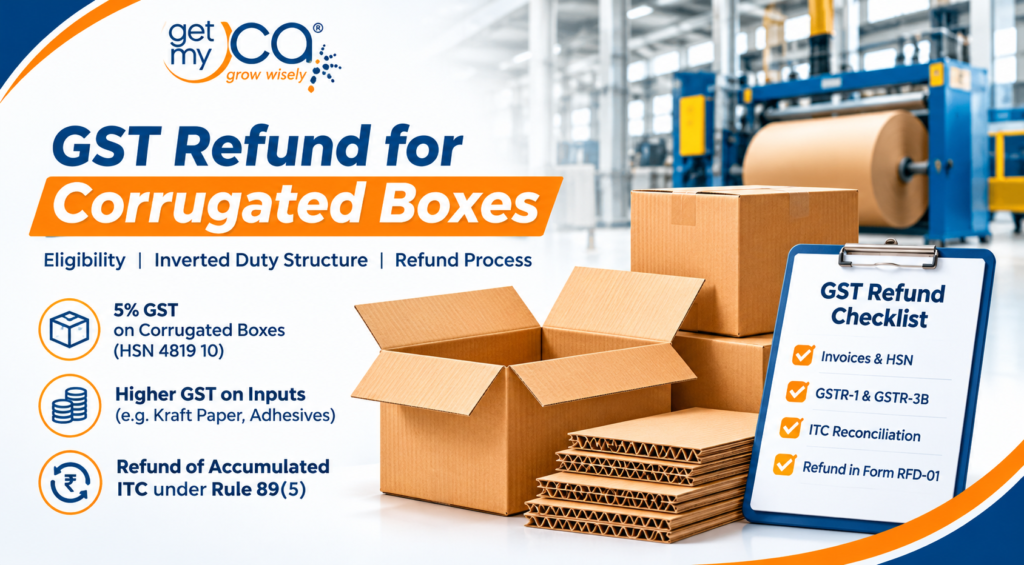
Specified corrugated boxes attract 5% GST, while certain materials used in their manufacture may attract higher rates.
When eligible input tax credits accumulate because of an inverted duty structure, qualifying businesses may apply for refunds under the applicable GST provisions.
The statutory framework includes Section 54(3) of the CGST Act and the relevant Rule 89(5) calculation.
Before submitting an application, businesses should verify the classification of inputs and outward supplies, reconcile eligible credits and review the statutory time limit.
Understanding GST refund claims for corrugated box manufacturing can help businesses examine the necessary calculations and supporting documents.
Eligibility should be established before recording an amount as a potential refund.
What Details Should a Refund Tracking Register Include?
A practical register may contain:
- GST refund application reference number.
- Relevant tax period.
- Refund category.
- Date of application submission.
- Total refund amount claimed.
- Current processing status.
- Relevant departmental communications.
- Response dates and supporting documents.
- Amount sanctioned, if applicable.
- Final processing outcome.
Businesses should update this information whenever the application status changes.
How Should Manufacturers Handle Departmental Queries?
The first step is identifying the specific type of communication received.
A deficiency memo in Form GST RFD-03 may require a different response from a notice proposing rejection of a refund claim.
Businesses should carefully review the form, stated issue and applicable procedural requirements.
Where supporting documentation is needed, the response should address the actual concern raised by the department.
Manufacturers should retain copies of submitted responses and relevant acknowledgements.
Can Accounting Controls Improve Refund Monitoring?
A refund tracking register should reconcile with the company’s accounting and GST records.
Finance teams should distinguish between refund amounts claimed, amounts sanctioned and amounts actually received.
Businesses may obtain GST refund and business accounting support to review application records, reconciliation requirements and financial reporting treatment.
Regular monitoring can improve visibility of pending claims without assuming that every application will be approved.
Conclusion
Effective refund management requires attention after the application is submitted.
Corrugated box manufacturers should track reference numbers, departmental communications and final processing outcomes.
An organised system supports better documentation, financial visibility and timely follow-up throughout the GST refund process.