
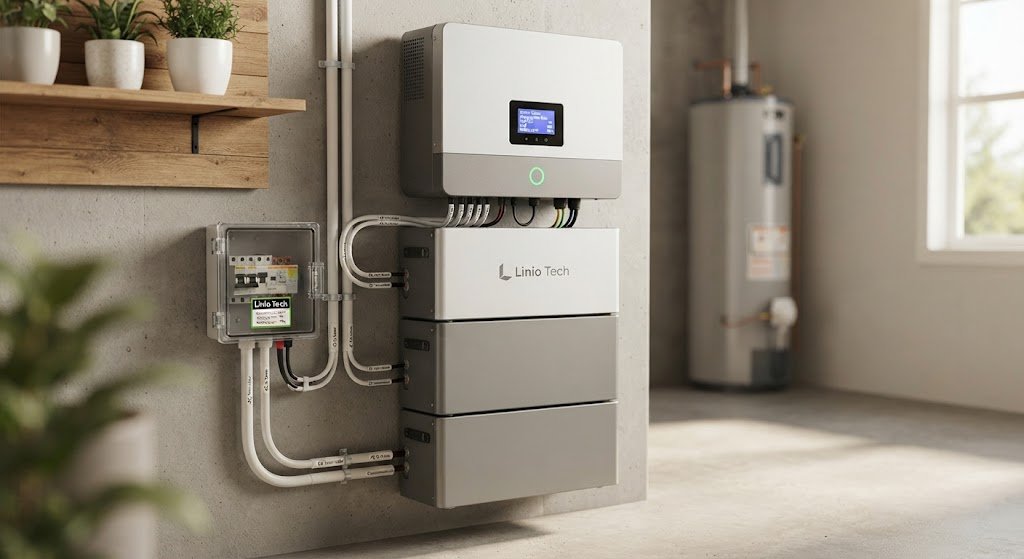
The modern household is demanding more energy than ever before. As electricity prices continue their relentless climb, the grid becomes increasingly strained by extreme weather, and the collective desire to reduce our carbon footprint grows, homeowners are seeking alternatives. The solution that is rapidly transforming the residential energy landscape is the Home Energy Storage System.
Often referred to simply as a residential battery or solar battery, this technology is the missing piece of the puzzle for true energy independence. It allows you to capture, store, and utilize the power you generate, shifting the paradigm from merely consuming energy to actively managing it.
This comprehensive guide will explore everything you need to know about home energy storage systems, from the technology behind them to the profound benefits they offer, and ultimately, why Linio Tech is at the forefront of this movement.
What is a Home Energy Storage System?
At its core, a home energy storage system is a sophisticated rechargeable battery bank designed for residential use. While standalone batteries exist, they are most commonly paired with rooftop solar photovoltaic (PV) systems.
The primary function of these systems is to store surplus electricity generated by solar panels during the day, rather than sending that energy back to the utility grid for a minimal credit. When the sun goes down, or when grid power becomes unreliable, the home draws on the stored energy in the battery.
The system typically consists of three main components:
The Battery Pack: The physical unit where the electricity is stored, usually utilizing lithium-ion chemistry due to its high energy density and longevity.
The Inverter: Solar panels produce Direct Current (DC) electricity, and your home runs on Alternating Current (AC) electricity. A battery inverter manages the flow of electricity, converting DC to AC for household use and AC back to DC to charge the battery. Modern systems often use hybrid inverters that manage both solar and battery input.
The Battery Management System (BMS): The brain of the operation. The BMS ensures the battery operates safely and efficiently by monitoring temperature, voltage, and current, preventing overcharging or deep discharging, which maximizes the battery’s lifespan.
Why Install a Home Battery? The Top Benefits
The adoption of home energy storage systems is not just a trend; it’s a financially and environmentally sound decision driven by a multitude of benefits.
Maximizing Solar Self-Consumption and Reducing Bills
Without a battery, your solar panels are most productive during the middle of the day when demand in your home is likely lowest. This surplus energy is exported to the grid. In many regions, utility companies offer a poor feed-in tariff (the credit you receive for exported energy), which is often a fraction of what you pay to import power at night.
A battery allows you to capture that midday peak production and “time-shift” it to the evening when your solar panels are dormant but your usage (lights, appliances, EV charging) spikes. This significantly reduces your reliance on the grid and can lead to near-zero electricity bills.
Protection Against Power Outages and Grid Instability
Aging infrastructure and increasingly volatile weather events make grid outages more frequent and prolonged. A standard grid-tied solar system will shut down during an outage for safety reasons (to prevent back-feeding power into lines where utility workers might be).
A home energy storage system equipped with backup capability acts as an uninterruptible power supply (UPS) for your entire home or essential circuits. When the grid goes down, the battery isolates itself from the grid and continues to power your home, providing invaluable peace of mind.
Shielding from Rising Energy Costs and Time-of-Use (TOU) Rates
Utility rates rarely go down. Furthermore, many energy providers are shifting to Time-of-Use (TOU) rate structures, where electricity is significantly more expensive during peak evening hours (e.g., 4 PM to 9 PM).
By utilizing stored battery power during these expensive peak windows, you can avoid paying premium rates altogether, even if you still need to draw some grid power during cheaper off-peak times.
Environmental Responsibility
Energy storage maximizes the use of clean, renewable solar energy. By reducing your dependence on fossil-fuel-generated grid power, you lower your carbon footprint and contribute to a cleaner, more decentralized energy grid.
Understanding the Different Types of Batteries
When shopping for a home energy storage system, you will primarily encounter two main battery chemistries.
Lithium-Ion (Li-ion)
This is the current industry standard for residential storage. Similar to the technology in your smartphone or electric vehicle, Li-ion batteries (specifically Lithium Iron Phosphate or LFP variants) offer:
- High Energy Density: More power in a smaller footprint.
- Long Lifespan: Thousands of charge cycles before capacity significantly degrades.
- High Efficiency: They charge and discharge with minimal energy loss.
- Depth of Discharge (DoD): Li-ion batteries can be discharged to a high percentage (often 90-100%) of their total capacity without harming the battery.
Lead-Acid
This is the older, more traditional battery technology, similar to what is in your car. While initially cheaper, they are generally not recommended for daily cycling in modern home systems due to:
- Shorter Lifespan: Fewer cycles and faster degradation.
- Lower Efficiency: Energy is lost during the charging and discharging process.
- Maintenance Requirements: Flooded lead-acid batteries require regular watering.
- Lower DoD: It is recommended not to discharge them below 50% capacity, meaning you need a larger bank to get the same usable energy.
For most homeowners, Li-ion is the superior long-term investment.
Considerations When Choosing a System
Investing in a home energy storage system is a significant decision. Here are the key metrics to evaluate:
Capacity (kWh): This measures how much total energy the battery can store. A standard modular system might start around 10 kWh, which is enough to power an average home’s essential loads overnight.
Power Rating (kW): This measures how much electricity the battery can deliver at any given moment. A higher power rating (e.g., 5 kW continuous) allows you to run more appliances simultaneously (like an air conditioner and a microwave).
Round-Trip Efficiency: This is the percentage of energy you get out of the battery compared to what you put in. Look for efficiencies above 90%.
Scalability: Some systems allow you to start with one battery and add more later as your needs or budget grow.
Warranty: Manufacturers typically offer a 10-year warranty or a guarantee of a certain number of cycles (e.g., 6,000 cycles) or a percentage of retained capacity (e.g., 70% after 10 years).
Software and Monitoring: A good system comes with an intuitive app that allows you to monitor energy flows, set backup reserves, and prioritize modes (e.g., self-consumption vs. backup-only).
Expert System Design and Tailored Solutions
We recognize that no two households have the same energy profile. Our experts conduct a thorough analysis of your energy usage, solar production potential, and your specific goals—whether that’s maximizing bill savings, achieving maximum backup resilience, or both. We don’t sell one-size-fits-all kits; we engineer solutions tailored to your home.
Cutting-Edge Technology Partnerships
Linio Tech partners only with the world’s leading manufacturers of battery storage and inverter technology. We select products that have proven track records for safety, performance, and longevity. When you choose Linio Tech, you are getting the most reliable and advanced technology the industry has to offer, ensuring your investment is future-proof.
Seamless Installation and Integration
Our installation teams are master electricians and certified solar and storage professionals. We handle every aspect of the installation, from securing permits and utility approvals to ensuring a clean, code-compliant, and aesthetically pleasing installation. We take pride in our work and respect your home, ensuring a hassle-free transition to energy independence.
Unmatched Customer Support and Monitoring
Our relationship with you doesn’t end when the system is switched on. Linio Tech provides comprehensive monitoring services. We keep an eye on the health of your system, and if any issues arise, we are often alerted before you are. Furthermore, we offer ongoing support and maintenance packages to ensure your system operates at peak efficiency for its entire lifespan.
Commitment to Sustainability and Innovation
At Linio Tech, we are driven by a mission to accelerate the transition to a sustainable energy future. We stay at the cutting edge of innovation in the energy storage sector, including emerging technologies like vehicle-to-home (V2H) integration and advanced smart-home energy management systems. When you partner with Linio Tech, you are aligning with a company that is shaping the future of energy.
Conclusion
The transition to a smarter, cleaner, and more resilient energy future is not just coming; it is already here. A home energy storage system is no longer a futuristic luxury; it is a practical, intelligent investment for any homeowner looking to reduce costs, increase security, and embrace sustainability.
It represents a fundamental shift from being a passive recipient of power to becoming an active manager of your own energy ecosystem.
Don’t let rising electricity costs and an unstable grid dictate your comfort and expenses. Take control of your power destiny.
Are you ready to join the energy revolution and experience the freedom of true energy independence? Contact Linio Tech today for a personalized consultation and discover how a home energy storage system can empower your life. Let us build a brighter, more sustainable future together.