
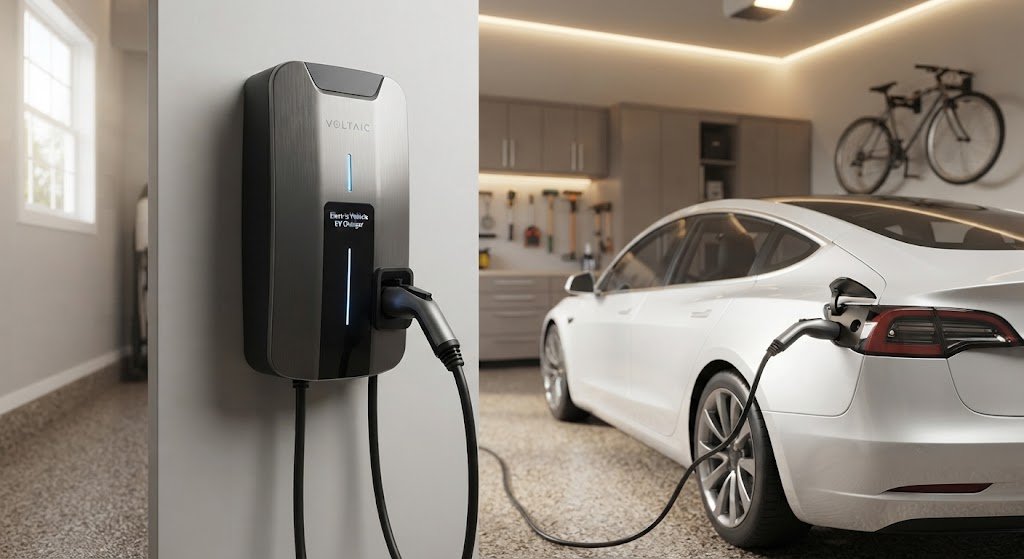
The transportation landscape is undergoing a seismic shift. The internal combustion engine, a staple for over a century, is rapidly being supplanted by cleaner, more efficient electric vehicles (EVs). This transition is not merely about changing the fuel source; it’s about rethinking how we interact with our vehicles. For new and prospective EV owners, the most critical piece of the puzzle, after the car itself, is the Electric Vehicle (EV) Charger.
Understanding the ecosystem of EV charging is essential for a seamless ownership experience. Unlike traditional cars, where refueling is a standardized, quick stop at a gas station, EV charging offers flexibility—you can “refuel” at home, at work, or while you shop. However, this flexibility introduces new terminology and choices. This comprehensive guide will walk you through everything you need to know about EV chargers, empowering you to make the best decision for your driving needs, your home, and your budget.
The ABCs of Electric Vehicle EV Chargers: Levels Explained
Before diving into the hardware, it is crucial to understand the different “Levels” of EV charging. These levels categorize how quickly electricity is transferred from the grid to your vehicle’s battery.
Level 1 Charging: The Standard Outlet
- Voltage: 120-volt AC
- The Experience: This is the most basic form of charging. Every new EV comes with a Level 1 cord set (often called a “trickle charger”) that plugs into any standard household three-prong outlet.
- The Speed: Exceptionally slow. It adds roughly 3 to 5 miles of range per hour of charging. For a standard EV with a 250-mile range, replenishing a nearly empty battery can take over 40 hours.
- Best For: Plug-in hybrid electric vehicle (PHEV) owners with short daily commutes, or as a temporary solution for BEV (Battery Electric Vehicle) owners while awaiting Level 2 installation.
Level 2 Charging: The Residential Standard
- Voltage: 208/240-volt AC (like a clothes dryer or oven)
- The Experience: This is what most people install at home. It requires a dedicated circuit and a piece of hardware commonly referred to as an EVSE (Electric Vehicle Supply Equipment), though everyone calls it a “charger.”
- The Speed: Significantly faster. Depending on the amperage of the circuit and the vehicle’s acceptance rate, Level 2 charging adds anywhere from 12 to 80 miles of range per hour. Most residential units operate at 32-40 amps, providing around 25-35 miles of range per hour, easily recharging an empty battery overnight.
- Best For: All BEV owners. It is the practical necessity for daily driving.
Level 3 Charging: DC Fast Charging (DCFC)
- Voltage: 400-volt to 900-volt DC
- The Experience: These are the large, industrial-grade stations found along highways and in commercial corridors. They bypass the car’s onboard charger and deliver direct current (DC) electricity straight to the battery.
- The Speed: Blistering. DC Fast Chargers can add hundreds of miles of range in 20 to 40 minutes.
- Best For: Long-distance road trips. They are not intended for daily residential use due to installation costs and the potential for long-term battery degradation if used exclusively.
Selecting Your Home EV Charger: Key Considerations
For the vast majority of EV owners, the decision point is which Level 2 charger to install at home. The market is flooded with options, but focusing on a few key technical specifications will guide you to the right choice.
Amperage and Output Power
The speed of your charger is dictated by its amperage. Most Level 2 chargers fall between 16 amps and 80 amps.
Check Your Car’s Specs: Your vehicle has an onboard charger (OBC) that limits how much power it can accept. If your car’s OBC maxes out at 32 amps, buying a 50-amp charger will not speed up your charge time. It is wise to future-proof slightly, as your next car may have a higher acceptance rate, but don’t overspend on capacity you cannot currently use.
Circuit Requirement: The charger must be installed on a dedicated circuit breaker that is 125% of the charger’s continuous load. For example, a 40-amp charger requires a 50-amp breaker. Ensure your home’s electrical panel can handle the additional load.
Smart vs. Dumb Chargers
The terms “smart” and “dumb” refer to connectivity.
- Dumb Chargers: These are “plug-and-play” units with no Wi-Fi or Bluetooth. They are simpler, often cheaper, and more rugged.
- Smart Chargers: These connect to your home network and a mobile app. They allow you to monitor charging sessions, track energy usage, schedule charging during off-peak electricity rate hours (saving you money), and receive software updates. Most modern installations are smart chargers due to the utility and cost-saving benefits.
Plug-in vs. Hardwired Installation
- Plug-in (NEMA 6-50 or 14-50): The charger plugs into a heavy-duty outlet. This offers flexibility; if the charger fails, you can easily swap it out.
- Hardwired: The unit is permanently connected to the electrical supply. This is often required for higher-amperage units (over 50 amps) and is generally considered slightly safer and more weatherproof for outdoor installations.
Cable Length and Durability
- Cable Length: Cords typically range from 18 to 25 feet. Measure your garage setup to ensure the cable reaches your car’s charging port, regardless of how the car is parked.
- Durability and Certifications: Since the charger may be installed outdoors, look for a high NEMA rating (typically NEMA 3 or 4) indicating weather resistance. Crucially, always verify that the unit is safety certified by a nationally recognized testing laboratory, such as UL (Underwriters Laboratories) or ETL.
Installation: A Job for the Professionals
While a handy DIY enthusiast might be tempted to install a 240-volt outlet, it is highly recommended—and often code-mandated—to hire a licensed electrician for EV charger installation.
An electrician will:
- Ensure the circuit and wiring meet National Electrical Code (NEC) standards.
- Perform a load calculation on your electrical panel to determine if an upgrade (heavy-up) is necessary.
- Properly install the required breaker and conduit.
- Secure the necessary permits and arrange for inspections.
Incorrect installation is a significant fire hazard and can void both the charger’s warranty and your homeowner’s insurance.
Conclusion
The shift to electric mobility represents a commitment to a cleaner, more sustainable future. Choosing the right Electric vehicle (EV) charger is the final step in fully integrating this technology into your life. While the process of selecting hardware and navigating electrical upgrades may seem daunting at first, it is a one-time investment that pays dividends in convenience and cost savings for years to come.
By understanding your vehicle’s capabilities, assessing your home’s infrastructure, and investing in certified, reliable equipment, you ensure that every journey begins fully charged. For expert guidance, premium hardware selections, and professional installation services designed to streamline your transition to electric driving, trust the specialists at Linio Tech to power your journey forward.
Meta Boxes
Use up and down arrow keys to resize the meta box pane.Move upMove downToggle panel: Yoast SEO Premium
Optimize your content for discovery or get new content suggestions.Get content suggestions
Focus keyphrase
Focus keyphrase
Use the main word or phrase you want your content found for across search, AI, and beyond. Learn more about best practices for keyphrases.