
Few dental phrases cause as much worry as “root canal.” Many people imagine a long, painful ordeal, yet the treatment exists to end pain and save a tooth that would otherwise be lost. Modern root canal therapy is done under local anesthesia and, for most patients, feels similar to having a filling placed.
This guide explains what a root canal is, when it’s needed, what the procedure involves, and how to decide between saving and removing a tooth. It also describes how Elora Dental and Aesthetics in Johar Town, Lahore, approaches this treatment.
What is a Root Canal?
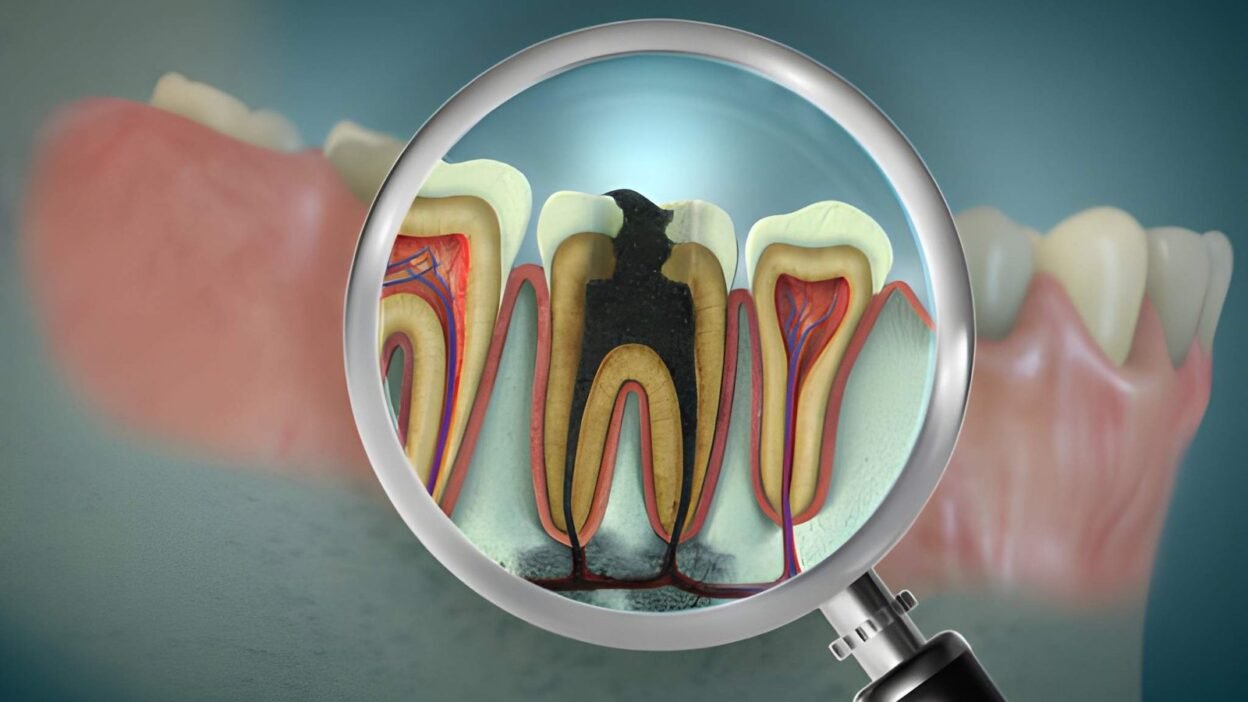
Inside every tooth is a soft tissue called the pulp, made of nerves and blood vessels. It sits in narrow channels (the root canals) that run from the crown down through the roots. When deep decay, a crack, or an injury lets bacteria reach the pulp, the tissue becomes inflamed or infected. The body cannot clear an infection inside a tooth by itself, and it can spread to the bone around the root tip, forming an abscess.
Root canal treatment removes the infected pulp, cleans and shapes the canals, and seals them. The tooth is then restored, usually with a crown, and continues to function like a natural tooth.
Signs You Might Need One
Only an examination and X-ray can confirm the diagnosis, but common warning signs include:
- Severe, lingering toothache, especially pain that wakes you at night
- Sensitivity to hot or cold that lasts long after the stimulus is removed
- Pain when biting or pressing on the tooth
- Swelling or tenderness of the gum near the tooth
- A pimple-like bump on the gum (which may drain pus)
- A tooth that darkens compared to its neighbors
Sometimes there are no symptoms at all, and the problem shows up on a routine X-ray. Also, pain that suddenly stops isn’t always good news. It can mean the nerve has died while the infection continues.
The Procedure, Step by Step
Root canal treatment can take one or more visits depending on the tooth and the level of infection.
- Diagnosis: examination, tests of the tooth’s response, and an X-ray.
- Anesthesia: the area is numbed so the procedure is comfortable.
- Access: a small opening is made in the top of the tooth.
- Cleaning and shaping: the infected pulp is removed and the canals are cleaned with fine instruments and disinfecting solutions.
- Filling: the cleaned canals are sealed with a biocompatible material.
- Restoration: a filling or, more commonly for back teeth, a crown protects the tooth from fracture.
Some infected teeth are treated in stages with medication placed between visits. Your dentist will explain which approach fits your case.
An Original Look: The Real Comparison Is “Root Canal vs. Extraction,” Not “Root Canal vs. Nothing”
Patients often frame the decision as “root canal or no treatment.” In practice, leaving an infected tooth untreated is not a stable option. The real choice is between two paths:
Path A: Save the tooth. Root canal plus crown. This preserves your natural tooth, bite, and jawbone. The cost is paid up front, and it involves a couple of visits.
Path B: Extract the tooth. Cheaper at first glance and quicker. But a missing tooth often needs replacing, with a bridge or implant, to prevent neighboring teeth from drifting and the opposing tooth from over-erupting. When you include replacement, the total cost and number of visits can equal or exceed Path A.
That doesn’t mean saving the tooth is always right. Extraction is the better choice when a tooth is too badly broken, has a vertical root fracture, has little healthy structure left to rebuild, or has severe gum and bone loss. A trustworthy dentist will lay out both paths honestly, including the odds of success, rather than pushing one.
How Painful Is It?
The idea that root canals are extremely painful comes mostly from the time before modern anesthesia and equipment. The pain patients feel usually comes from the infection, not from the treatment. Most people describe the procedure as comfortable, with some soreness afterward that can be managed with standard pain relief as your dentist advises. Persistent severe pain, swelling, or fever after treatment should be reported promptly.
Success Rates and Aftercare
When properly performed and followed by a good restoration, Root Canal Treatment in Johar Town has a high success rate, and many treated teeth last for many years or even a lifetime. Success depends on thorough cleaning, a sealed restoration that keeps bacteria out, and good oral hygiene.
Aftercare basics:
- Avoid chewing on the treated tooth until the permanent restoration is placed.
- Get the crown or final filling done on schedule. A delay is a common cause of failure.
- Brush and clean between teeth as usual.
- Keep follow-up appointments and dental check-ups.
Occasionally, a treated tooth becomes infected again. Retreatment or a small surgical procedure can often solve it.
What to Look For in a Clinic
When choosing where to have a root canal in Johar Town, consider:
- Clear diagnosis with X-rays, and an explanation of your options
- Anesthesia and comfort discussed openly
- Infection control: sterilized instruments and clean procedures
- Written estimates, including the cost of the crown
- Referral willingness for complex cases, such as curved or blocked canals, which some general dentists refer to an endodontist (root canal specialist)
How Elora Dental and Aesthetics Approaches Root Canal Care
Elora Dental and Aesthetics in Johar Town, Lahore, treats endodontic problems as part of comprehensive dental care. A responsible sequence involves a careful diagnosis, a discussion of whether to save or extract the tooth, comfortable treatment, and a plan for the final restoration. Please contact the clinic directly to confirm which services are offered in-house, appointment availability, and current fees.
Conclusion
A root canal is not the thing to fear. Infection left untreated is. By removing the source of pain and infection, the treatment lets you keep your natural tooth, which is usually the best long-term outcome when the tooth is restorable. If you have a persistent toothache, swelling, or heat sensitivity, don’t wait for it to worsen. An early examination at Elora Dental and Aesthetics in Johar Town, Lahore, can clarify your options and help you keep a healthy, functioning smile well through the end of 2027 and beyond.
Frequently Asked Questions
1. How long does a root canal take?
A simple case can often be completed in one visit lasting roughly an hour or more, while infected or complex teeth may need two or more visits. Your dentist will give a realistic estimate after the X-ray.
2. What happens if I delay a root canal?
The infection can spread to the surrounding bone, form an abscess, cause swelling and increasing pain, and in serious cases affect your general health. A tooth that could have been saved may end up needing extraction.
3. Why does a root canal-treated tooth need a crown?
After treatment, the tooth is more brittle because it has lost its blood supply and much of its structure. A crown protects it from cracking under chewing pressure, particularly for molars and premolars.
4. How much does a root canal cost in Lahore?
Cost varies with the tooth (front teeth are simpler than molars), the complexity, and whether a crown is included. Ask for a written estimate covering the root canal, any build-up, and the crown, and confirm current fees with the clinic.
5. What can I eat after a root canal?
Once the anesthesia wears off, choose soft foods and avoid chewing on the treated side until the permanent restoration is in place. Avoid very hot, hard, or sticky foods in the early days.