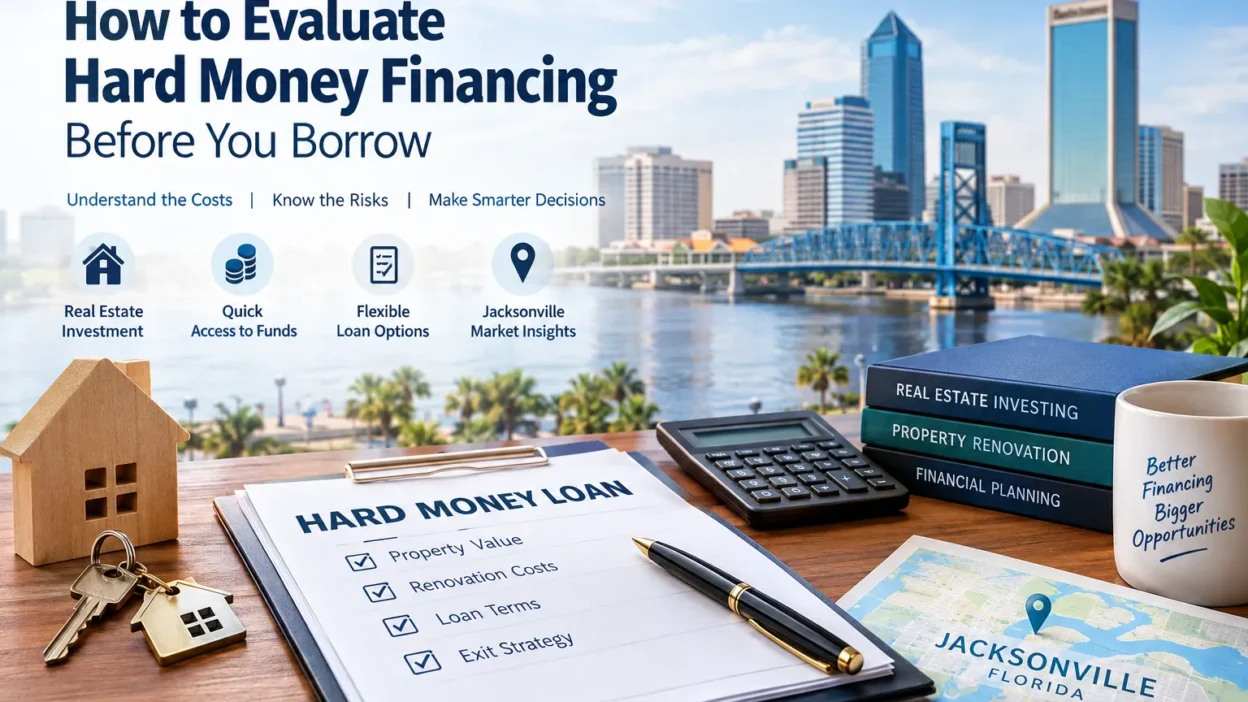
Real estate investors often face situations where a traditional mortgage is too slow or difficult to obtain. A property may need repairs before it qualifies for conventional financing, or an investor may need to close quickly to secure a promising opportunity. In these cases, hard money financing can offer an alternative route to funding.
Hard money loans are generally short-term loans secured by real estate. Instead of relying primarily on a borrower’s income and credit profile, many hard money lenders place significant emphasis on the property’s value, condition, and potential after improvements. However, faster access to funds can come with higher interest rates, fees, and repayment risks.
For investors considering Hard Money Loans Jacksonville, understanding how these loans work is essential before committing to a purchase, renovation, or refinancing strategy. Careful planning can help you determine whether this financing option supports your goals or creates unnecessary financial pressure.
What Are Hard Money Loans?
Hard money loans are asset-based loans commonly used in real estate investing. The property serves as collateral, giving the lender a legal claim against it if the borrower fails to meet the loan obligations.
These loans are often provided by private lenders or specialized lending companies. They may be used to finance properties that require substantial repairs, investment properties purchased for resale, or transactions that need a shorter closing timeline.
Unlike many traditional mortgages, hard money financing may focus heavily on factors such as:
- The property’s current market value
- The estimated after-repair value (ARV)
- The cost and scope of planned renovations
- The borrower’s real estate investment experience
- The proposed repayment or exit strategy
- The amount of equity available in the transaction
Approval criteria vary by lender. Asset-based underwriting does not mean that income, credit, liquidity, or experience will never matter. Lenders may review all of these factors when evaluating an application.
When Should Jacksonville Investors Consider Hard Money Financing?
The right financing choice depends on the property, investment timeline, available capital, and expected return. Hard money financing may be useful in several situations.
Purchasing a property that needs major repairs
Some properties require structural work, updated electrical systems, roof replacement, or other improvements before they can attract tenants or qualify for conventional financing. A hard money loan may help an investor acquire the property and complete approved renovations.
Before borrowing, prepare a detailed repair estimate and include a contingency reserve. Underestimating renovation expenses can reduce profits and leave you without enough cash to complete the project.
Competing in a time-sensitive transaction
A seller may prefer an offer with a shorter closing period. Depending on the lender’s process and the complexity of the transaction, hard money financing may help an investor move more quickly than some traditional loan options.
However, fast approval is not guaranteed. Property appraisals, title searches, insurance requirements, underwriting, and legal documentation can still delay closing. Confirm the expected timeline with the lender before making commitments.
Funding a fix-and-flip project
Real estate investors sometimes purchase undervalued properties, renovate them, and sell them for a profit. Short-term financing may help cover the acquisition and eligible renovation costs.
The investment only makes sense if the expected resale proceeds can cover the purchase price, renovation budget, financing expenses, selling costs, taxes, and other project expenses. A realistic profit estimate should also account for the possibility that the property takes longer to sell than expected.
Refinancing or transitioning to long-term financing
Some investors use short-term financing while improving a property’s condition or rental performance. They may then plan to refinance with a conventional mortgage or another longer-term loan.
This approach carries refinancing risk. A future lender may not approve the application, property values may change, or interest rates may rise. Do not assume that refinancing will automatically be available when the hard money loan matures.
How Hard Money Loans in Jacksonville Are Evaluated
Investors searching for Hard Money Loans Jacksonville should understand the factors lenders may review before approving financing.
Property value: Lenders assess the real estate offered as collateral. The property’s condition, location, comparable sales, and market demand may affect the valuation.
After-repair value: For renovation projects, the lender may consider the property’s estimated value after planned improvements. This estimate depends on market evidence and the quality of the renovation plan.
Loan-to-value ratio: This ratio compares the loan amount with the property’s value. Some lenders also consider the loan-to-cost ratio, which compares financing with the total eligible project cost.
Renovation budget: Lenders may request contractor estimates, a scope of work, and a schedule for completing improvements.
Borrower experience and reserves: Experience managing similar projects can strengthen an application. Cash reserves may also help cover overruns, loan payments, and unexpected delays.
Exit strategy: The lender will generally want to understand how the loan will be repaid. Common strategies include selling the renovated property, refinancing, or using other available funds.
Preparing these details before applying can make it easier to compare lenders and identify potential problems early.
Understand the Full Cost Before Signing
One of the biggest mistakes investors make is comparing hard money loans only by their interest rates. The total cost may include several additional expenses.
Review the following items carefully:
- Interest rate and how interest is calculated
- Loan origination fees and underwriting charges
- Appraisal, inspection, title, and legal costs
- Points or other lender fees
- Draw fees or inspection charges for renovation funding
- Extension fees if the project exceeds the original term
- Late-payment charges and default provisions
- Prepayment penalties, if applicable
- Balloon payments and the final maturity date
For example, a loan with a relatively short repayment period may appear manageable at first, but delays in construction or resale can add interest and extension costs. Request a written breakdown of the expected charges and repayment schedule.
Compare the total financing expense with the project’s projected profit rather than relying on optimistic resale estimates.
Build a Realistic Property Investment Budget
A reliable budget is essential when using short-term real estate financing. Begin with the purchase price and add renovation costs, closing expenses, insurance, taxes, utilities, permits, and other holding costs.
You should also estimate the time needed for each project stage. These stages may include acquisition, inspections, permits, construction, marketing, and sale or refinancing.
For a fix-and-flip investment, calculate the expected profit using a conservative resale estimate. Include real estate agent commissions, seller closing costs, and other expenses associated with the sale.
Then test what happens if:
- Renovation costs increase by 10% or more.
- The property takes several additional months to sell.
- The final sale price is lower than expected.
- A contractor misses important deadlines.
- Refinancing becomes more expensive or unavailable.
These scenarios help determine whether you have enough reserves to handle setbacks without jeopardizing the investment.
Common Hard Money Borrowing Mistakes to Avoid
Investors can reduce risk by recognizing common problems before closing.
Relying on an unrealistic after-repair value
An inflated property valuation can make an investment look more profitable than it really is. Use recent comparable sales and consider the property’s location, condition, layout, and market demand.
Ignoring the repayment deadline
Hard money loans are usually designed for short-term use. If you cannot sell or refinance before maturity, you may face extension fees, additional interest, or default consequences. Establish a primary exit strategy and consider a practical backup plan.
Borrowing without sufficient cash reserves
Unexpected repairs and holding costs can quickly consume an investor’s available funds. Keep a reasonable reserve for project expenses and loan payments rather than allocating every dollar to the acquisition.
Failing to compare lenders
Loan terms can differ significantly between private lenders. Compare written offers, confirm the funding process, and review the agreement with a qualified attorney when necessary. Be cautious of unclear fees, pressure to sign quickly, or promises that sound too good to be true.
How to Choose a Hard Money Lender
A suitable lender should provide clear terms and explain how the loan works. Ask about its experience with similar properties, typical underwriting requirements, renovation funding procedures, and expected closing timelines.
Request written answers to these questions:
- What is the total estimated cost of the loan?
- How much cash must I contribute at closing?
- What documentation is required for approval?
- How are renovation funds released?
- What happens if the project runs past the maturity date?
- Are extensions available, and what do they cost?
- What events could trigger default or foreclosure?
- Can I repay the loan early without a penalty?
Read the loan documents carefully and confirm that the repayment terms match your investment plan. A lender’s willingness to provide funds does not automatically mean that the project is financially sound.
Make a Better-Informed Real Estate Financing Decision
Hard money financing can provide flexibility for certain real estate investments, especially when a property needs repairs or a transaction requires short-term funding. However, the higher costs and shorter repayment periods mean that careful preparation is essential.
Before choosing Hard Money Loans in Jacksonville, evaluate the property’s current condition, realistic resale or rental potential, complete financing costs, and available cash reserves. Build a detailed budget, review the lender’s requirements, and create a clear exit strategy that does not depend on everything going perfectly.
The most successful borrowing decision is not necessarily the one that provides funds the fastest. It is the one that supports a realistic investment plan while keeping repayment obligations manageable. With thorough due diligence and professional guidance where needed, investors can evaluate opportunities more confidently and make financing decisions that fit their long-term real estate goals.