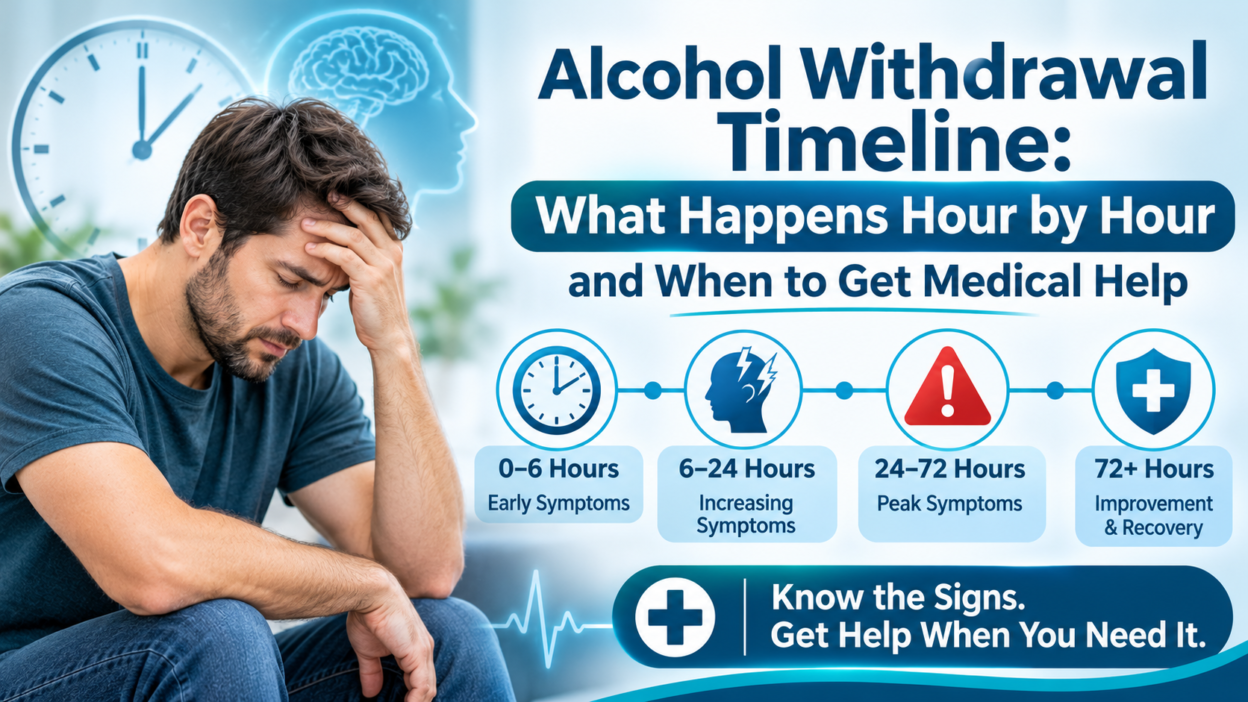
Alcohol withdrawal does not follow a fixed schedule, and it can turn dangerous faster than most people expect. A person who drinks every day may feel mild shakes at first, then have a seizure a day later. Knowing what happens hour by hour helps you decide when home care stops being safe.
This article lays out the typical withdrawal timeline, the warning signs that need emergency care, and how alcohol recovery treatment in Encinitas begins with a medical assessment and supervised detox. Timelines vary from person to person, so treat them as a general reference and not a promise.
Why Withdrawal Happens
Alcohol slows brain activity. When you drink regularly, your brain adjusts by increasing its own excitatory signals to stay balanced. If you stop suddenly, those signals run unchecked, and the nervous system becomes overactive. That overactivity causes the shaking, sweating, racing heart, and anxiety people feel during withdrawal. In severe cases, it causes seizures and delirium.
The Hour-by-Hour Timeline
| Time after last drink | What can happen |
|---|---|
| 6 to 12 hours | Shaking, anxiety, sweating, nausea, headache, trouble sleeping, fast heartbeat |
| 12 to 24 hours | Symptoms intensify; some people see or hear things that are not there |
| 12 to 48 hours | Seizures can occur, even in people with no earlier history |
| 24 to 72 hours | Symptoms often peak |
| 48 to 96 hours | Delirium tremens can develop: confusion, fever, severe agitation, rapid heartbeat |
| 5 to 7 days | Acute symptoms usually ease |
| Weeks | Poor sleep, low mood, and anxiety can continue |
Mild symptoms can hide the danger ahead. Someone who feels shaky at hour eight may face a seizure at hour thirty, so you should not judge safety by how you feel early on.
What Raises the Risk of Severe Withdrawal
Clinicians watch for several risk factors:
- Daily drinking in large amounts over months or years
- Earlier withdrawal seizures or delirium tremens
- Past failed attempts to quit that ended in severe symptoms
- Medical conditions such as liver disease, heart problems, or infections
- Poor nutrition, especially low thiamine (vitamin B1)
- Use of benzodiazepines, opioids, or other substances alongside alcohol
- Older age
Nobody can predict exactly who will develop severe withdrawal. A medical assessment gives a far more reliable answer than a guess.
Warning Signs That Need Emergency Care
Call 911 right away if someone has:
- A seizure
- Severe confusion or disorientation
- Hallucinations
- A fever with a very fast heartbeat
- Chest pain or trouble breathing
- Uncontrolled vomiting that prevents drinking fluids
Delirium tremens is a medical emergency. Do not wait to see whether symptoms pass.
How Medical Detox Manages Withdrawal
Medical detox replaces guesswork with monitoring. Nurses check blood pressure, heart rate, temperature, and hydration on a regular schedule, and they use standardized symptom scales to track withdrawal severity. Physicians prescribe medications, most often benzodiazepines, that calm the nervous system and lower seizure risk. They also give thiamine and fluids to protect the brain and correct deficiencies.
Inpatient alcohol detox in Encinitas fits people who drink every day, have had serious withdrawal before, or lack a safe place to recover. Staff stay on site around the clock, so they catch complications early. Facilities such as Leucadia Detox in Encinitas provide this level of supervision and plan the next stage of care before the client leaves.
When Alcohol Is Not the Only Substance
Many people drink while using opioids, benzodiazepines, or stimulants, and each combination changes the withdrawal picture. Alcohol and benzodiazepines both cause seizure risk, so stopping both at once demands close supervision. Opioid withdrawal causes severe flu-like symptoms and intense cravings that often push people back to use.
Inpatient drug detox in Encinitas allows staff to manage several withdrawals at the same time. Programs for opioid addiction treatment in Encinitas often add medications such as buprenorphine, which reduce cravings and withdrawal symptoms. Tell the care team about every substance you use, including prescriptions, so clinicians can build a safe plan.
What Comes After Detox
Detox clears alcohol from your body, but it does not treat the habits and triggers behind the drinking. Therapy fills that gap. Cognitive behavioral therapy teaches you to recognize triggers and respond differently, and relapse-prevention planning prepares you for cravings and stress.
Depending on your assessment, the next step may include residential care, a partial hospitalization program (PHP), an intensive outpatient program (IOP), or standard counseling. Doctors may also prescribe naltrexone or acamprosate to reduce cravings. Peer groups such as AA or SMART Recovery add daily support. Good alcohol recovery treatment in Encinitas links all of these pieces into one plan.
How to Choose a Facility
Ask specific questions before you commit:
- Does the facility hold a California Department of Health Care Services (DHCS) license?
- Does a physician oversee detox, and do nurses monitor patients 24 hours a day?
- Does a clinician assess you before admission?
- Does the team treat anxiety, depression, and trauma alongside alcohol use?
- Will staff verify your insurance before you arrive?
- Does the aftercare plan start before discharge?
A reliable addiction treatment center in Encinitas answers each question directly and without pressure. You can also review how to verify a treatment center’s license before you decide.
Take the Next Step
Alcohol withdrawal can change quickly, and the safest plan starts before the last drink. If you drink every day or have had a hard withdrawal before, request a clinical assessment first. A team such as Leucadia Detox can review your history, explain the options, and recommend a safe starting point. You can also verify your insurance before you make a decision.
If you are in crisis, call or text 988. For a medical emergency, call 911.
Frequently Asked Questions
Acute symptoms usually start within 6 to 12 hours, peak between 24 and 72 hours, and ease within about a week. Sleep problems, anxiety, and low mood can last for weeks.
Yes. Severe withdrawal can cause seizures and delirium tremens, and both can be life-threatening without medical care. Medical supervision lowers this risk.
Choose inpatient detox if you drink every day, have had seizures or severe withdrawal before, use other substances, have a serious medical condition, or lack a safe place to recover. A clinician can confirm the right level of care.
Many insurance plans cover medically necessary detox and treatment. The admissions team at a licensed facility can verify your benefits before you arrive.