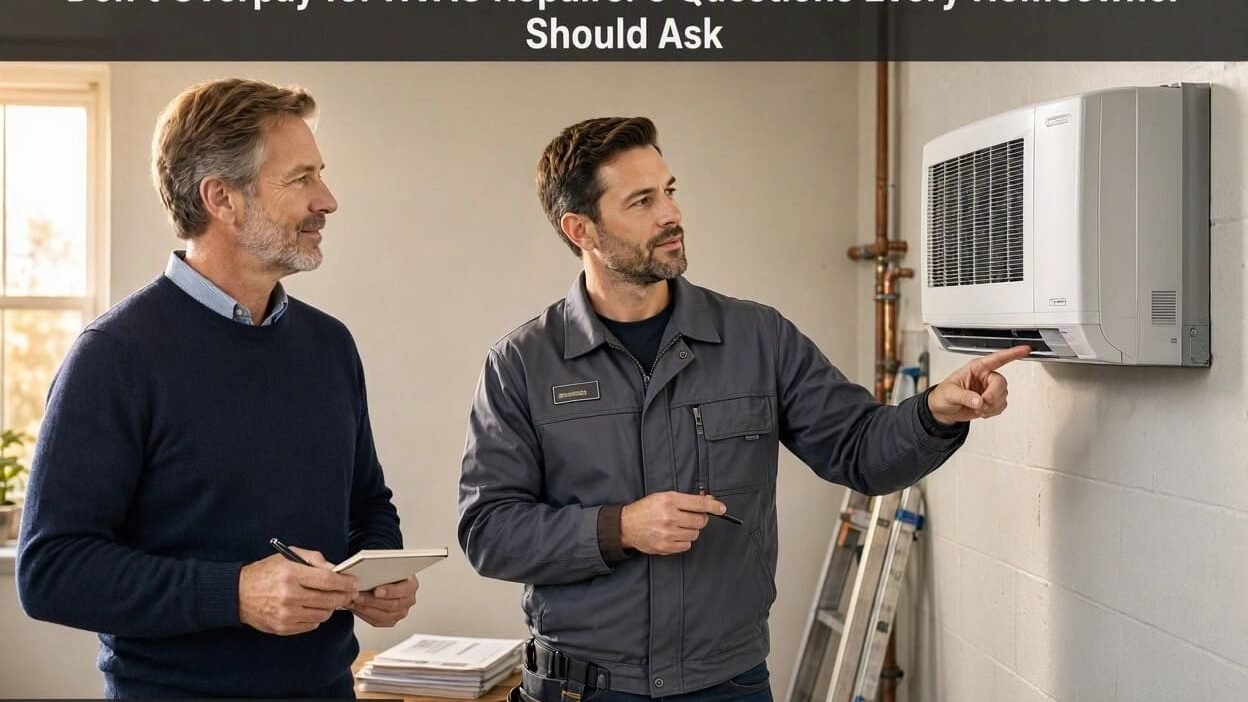
When an HVAC system stops cooling or heating properly, homeowners often want the problem fixed as quickly as possible. Unfortunately, rushing into a repair can sometimes lead to unnecessary expenses, unclear recommendations, or unexpected charges. Understanding what you are paying for can make the repair process much easier and help you make a more informed decision.
You do not need to become an HVAC technician to protect your budget. Asking the right questions before approving a repair can give you valuable information about the diagnosis, pricing, parts, labor, and long-term solution.
Here are six important questions every homeowner should ask before agreeing to an HVAC repair.
More info about air conditioner price, visit: harga ac 1/2 pk
1. What Exactly Is Causing the Problem?
The first question should always focus on the diagnosis. A technician should be able to explain what is wrong with your HVAC system and why the problem is occurring.
For example, if an air conditioner is not cooling, several issues could be responsible. The problem might involve restricted airflow, a dirty coil, a faulty capacitor, refrigerant leakage, electrical components, or a compressor issue. These problems can have very different repair costs.
Ask the technician to explain the problem in simple language. You can also ask whether the diagnosis was confirmed through testing.
A clear explanation helps you understand whether the recommended repair addresses the actual cause rather than simply treating a symptom.
2. How Much Will the Repair Cost?
Never hesitate to ask for the total estimated price before authorizing significant HVAC work.
A professional HVAC company should be able to provide information about expected labor, replacement parts, service charges, and other applicable fees. Some repairs may have costs that vary depending on the exact equipment or parts required, but you should still receive a reasonable estimate.
Ask whether the quoted price is the final expected cost or simply an initial estimate. If additional problems are discovered during the repair, find out whether the technician will contact you before performing extra work.
Getting pricing information upfront can reduce the risk of an unpleasant surprise when the job is completed.
3. Does the System Really Need This Repair?
Not every recommendation requires immediate approval. Ask the technician why the repair is necessary and what could happen if you postpone it.
This is particularly important when a technician recommends replacing an expensive component. For example, a homeowner may need to decide whether repairing an older compressor, blower motor, or control board makes financial sense.
Ask questions such as:
- Is the component completely failed?
- Can it be safely repaired?
- How long is the repair expected to last?
- Is there a temporary solution?
- Could another component be responsible for the problem?
These questions can help you distinguish between an essential repair and an optional recommendation.
4. Is the Replacement Part New and Compatible?
If your HVAC repair requires a replacement component, ask what type of part will be installed.
Some systems require manufacturer-specific components, while others can use compatible aftermarket parts. There is nothing inherently wrong with an aftermarket component, but you should understand what you are receiving.
Ask whether the replacement part is new, refurbished, or used. You should also ask whether it is compatible with your specific HVAC model.
Most importantly, find out whether the replacement part comes with a warranty. A lower-priced component may not be a bargain if it fails shortly after installation and leaves you paying for another service call.
5. What Warranty Comes With the Repair?
A warranty can provide valuable protection after an HVAC repair. Before approving the job, ask about both the parts warranty and the labor warranty.
These warranties may have different coverage periods and conditions. A manufacturer might provide a warranty for a replacement component, while the HVAC contractor may provide separate coverage for installation labor.
Ask:
- How long is the parts warranty?
- How long is the labor warranty?
- What situations are excluded?
- Who should you contact if the repaired component fails?
Keep the invoice, warranty information, and repair documentation in a safe place. These records may become important if you need follow-up service.
6. Would Repairing or Replacing the System Be More Cost-Effective?
Sometimes the cheapest immediate repair is not the most economical long-term solution.
If your HVAC system is relatively old and requires frequent repairs, ask the technician whether continued repairs make financial sense. An older unit may continue operating after a repair, but additional components could fail later.
Ask for an honest comparison between repairing the existing equipment and replacing it. Consider factors such as the system’s age, repair history, energy efficiency, expected remaining service life, and replacement cost.
You do not necessarily need to replace an older HVAC system simply because a technician recommends it. However, understanding both options can help you make a decision based on long-term value rather than short-term cost alone.
Compare Before You Commit
One of the easiest ways to avoid overpaying for HVAC repairs is to compare estimates when the situation allows it. If the system is still operating and the repair is not an emergency, consider obtaining estimates from more than one reputable HVAC contractor.
Do not compare prices alone. Look at the diagnosis, proposed solution, parts being used, warranties, labor, and overall reputation of the contractor.
A very low quote may not always represent the best value if it excludes important services or uses inferior components.
Final Thoughts
HVAC repairs can be stressful, especially when you depend on your heating or cooling system every day. However, homeowners can reduce unnecessary expenses by slowing down, asking questions, and understanding the proposed work.
Before approving an HVAC repair, ask what caused the problem, how much the repair will cost, whether the repair is necessary, what replacement parts will be used, what warranty is provided, and whether repair or replacement makes more financial sense.
A trustworthy HVAC professional should be willing to explain the problem and answer your questions clearly. The goal is not simply to find the cheapest repair, but to receive a safe, appropriate, and dependable solution at a fair price.