
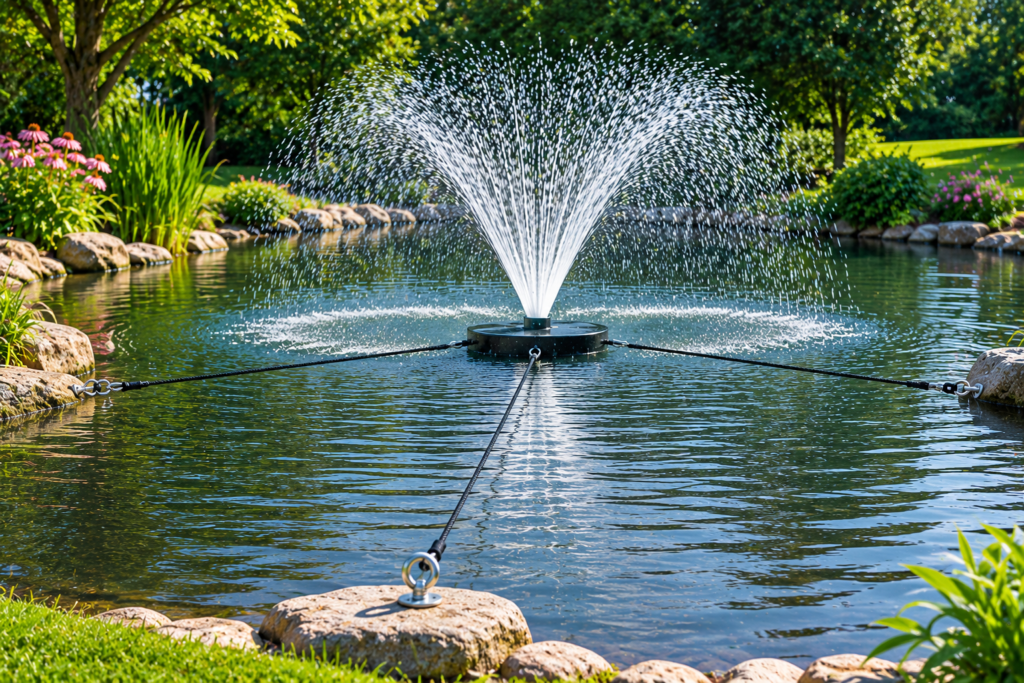
Proper anchoring plays an important role in keeping a floating pond fountain stable and protecting its components from unnecessary strain. Selecting a suitable mooring rope helps control movement caused by wind and water currents while keeping the fountain positioned correctly. Rope strength, material, length, and weather resistance should all be considered before installation. Regularly checking the rope, anchor points, and connections can also help identify wear before it becomes a problem. With the right anchoring arrangement and routine maintenance, pond owners can keep their fountains operating reliably and reduce the need for frequent repositioning.
Choosing the Right Rope Length
Rope length depends on the distance between the fountain and the anchor point. A rope that is too short can pull the fountain off-centre or place stress on its components. A rope that is too long may allow excessive drifting.
When selecting a mooring rope, measure the distance from the intended fountain position to the shoreline anchor. Add enough length to allow for water-level changes, seasonal conditions, and minor movement.
For larger ponds, multiple anchor points may be useful. Anchoring from more than one side can help keep the fountain centred and reduce side-to-side movement. This approach is especially helpful in ponds with consistent wind direction or noticeable water current.
How to Install a Mooring Rope
Installing a mooring rope is a straightforward process, but it should be done carefully to avoid damaging the fountain or its electrical components.
- Position the fountain: Place the floating fountain in the desired location, away from shallow areas, vegetation, and obstacles.
- Identify an anchor point: Choose a secure shoreline location that will not shift or loosen over time.
- Attach the rope to the fountain: Connect the rope to the fountain cleat or designated anchor point.
- Secure the shoreline end: Attach the other end to a stable anchor, ensuring it cannot pull free.
- Adjust the tension: Leave enough slack for natural movement while preventing excessive drift.
- Test the setup: Run the fountain briefly and observe whether it remains in the intended position.
Protecting Fountain Components
A secure fountain is not only easier to manage; it also helps protect the equipment. When a fountain drifts, its power cord may become stretched, tangled, or pulled against rocks and shoreline structures.
A properly installed mooring rope reduces movement-related stress on pumps and fountain components. This can help maintain stable operation and minimise the need to reposition the fountain after wind or wave activity.
Pond owners should also inspect the rope periodically for fraying, UV damage, or loosening. Outdoor exposure can affect rope condition over time, especially in areas with strong sunlight or frequent weather changes.
Matching the Rope to Pond Conditions
Pond conditions vary widely. A small garden pond may require only a simple shoreline anchor, while a larger pond with wind exposure may benefit from multiple anchor points.
When evaluating a mooring rope, consider:
- Pond size and shape.
- Typical wind direction and strength.
- Water current and wave activity.
- Distance from shoreline to fountain.
- Number of anchor points needed.
- Fountain size and pump capacity.
- Seasonal water-level changes.
Conclusion
A floating fountain is often part of a broader pond-care routine. In addition to anchoring, pond owners may use filtration products to support water clarity and circulation. A water pump filter bag can help protect pump components by reducing debris intake and supporting cleaner water flow. For those looking for a reliable anchoring solution, Friendly Fountains offers a 100-foot marine-grade mooring rope designed to secure floating pond fountains and resist outdoor wear. A stable fountain setup supports better circulation, reduces equipment stress, and helps maintain the appearance of the pond. With the right rope and anchor points, pond owners can enjoy a fountain that remains in place through changing weather and water conditions.