
Digital Sales Room Software: The New Frontier of B2B Selling
Modern B2B buying has changed. Deals now involve multiple stakeholders, long email threads, scattered attachments, and disconnected conversations across calls, chats, and shared drives. Digital Sales Room software solves this fragmentation by creating a single, personalized, interactive hub where buyers and sellers collaborate throughout the sales cycle.
What Is a Digital Sales Room?
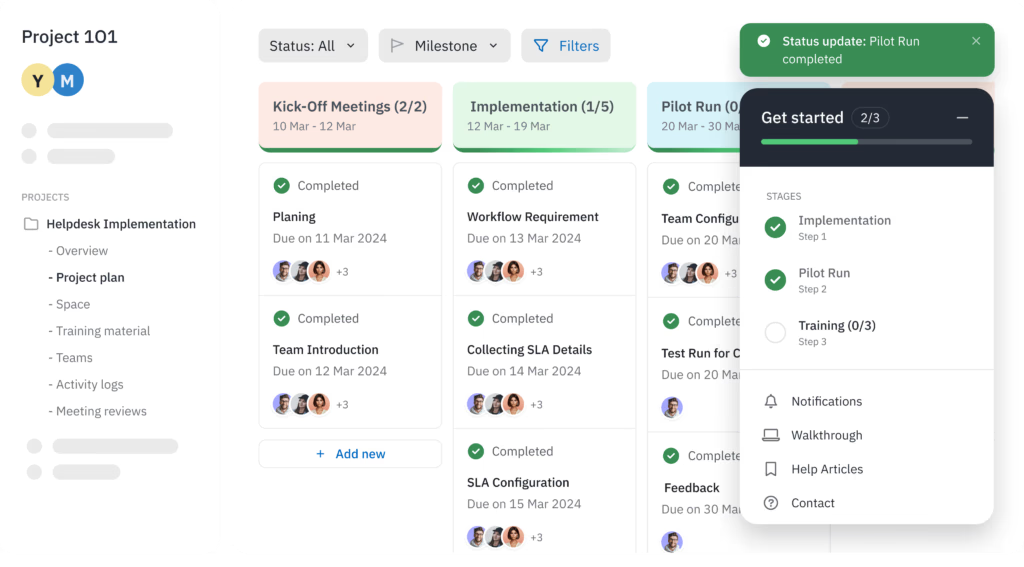
A digital sales room is a secure, branded microsite created for a specific deal or account. Instead of sending buyers a pile of PDFs and follow-up emails, sales reps consolidate everything (proposals, case studies, pricing, contracts, videos, and mutual action plans) into one living workspace. Buyers can revisit the room anytime, share it internally with colleagues, and track their own next steps, while sellers gain visibility into who is engaging with what.
Core Features
Most digital sales room platforms share a common feature set:
- Centralized content hubs that organize proposals, decks, and resources by deal stage
- Personalization with buyer-specific branding, messaging, and recommended content
- Mutual action plans that align buyer and seller responsibilities with clear deadlines
- E-signature integration to move from proposal to signed contract without leaving the room
- Engagement analytics showing which stakeholders viewed content, how long they spent, and what they shared internally
- Video and interactive content such as embedded demos, ROI calculators, and personalized walkthroughs
- Multi-threaded stakeholder access, letting buying committees collaborate in one place instead of forwarding emails
Why Sales Teams Are Adopting DSR Tools
- Shorter sales cycles. Centralizing information reduces the back-and-forth of searching for the “latest version” of a document or waiting on missing details.
- Better buyer experience. Buyers increasingly prefer self-serve, digital-first interactions. A polished, organized room signals professionalism and reduces friction compared to a cluttered inbox.
- Improved internal alignment. Buying committees often include five to ten stakeholders. A shared room lets champions easily loop in colleagues without losing context.
- Deal intelligence for reps. Engagement analytics reveal buying intent signals, like a champion re-sharing pricing pages with finance, that help reps time their follow-ups more effectively.
- Consistency at scale. Sales leaders can standardize how deals are presented, ensuring every rep follows best practices and brand guidelines.
Popular Use Cases
- Enterprise sales, where long cycles and multiple stakeholders benefit most from a persistent, organized space
- Customer onboarding, extending the room’s life beyond the close to guide implementation
- Renewals and upsells, using the same collaborative space to present expansion opportunities
- RFP responses, replacing static documents with interactive, trackable proposals
Choosing the Right Platform
When evaluating right digital sales room software, sales teams typically weigh:
- Integration with existing CRM and content management systems
- Ease of setup and template creation for reps
- Depth of analytics and buyer engagement tracking
- Security and permission controls for sensitive documents
- Support for multimedia and interactive content types
Popular platforms in this category include tools like Trumpet, Journey, GetAccept, Aligned, and Recapped, each offering variations on personalization, analytics depth, and CRM integration.
The Bottom Line
Digital sales rooms represent a shift from transactional, email-driven selling to collaborative, buyer-centric experiences. As B2B purchasing continues to move toward self-service and digital engagement, DSR software is becoming less of a nice-to-have and more of a competitive necessity for sales organizations aiming to close deals faster and create better buying experiences.
Frequently Asked Questions
1. How is a digital sales room different from a regular content sharing link or folder?
A shared folder is a passive drop-off point for files. A digital sales room is an active, organized workspace built for a specific deal. It includes structure, personalization, mutual action plans, and analytics that show exactly how buyers are engaging, none of which a basic file link can offer.
2. Do digital sales rooms replace the CRM?
No. A digital sales room works alongside the CRM rather than replacing it. Most platforms integrate directly with CRM systems, pushing engagement data and deal activity back so reps can keep a complete record without duplicate data entry.
3. Is digital sales room software only useful for large enterprise deals?
It is most valuable in complex, multi-stakeholder deals, but smaller sales teams also use it to standardize their process, speed up onboarding, and present a more polished buying experience even for shorter sales cycles.
4. What kind of analytics do these platforms provide?
Most tools track page views, time spent on each section, document downloads, and which stakeholders accessed the room. Some also flag internal sharing, so reps can see when a champion forwards content to other decision makers.
5. How long does it take to set up a digital sales room?
Setup time varies by platform, but most tools offer templates that let reps launch a room in minutes. The initial content library and branding setup usually take longer, though that is typically a one-time effort handled by sales enablement or marketing teams.