Quick Answer
Kitchens are consistently one of the highest-returning rooms to invest in, but the return is not linear. Mid-range kitchen updates often recoup a large share of their cost at resale, while ultra-high-end spending returns a smaller percentage, because it exceeds what the local market will pay back. The nuance: in genuine luxury markets, a distinctive, well-built kitchen can still be the feature that sells the home, even when it does not return every dollar on paper. The value is often in speed and desirability, not just the percentage recouped.
The Question Every Renovating Homeowner Asks
Before any significant kitchen project, the same question comes up: will I get this money back when I sell? It is the right question, and the honest answer is more layered than the headlines suggest. Kitchens do add resale value, reliably, but how much depends on what you spend, where the home is, and what the local market expects.
Let us separate what the data actually shows from what people assume.
What the Data Consistently Shows
Across years of remodeling-cost-versus-value research, a few patterns hold steady:
• Kitchens are among the best-returning rooms. Kitchen and bath projects routinely top the list of renovations that recoup the most at resale, ahead of most additions and cosmetic upgrades elsewhere in the home.
• Mid-range updates recoup a higher percentage than luxury ones. A moderate kitchen remodel typically returns a larger share of its cost than an upscale one. This is not because luxury kitchens are a bad investment; it is because the recouped percentage falls as spending rises above the neighborhood norm.
• The return is about the buyer pool, not the finishes. A kitchen returns well when it matches what buyers in that price band expect. Overbuild relative to the neighborhood and the extra spend returns less. Match or slightly exceed the market and the return holds up.
The takeaway is not “spend less.” It is “spend in proportion to the home and the market.”
Why Ultra-High-End Kitchens Break the Simple ROI Rule
Here is where the standard percentages stop telling the whole story. In genuine luxury markets, the kitchen often functions less like a line-item improvement and more like the reason a buyer chooses one multimillion-dollar home over another comparable one.
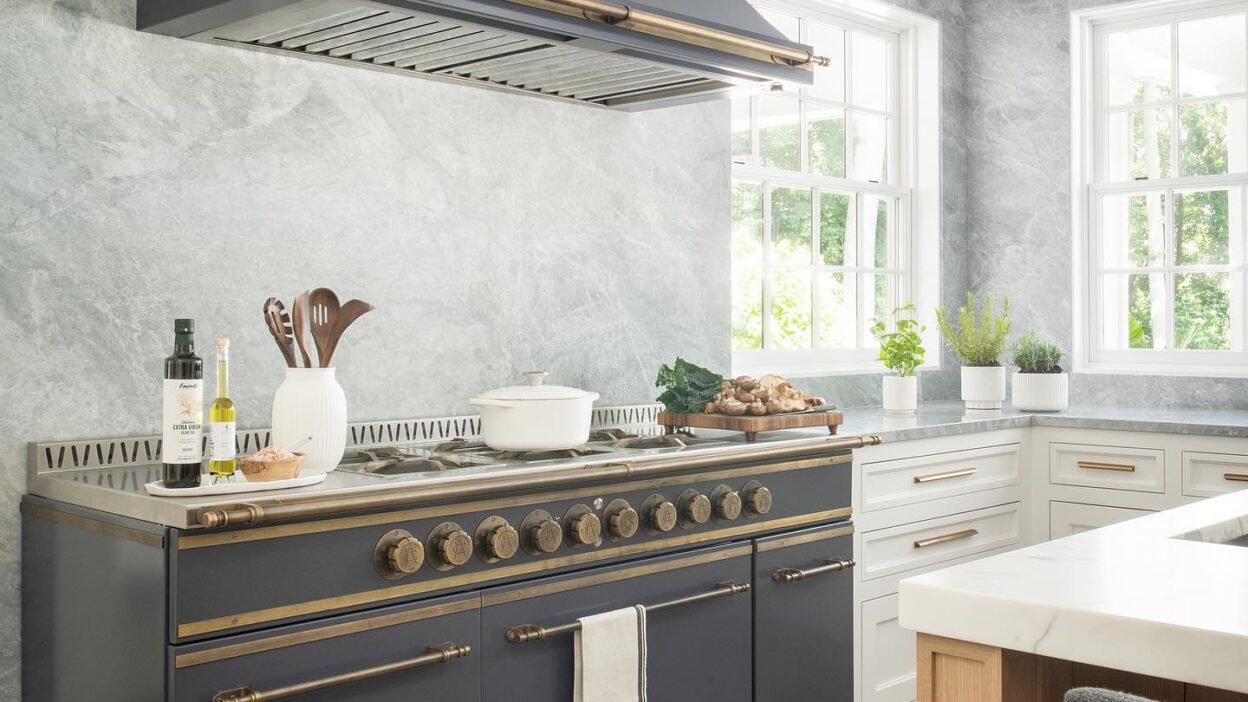
At that level, a distinctive, handcrafted kitchen with a statement range and permanent materials can be the feature that makes the home memorable, sells it faster, and supports the asking price, even if a spreadsheet says it returned only a fraction of its cost. In a competitive luxury market, an extraordinary kitchen can become a meaningful point of differentiation between otherwise comparable properties. That is real value, and it does not show up cleanly in a cost-versus-value percentage.
This is also why permanence matters at the top of the market. A kitchen built to last decades, with a long-term investment in the architecture and functionality of the kitchen, does not read as “someone’s dated renovation” to the next buyer. A trend-driven kitchen does. Makers that build for permanence, such as L’Atelier Paris, whose custom French ranges are made to be serviced and passed down rather than replaced, are effectively offering a form of resale insurance: a kitchen that still looks intentional to whoever buys the home next.
Where High-End Spending Stops Paying Back
Being clear-eyed cuts both ways. Some luxury kitchen spending genuinely does not return, and it helps to know where:
• Hyper-personal choices. A finish or layout tailored to one owner’s taste can narrow the buyer pool rather than widen it.
• Overbuilding for the neighborhood. A six-figure kitchen in a market that tops out below that will not recoup the premium, though it may still help the home sell.
• Features over fundamentals. Gadget-heavy kitchens date quickly. Quality materials and timeless design hold value better than the newest technology.
The pattern: spending on permanence, quality, and broadly appealing design tends to hold value. Spending on novelty and hyper-specific personalization tends not to.
How to Invest in a Kitchen That Holds Value
For homeowners who want the luxury kitchen and a defensible return, a few principles apply:
1. Match the spend to the market. Aim your kitchen at what buyers in your home’s price band expect, and be cautious about exceeding it dramatically unless you plan to stay for years.
2. Choose permanence over trend. Timeless materials and a well-built, serviceable range outlast trend cycles and read as quality to future buyers.
3. Invest in the focal point. A statement range and quality surfaces do more for perceived value than a long list of gadgets.
4. Design for broad appeal at resale. Keep the most personal choices to elements that are easy to change, and keep the permanent bones widely appealing.
The Bottom Line
Do luxury kitchens add resale value? Yes, but measure it correctly. On a pure percentage basis, mid-range kitchens recoup more, and ultra-high-end kitchens recoup less. But in luxury markets, a distinctive, permanent, well-built kitchen often does something the percentage misses: it makes the home more desirable and easier to sell. The smartest high-end kitchen investment is not the most expensive one. It is the one built to last, matched to its market, and designed to still look intentional to the buyer who comes next.
Frequently Asked Questions
Do kitchens add the most resale value of any room?
Kitchens and bathrooms consistently rank among the highest-returning renovations, ahead of most other rooms and many additions. The exact return depends on the scope of the project and the local market.
Do luxury kitchens recoup their full cost at resale?
Usually not on a straight percentage basis. Mid-range kitchen remodels tend to recoup a higher share of their cost than ultra-high-end ones, because spending above the neighborhood norm returns a smaller percentage. In luxury markets, though, an exceptional kitchen can still drive a faster sale and support the asking price.
Why do high-end kitchens return a smaller percentage?
Because the recouped percentage falls as spending rises above what the local buyer pool expects. It is not that quality is a poor investment; it is that overbuilding relative to the market caps the measurable return.
What kitchen investments hold value best?
Permanence and broad appeal: timeless materials, quality surfaces, and a well-built, serviceable range. Hyper-personal finishes and gadget-heavy features tend to date and narrow the buyer pool.
Does a statement range help a home sell?
It can. A distinctive, high-quality range anchors the kitchen and makes the home more memorable to buyers, which in luxury markets can be the difference between two similarly priced homes.