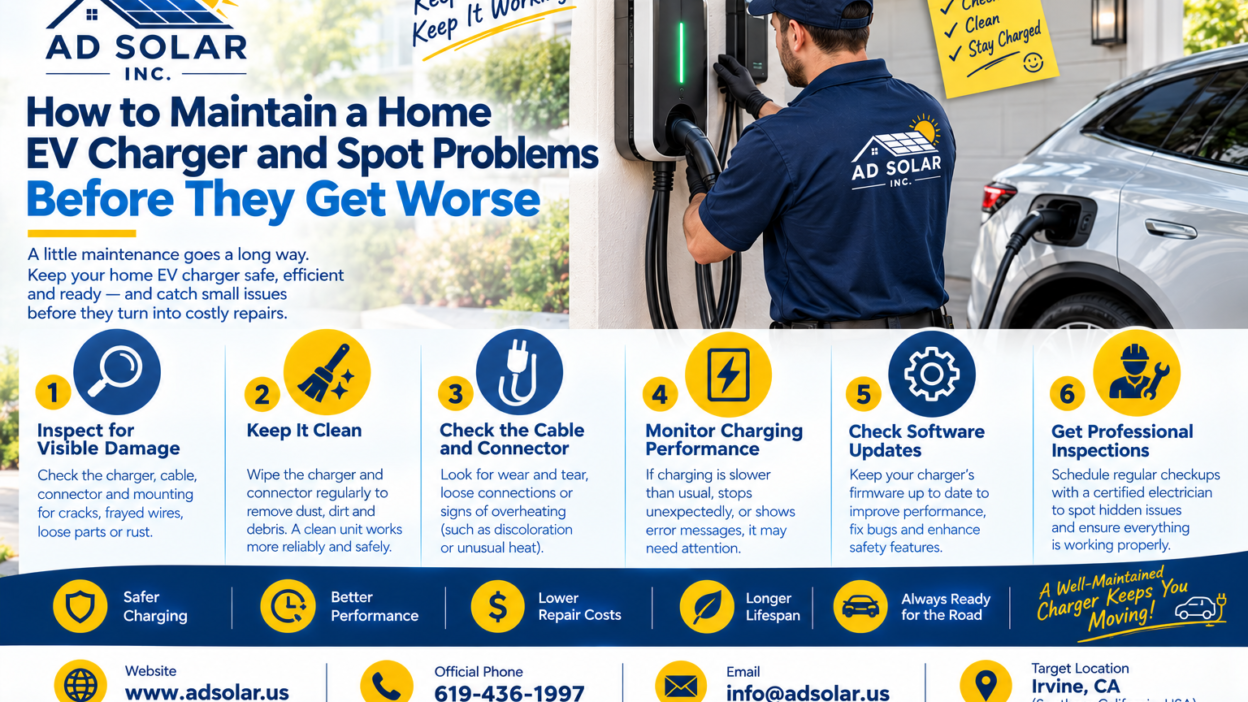
A home EV charger can make daily electric vehicle ownership more convenient, but its performance depends on proper use, routine checks, and attention to early warning signs. After completing an EV charger installation, homeowners should understand how to care for the equipment, keep the charging area organized, and recognize when a problem requires professional attention. Regular visual inspections cannot replace professional electrical maintenance, but they can help homeowners identify concerns before they interrupt their charging routine.
The right maintenance approach depends on the charger model, installation location, manufacturer instructions, and whether the equipment is installed indoors or outdoors. A few simple habits can help protect the charging setup and make it easier to identify changes in performance.
1. Inspect the Charging Cable and Connector
The charging cable and connector are among the most frequently handled parts of a home charging system. Repeated use, improper storage, and accidental impacts can cause wear over time.
Check the cable periodically for visible cuts, cracks, flattened areas, or signs that it has been crushed under a vehicle or trapped in a door. Look at the connector for visible damage, unusual discoloration, or debris around the contact area.
Keep these basic practices in mind:
- Store the cable according to the manufacturer’s instructions.
- Avoid driving over the cable or stretching it across walkways.
- Keep the connector away from standing water and avoid unnecessary impacts.
- Never attempt to repair damaged electrical cables with tape or improvised materials.
If the cable or connector appears damaged, stop using the charger until the issue has been assessed by a qualified professional. Do not open electrical components or attempt repairs yourself.
2. Keep the Charging Area Clean and Accessible
Dust, clutter, stored equipment, and poorly arranged cables can make charging less convenient and create avoidable hazards. A clean charging area also makes it easier to notice physical damage or changes in the equipment.
For garage installations, keep the space around the charger accessible. Avoid placing boxes, tools, or other stored items where they can strike the unit or interfere with the cable. If the charger is installed outdoors, keep the surrounding area clear of debris and make sure the equipment is being used within the environmental conditions specified by its manufacturer.
Cable organization deserves particular attention. A cable left across a walking path can become a tripping hazard, while a connector left on the ground may be exposed to dirt or accidental damage.
A practical setup should allow the vehicle to park comfortably, the connector to reach its charging port without strain, and other household members to move through the area safely.
3. Pay Attention to Charging Speed and Interruptions
A charger does not necessarily have a problem every time charging takes longer than expected. Charging speed can vary because of the vehicle’s battery level, temperature, charging settings, electricity supply, and the vehicle’s own charging limits.
However, a sudden and repeated change in charging behavior deserves attention.
Keep an eye out for:
- Charging sessions that stop unexpectedly.
- Repeated error messages on the charger or vehicle.
- A noticeable drop in charging performance under similar conditions.
- A connector that does not remain securely connected.
- A charger that repeatedly restarts without an obvious reason.
Check the vehicle’s charging schedule and the charger’s app settings before assuming there is an electrical fault. If the problem continues, record the error message and when it occurs. This information can help the installer or a qualified electrician investigate the issue more efficiently.
Do not repeatedly reset a charger if it continues to show an error or behaves abnormally. Follow the manufacturer’s troubleshooting instructions and seek professional help when needed.
4. Understand Outdoor Charger Care
Outdoor chargers may face sunlight, rain, dust, temperature changes, and other environmental conditions. Equipment intended for outdoor use is designed for specified conditions, but its installation requirements and limits still matter.
Check the manufacturer’s instructions for cleaning, weather exposure, and any restrictions on the use of covers or accessories. Never assume that a charger is suitable for outdoor use simply because it is mounted on an exterior wall.
Homeowners should also look for visible changes around the installation, such as a loose mounting point, damaged conduit, cracked enclosure, or signs of water intrusion. Do not remove the cover to inspect internal components.
If the charger or its electrical connections appear compromised, discontinue use and arrange a professional inspection. Avoid spraying water directly onto the unit unless the manufacturer explicitly permits the cleaning method.
5. Know Which Warning Signs Require Immediate Attention
Some issues should not wait for a routine service appointment. Unusual heat, a burning smell, smoke, sparks, buzzing that was not present before, or visible melting can indicate a potentially dangerous electrical problem.
If any of these signs appear, stop charging if it is safe to do so. Do not touch damaged equipment, exposed wiring, or a connector that appears overheated. If there is smoke or fire, move away and contact emergency services. Have the equipment inspected before using it again.
A charger displaying an ordinary error code may need troubleshooting, but signs of overheating or electrical damage should be treated differently. Never continue charging simply because the vehicle still appears to be receiving power.
Knowing the difference between a routine operating issue and a possible electrical hazard helps homeowners make safer decisions.
6. Review the Manufacturer’s Maintenance Instructions
Not every EV charger has the same maintenance requirements. Some models provide app-based diagnostics, status indicators, firmware updates, or specific instructions for cleaning and inspection.
Keep the product manual and warranty information somewhere accessible. Review the manufacturer’s recommendations for:
- Cleaning the enclosure and connector.
- Inspecting the cable and mounting hardware.
- Installing approved software or firmware updates.
- Understanding indicator lights and error codes.
- Reporting a fault and requesting warranty service.
Do not apply generic maintenance steps if they conflict with the instructions for your particular model. Avoid opening the charger, modifying its wiring, or installing unapproved parts.
If the charger has a smart application, check whether it provides useful alerts or records of interrupted charging sessions. These records can help you identify recurring problems without guessing at the cause.
7. Protect the Charger From Accidental Damage
Everyday activity can affect a charger even when its electrical components are working properly. Garage doors, bicycles, storage shelves, gardening equipment, and vehicles can strike a poorly positioned unit or damage its cable.
Take time to review how the charger fits into your normal routine. If the connector is difficult to reach, the cable is repeatedly stretched, or the unit sits in a high-traffic area, the arrangement may need improvement.
Helpful precautions include:
- Parking in a way that avoids pulling the cable tight.
- Using only manufacturer-approved cable holders or accessories.
- Keeping heavy objects away from the charger and cable.
- Avoiding sharp bends or repeated twisting of the cable.
- Making sure the charging equipment does not obstruct a walkway or exit.
If the equipment is frequently exposed to accidental impacts, ask a qualified installer whether its location or cable-management arrangement can be improved safely.
8. Keep Installation and Service Records
Installation documents can become important when a charger develops a fault, a warranty claim is needed, or electrical work is carried out elsewhere in the property.
Keep copies of the installation invoice, charger model and serial number, product manual, warranty terms, and any inspection or service records. If a qualified professional makes a repair or adjustment, retain the paperwork describing the work.
These records can also help future electricians understand the existing setup before recommending changes. This is particularly useful if you later install another charger, upgrade your electrical panel, add solar equipment, or make changes to your garage.
For a home with multiple electrical upgrades, organized records make it easier to understand which equipment was installed, when it was installed, and who completed the work.
9. Know When to Call a Qualified Professional
Routine visual checks are useful, but they are not a substitute for professional electrical work. Contact the installer or a qualified electrician if the charger repeatedly stops, displays persistent fault codes, appears physically damaged, or shows signs of abnormal heating.
Professional assistance may also be appropriate if you plan to relocate the charger, add a second charging point, change the electrical panel, or modify the circuit supplying the equipment.
Homeowners researching broader electrical or solar upgrades may also compare local providers. For example, people looking for solar installers in irvine ca should confirm that the company they contact offers the specific electrical or charging work required. Solar installation and EV charger service are related home-energy needs, but one service listing does not automatically confirm that every provider handles every type of charger repair.
For new equipment or a replacement unit, the EV charger installation service page is a useful starting point for understanding the installation service. Ask the provider about the proposed equipment, electrical requirements, permits where applicable, and the scope of work before proceeding.
Homeowners can also visit AD Solar to learn more about the company’s solar and electrical services and determine whether its available services fit their project.
10. Make Maintenance Part of Your Household Routine
EV charger maintenance does not need to become a complicated task. A brief visual check from time to time, careful cable storage, and attention to warning messages can help you notice changes early.
A simple routine could include checking the cable and connector for visible damage, clearing clutter around the charging area, reviewing any persistent alerts, and confirming that the charger is operating as expected. Follow the maintenance intervals provided by the manufacturer rather than assuming every charger needs the same schedule.
After severe weather, accidental impacts, or electrical work near the charging circuit, check for visible signs of damage and seek professional advice if anything appears unusual.
Most importantly, avoid trying to fix electrical problems yourself. A qualified professional can assess the equipment, determine whether a repair is appropriate, and advise whether the charger should remain out of service.
Frequently Asked Questions
How often should I inspect my home EV charger?
Follow the manufacturer’s maintenance guidance. It is sensible to look for visible cable, connector, and enclosure damage regularly and whenever you notice unusual behavior. Professional inspections may be appropriate when a fault develops or electrical work is planned.
Can I clean my EV charger with water?
Use only the cleaning method approved by the manufacturer. Do not spray water directly onto the charger or clean it while connected if the instructions prohibit it. Avoid opening the enclosure or exposing electrical components.
Why does my EV charger sometimes charge more slowly?
Charging speed may depend on the vehicle, battery temperature, battery level, charging settings, and available electrical capacity. If the change is sudden or accompanied by repeated errors, consult the charger manual and contact a qualified professional if it continues.
Should I continue using a charger that smells burnt or becomes unusually hot?
No. Stop using the equipment if it is safe to do so, avoid touching potentially damaged components, and arrange a professional assessment. If there is smoke or fire, move away and contact emergency services.
Do I need an electrician to move my home EV charger?
Relocating a charger can involve changes to the electrical circuit, mounting, wiring, or required permits. Have a qualified professional assess the work rather than disconnecting or rewiring the equipment yourself.
Final Thoughts
A home EV charger should be treated as an important part of the property’s electrical system, not simply as an accessory that can be ignored after installation. Keeping the charging area organized, checking for visible damage, understanding error messages, and responding promptly to warning signs can make daily charging easier to manage.
When a problem goes beyond basic visual checks, professional advice is the safer option. Homeowners planning a new charger, a replacement, or a broader electrical upgrade should choose a provider that can explain the equipment requirements and the scope of work clearly.
With sensible care and accurate installation records, homeowners can better understand their charging equipment, recognize when something changes, and know when to seek help.longer-term plan, tell the providers so they can consider your expected electricity needs when assessing the project.
Is a Level 2 charger necessary for every EV owner?
No. The suitable charging option depends on driving habits, available parking time, vehicle specifications, and the home’s electrical supply.
Do I need a permit for home EV charger installation?
Requirements vary by location and project scope. Ask your installer or local authority which permits and inspections apply before work begins.
Should I plan for two EVs even if I currently own only one?
If a second vehicle is a realistic future possibility, mention it during the electrical assessment. The professional can explain whether it affects current planning without assuming that additional equipment must be installed immediately.
Final Thoughts
Preparing a home’s electrical system for future EV charging starts with understanding the property’s existing capacity and the household’s likely needs. Reviewing the panel, considering daily driving habits, choosing a practical charging location, and discussing potential upgrades can help you make informed decisions.
Solar panels and battery storage may also form part of a longer-term energy plan, but neither should be treated as a requirement for every EV owner. The right setup depends on your property, equipment, and goals.
To explore available services, visit AD Solar and confirm directly whether the company offers the work required for your project.