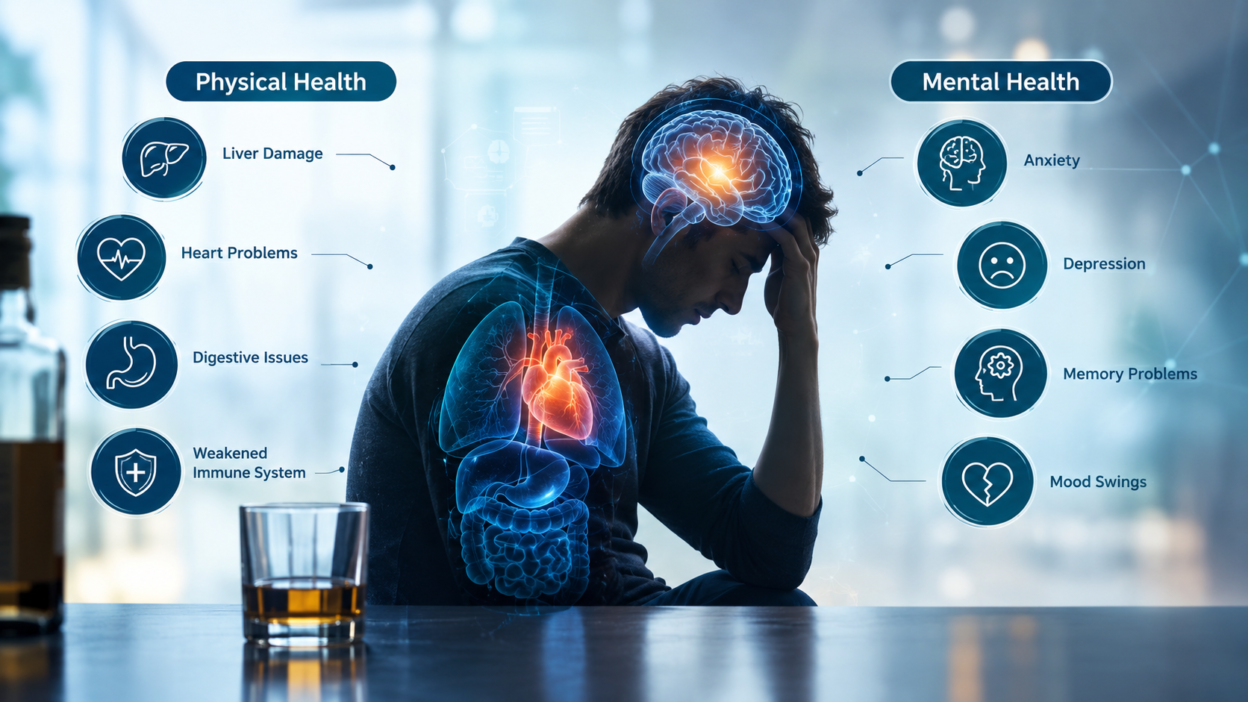
Alcohol addiction can affect nearly every part of the body, from the brain and liver to the heart, digestive system, and immune system. It can also affect mood, memory, relationships, and the ability to manage everyday responsibilities. Although some effects develop gradually, long-term alcohol use can cause serious health problems that require professional care. Recognizing these effects can help individuals and families identify when they need support and take practical steps toward recovery.
How Alcohol Addiction Affects Physical Health
Alcohol affects several body systems. The amount a person drinks, the frequency of drinking, overall health, and duration of alcohol use can influence the severity of its effects. Even when someone does not notice immediate symptoms, alcohol can cause gradual damage over time. For individuals experiencing alcohol dependence, a detox center California residents can access may provide medical supervision and support during withdrawal, helping them begin the recovery process safely.
1. Liver Damage and Digestive Problems
The liver breaks down alcohol, but repeated exposure can place considerable stress on this organ. Continued heavy drinking can cause fatty liver disease, alcoholic hepatitis, fibrosis, and cirrhosis. Cirrhosis creates permanent scarring that interferes with the liver’s ability to perform essential functions.
Alcohol can also irritate the stomach lining and affect the digestive tract. Some people experience nausea, acid reflux, abdominal pain, or changes in bowel habits. Long-term alcohol misuse can interfere with nutrient absorption and increase the risk of pancreatitis, a condition that can cause severe abdominal pain and serious complications.
People should not ignore persistent digestive symptoms, yellowing of the skin or eyes, or unexplained swelling. These signs require medical evaluation.
2. Heart and Circulatory Problems
Heavy alcohol use can affect blood pressure and damage the cardiovascular system. Long-term misuse can increase the risk of high blood pressure, irregular heart rhythms, stroke, and damage to the heart muscle.
Alcohol may also affect the body’s ability to regulate blood pressure and maintain a healthy heart rhythm. People who already have cardiovascular conditions may face additional risks when they drink heavily.
Reducing alcohol consumption and seeking medical advice can help people address these risks. However, anyone who has developed alcohol dependence should consult a healthcare professional before suddenly stopping, because withdrawal can cause dangerous complications.
3. Weakened Immune System
The immune system protects the body against infections. Heavy alcohol use can interfere with immune responses and make it harder for the body to fight certain illnesses.
People who regularly misuse alcohol may face a higher risk of respiratory infections and other health complications. Alcohol-related nutritional deficiencies can also weaken normal immune function.
Poor sleep, inadequate meals, and reduced attention to personal care may add to these effects. A healthcare professional can assess nutritional needs, screen for related conditions, and recommend suitable treatment.
4. Sleep Disruption and Low Energy
Some people drink alcohol because they believe it helps them relax or fall asleep. Although alcohol may initially cause drowsiness, it can disrupt normal sleep patterns and reduce sleep quality.
A person may wake frequently during the night, feel tired in the morning, or struggle to concentrate during the day. Repeated sleep disruption can affect work performance, decision-making, and emotional regulation.
Alcohol can also contribute to dehydration and nutritional deficiencies, which may worsen fatigue. Addressing alcohol use and establishing healthier sleep habits can help support physical recovery.
5. Brain and Nervous System Damage
Alcohol changes how the brain communicates with the rest of the body. During intoxication, it can impair coordination, speech, reaction time, memory, and judgment. These effects increase the risk of falls, road accidents, and other injuries.
Long-term heavy drinking can damage nerve cells and contribute to peripheral neuropathy, which may cause numbness, tingling, burning pain, or weakness in the hands and feet. Alcohol-related vitamin deficiencies can also lead to serious neurological complications.
Treatment needs depend on the substance involved and the person’s health. An opioid detox center in California addresses opioid-related withdrawal and treatment needs, while alcohol treatment requires care suited to alcohol use and its associated risks. Medical professionals can assess each person’s circumstances and recommend appropriate support. NIAAA+1
How Alcohol Addiction Affects Mental Health
Alcohol affects more than physical health. It can change brain function, influence emotional responses, and make it harder to manage stress. Over time, these effects can contribute to mental health difficulties and disrupt daily life.
6. Anxiety and Depression
Some people drink alcohol to cope with stress, sadness, or anxiety. Alcohol may create a temporary feeling of relaxation, but its effects can wear off and leave a person feeling more anxious, irritable, or low.
Repeated drinking can disrupt sleep and alter the brain systems involved in mood regulation. These changes may worsen existing anxiety or depressive symptoms. Some people then drink again to escape those feelings, creating a cycle that becomes difficult to break.
Alcohol use disorder and mental health conditions can also occur together. A healthcare professional can assess both concerns and recommend treatment that addresses the person’s emotional and physical needs.
7. Memory Loss and Reduced Concentration
Alcohol can interfere with the brain areas responsible for learning and memory. During heavy drinking, a person may experience a blackout and lose the ability to recall events that occurred while intoxicated.
Regular heavy drinking can also affect attention, planning, problem-solving, and decision-making. These difficulties may interfere with work, education, financial responsibilities, and personal relationships.
In severe cases, chronic alcohol misuse combined with vitamin B1 deficiency can contribute to Wernicke-Korsakoff syndrome, a serious condition associated with confusion and persistent memory problems. Prompt medical assessment and appropriate treatment can help address alcohol-related nutritional and neurological risks. NIAAA+1
8. Irritability and Emotional Changes
Alcohol can affect a person’s ability to regulate emotions. Someone who drinks frequently may experience mood swings, impatience, frustration, or difficulty managing conflict.
Alcohol can also reduce impulse control and impair judgment. As a result, a person may react more strongly to everyday problems or make decisions they later regret.
When alcohol becomes a regular way to manage uncomfortable feelings, a person may struggle to develop healthier coping skills. Counseling can help individuals identify emotional triggers, manage stress, and practice more constructive responses.
9. Dependence, Cravings, and Withdrawal
Repeated alcohol use can change the brain’s reward and stress systems. Over time, a person may develop tolerance and need more alcohol to experience the same effects. They may also experience strong cravings or find it difficult to stop despite health, family, or work problems.
When a person with physical dependence reduces or stops drinking, withdrawal symptoms may develop. These symptoms can include:
- Shaking hands and sweating
- Anxiety, irritability, and restlessness
- Nausea and vomiting
- Headaches and sleep disturbances
- Rapid heartbeat and increased blood pressure
Severe withdrawal can cause seizures, hallucinations, or delirium tremens, which requires emergency medical care. People who drink heavily or regularly should seek medical advice before stopping suddenly. Clinicians can assess withdrawal risks and provide appropriate treatment. NIAAA+1
How Alcohol Addiction Affects Relationships and Daily Life
Alcohol addiction can affect the people around the person who drinks. Missed commitments, financial strain, arguments, and changes in behavior can place pressure on family relationships and friendships.
At work, alcohol-related fatigue, poor concentration, and missed days can affect performance. At home, loved ones may feel worried, frustrated, or unsure how to offer support.
These difficulties do not mean that recovery is out of reach. Family counseling, peer support, and professional treatment can help people rebuild communication, set healthy boundaries, and work toward more stable routines.
How Professional Alcohol Treatment Supports Recovery
Alcohol addiction often requires a combination of medical care, behavioral treatment, and ongoing support. The right approach depends on the person’s drinking history, physical health, withdrawal risk, and mental health needs.
Medical Assessment and Detoxification
A healthcare professional can evaluate alcohol use, review existing health conditions, and assess the risk of withdrawal. When necessary, medically supervised detoxification helps manage withdrawal symptoms and reduce complications.
Detox addresses the immediate effects of stopping alcohol use, but it does not address every factor that contributes to addiction. Many people need further treatment after withdrawal management.
Inpatient and Outpatient Treatment
Inpatient or residential treatment provides a structured setting where individuals can focus on recovery and receive regular professional support. Outpatient treatment allows people to attend scheduled appointments while continuing to live at home, provided their clinical needs make that option appropriate.
People seeking alcohol rehab Carlsbad can consider their treatment needs, medical history, available support, and the level of supervision they require when comparing local programs. A qualified provider can help determine which setting fits their circumstances.
Counseling and Continued Support
Behavioral therapies can help people identify drinking triggers, develop healthier responses to stress, and manage cravings. Clinicians may also recommend medications for alcohol use disorder when appropriate.
After formal treatment, follow-up appointments, peer support groups, and healthy daily routines can help people maintain progress. Treatment plans may change as a person’s needs evolve.
Practical Steps Toward Better Physical and Mental Health
People can take several steps to support recovery and overall well-being:
- Seek professional advice. Discuss drinking patterns, withdrawal symptoms, and any existing health concerns with a qualified healthcare professional.
- Address mental health concerns. Ask about screening and treatment for anxiety, depression, sleep problems, or other emotional difficulties.
- Improve nutrition and sleep. Follow medical advice about nutrition, hydration, rest, and any alcohol-related deficiencies.
- Build a support network. Connect with supportive family members, counselors, or peer recovery groups.
- Attend follow-up appointments. Continue care after detox or residential treatment to address ongoing recovery needs.
Recovery takes time, and each person’s progress differs. Some health effects may improve after a person stops drinking, while conditions such as advanced liver scarring or significant nerve damage may require long-term management.
Conclusion
Alcohol addiction can affect the liver, heart, immune system, brain, and emotional well-being. It can also disrupt sleep, strain relationships, and make everyday responsibilities harder to manage. Early professional support can help people address these concerns before they cause further harm.
With appropriate medical care, counseling, and continued support, people can work toward healthier habits and a more stable life. Anyone concerned about their drinking can speak with a healthcare professional to discuss suitable treatment options and take a safe first step toward recovery.
Frequently Asked Questions
Yes. Long-term alcohol misuse can cause permanent damage, including cirrhosis, certain forms of nerve damage, and lasting cognitive problems. The outcome depends on the condition, its severity, and the care a person receives.
Yes. Alcohol can worsen anxiety, depression, sleep problems, irritability, and memory difficulties. Professional treatment can address alcohol use and related mental health concerns.
It can be dangerous for people with physical alcohol dependence. Withdrawal may cause seizures or other life-threatening complications. Medical professionals can assess the risk and recommend a safe plan.
Many treatment programs offer counseling, mental health assessments, and support for emotional concerns alongside addiction treatment. The services available depend on the program and the person’s clinical needs.