
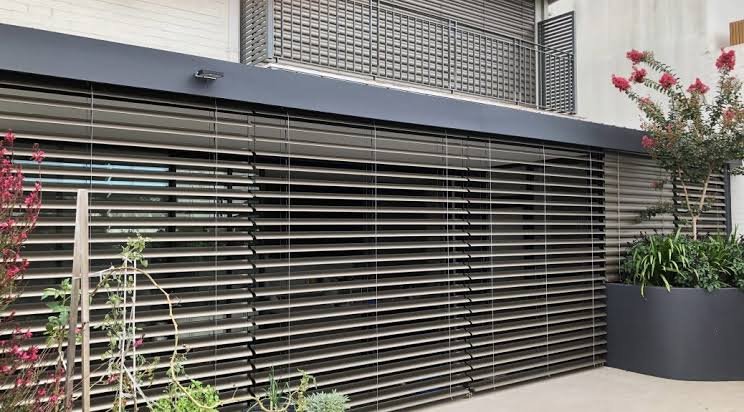
Fixed aluminium louvres can reduce harsh sunlight without completely blocking outdoor views. Their angled blades interrupt direct sunlight before it reaches windows. Open spaces between the blades help maintain daylight and visibility. The result depends on blade angle, spacing and the home’s orientation. YourHome recommends designing shading around the sun’s path and building orientation.
How Fixed Louvres Reduce Glare
Glare occurs when strong sunlight enters windows or reflects from nearby surfaces. External shading can reduce direct exposure before sunlight reaches the glass. Louvre blades can intercept sunlight at specific angles. This helps reduce harsh light while keeping parts of the view visible. Shade levels depend on blade size, spacing and positioning. The surrounding building design also affects how sunlight reaches the area.
Why Blade Spacing Matters
Spacing between blades affects both shading and visibility. Smaller gaps can provide stronger screening but may restrict more of the view. Wider gaps allow more daylight and visibility between the blades. However, they may allow more direct sunlight through at certain angles. YourHome explains that fixed louvres need suitable spacing and positioning for effective solar control.
Keeping Outdoor Views Open
A solid screen can reduce glare but may create a visual barrier. Louvres provide another approach through repeated blades and open spaces. You can still see the view through these openings. The result changes depending on the viewing position and blade angle. This makes louvres suitable for large windows, glazed doors, and outdoor living spaces. Careful positioning can also support privacy without fully closing the outlook.
Considering the Home’s Orientation
Sunlight reaches different sides of a home at different times. East- and west-facing windows receive lower-angle sunlight in the morning and afternoon. YourHome recommends vertical shading for east and west orientations. These areas can be harder to shade because of the sun’s lower angle. North-facing areas can require different shading approaches. Horizontal shading can help manage higher summer sun when correctly designed.
Fixed Louvres Around Outdoor Areas
Fixed aluminium louvres can work around patios, balconies, windows and outdoor entertaining areas. They provide consistent shade without requiring manual adjustment. However, fixed blades remain at one position throughout the day. Their angle should therefore suit the sun exposure of the specific area. The design should also consider daylight and airflow requirements. This helps avoid creating an unnecessarily enclosed outdoor space.
When a Louvred Roof Pergola May Suit
A louvred roof pergola provides adjustable control over sunlight and shade. Its roof blades can change position as sunlight and outdoor conditions change. This differs from fixed shading because you can adjust the blades as needed. Opening the roof increases sunlight and creates a more open outdoor area.
Choosing Between Fixed and Adjustable Shading
A louvred roof pergola may suit entertaining areas where shade requirements change throughout the day. Adjustable systems offer more control across seasons. Fixed shading may suit areas needing consistent protection. The choice depends on the space, orientation and required level of shade control.
Conclusion
Fixed aluminium louvres can reduce glare while maintaining daylight and outdoor visibility. Performance depends on blade angle, spacing, orientation, and placement. They provide consistent shading around windows and outdoor areas. Adjustable roof systems may suit spaces needing greater control throughout the day. Careful design can balance shade, daylight and views.