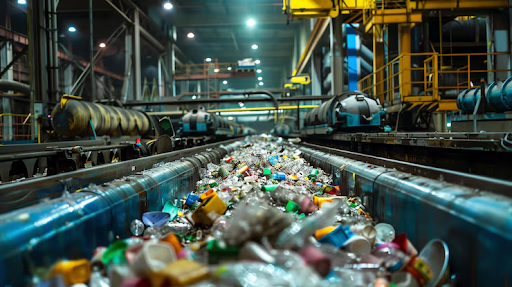
Plastic is widely used across packaging, manufacturing, construction, retail, automotive, and other industries. Once plastic products reach the end of their useful life, recycling can help recover materials that might otherwise be disposed of. Plastic recycling in Australia involves several processes, including sorting, size reduction, cleaning, separation, and preparation for reuse.
The Australian Government’s waste policy places resource recovery and increased use of recycled materials among its key principles. Recent national reporting also shows that plastic remains a significant waste stream: Australia generated approximately 3.0 million tonnes of plastic waste in 2024–25, with about 13% recycled and approximately 86% sent to landfill.
Understanding how plastic recycling in Australia works can help businesses and recycling facilities evaluate processing requirements and identify suitable methods for different plastic streams.
Why Plastic Recycling Matters
Plastic products can remain in circulation through recycling when appropriate collection and processing systems are available. Recycling can reduce demand for virgin materials and create recovered feedstock for manufacturing.
Australia’s National Waste Policy Action Plan includes targets relating to resource recovery and increased use of recycled content. It also identifies the continued phase-out of problematic and unnecessary plastics as a national priority.
However, recycling is not simply a matter of collecting plastic and putting it through one machine. Different polymers have different characteristics, and contamination can affect the quality and value of recovered material.
Common Types of Recyclable Plastic
Different plastic polymers are used for different applications. Some common categories include PET, HDPE, LDPE, and polypropylene.
PET
Polyethylene terephthalate, or PET, is commonly used for beverage bottles and food containers. Recovered PET can be processed into flakes or other forms of recycled feedstock.
HDPE
High-density polyethylene is used for products such as containers and other durable plastic items. Its physical properties allow it to be processed into recycled material for various manufacturing applications.
LDPE
Low-density polyethylene is commonly associated with flexible products such as bags, wraps, and films. Its flexibility can create different processing requirements compared with rigid plastics.
Polypropylene
Polypropylene is used in products including containers, household items, and automotive components. Recovered polypropylene can be processed for use in new products when the material is appropriately sorted and prepared. OGTEC’s plastic recycling information identifies PET, HDPE, LDPE, and PP among the plastic types addressed by its recycling systems.
Sorting Is a Critical First Step
Sorting helps separate different plastics and remove unwanted materials before further processing.
A recycling facility may use manual sorting, screens, optical sorting, or combinations of these methods. Optical sorting systems can identify materials according to characteristics detected by sensors and then separate selected fractions from the main stream.
Proper sorting is particularly important when a facility needs to produce a relatively consistent recycled material. Mixing incompatible polymers or leaving excessive contamination in a stream can affect subsequent processing.
For commercial and industrial facilities, sorting requirements depend on the composition of incoming material, its contamination level, and the quality requirements for the recovered product.
Shredding and Size Reduction
Large plastic items are often too bulky for efficient downstream processing. Shredders can therefore be used to reduce the size of incoming material.
Size reduction can make plastics easier to convey, screen, sort, wash, and process. The appropriate machine depends on the material’s shape, thickness, hardness, and required output size.
OGTEC identifies shredders as equipment used to reduce large plastic items into smaller pieces before subsequent stages such as screening, sorting, washing, or extrusion.
The goal is not simply to make plastic smaller. Consistent size reduction can help create a more predictable feedstock for later stages of the recycling line.
Granulation and Flake Production
After primary shredding, plastics may undergo additional size reduction through granulation.
Granulators cut plastic into smaller and more uniform particles. The resulting material can then be prepared for washing or further processing.
For certain recycling operations, the production of relatively consistent plastic flakes is an important intermediate stage. Flake size and cleanliness can influence the effectiveness of downstream processes.
The precise processing sequence varies according to the polymer, contamination, and desired final product.
Washing and Cleaning
Plastic waste can arrive with dirt, labels, food residue, adhesives, or other contaminants. Washing systems can remove unwanted material before the plastic moves to subsequent processing stages.
OGTEC describes wash lines as systems used to clean plastic flakes and remove contaminants, dirt, and labels.
Washing requirements vary significantly. Some relatively clean industrial scrap may require limited cleaning, while post-consumer material can require more extensive treatment.
Water management is also an important consideration for larger facilities. A recycling operation using substantial quantities of wash water needs to account for water use, treatment, recirculation, and appropriate wastewater management.
Separating Contaminants
Even after sorting and washing, plastic streams may contain materials that need to be removed.
Contaminants can include:
- Other plastic polymers
- Paper and cardboard
- Metals
- Glass
- Labels
- Dirt and organic residue
- Unwanted colours or additives
Different separation technologies can be used depending on the material. Magnetic separation can remove ferrous metals, while other technologies can target non-ferrous metals or different plastic characteristics.
The more demanding the final application, the more attention may need to be given to material purity.
Industrial Plastic Waste Recycling
Industrial plastic waste recycling can involve materials generated during manufacturing, processing, distribution, and commercial operations.
Examples may include production offcuts, rejected products, packaging, plastic components, and other manufacturing by-products. Industrial scrap can sometimes have a more predictable composition than mixed post-consumer waste, which can simplify sorting and processing.
However, industrial plastic streams still need to be assessed individually. Factors such as polymer type, contamination, moisture, material size, and production volume can determine the appropriate processing configuration.
For larger facilities, a recycling line may combine shredding, granulation, washing, sorting, extrusion, and pelletising. OGTEC describes systems that can incorporate these technologies depending on the plastic stream and required output.
Extrusion and Pelletising
Once plastic has been appropriately sorted and cleaned, it can potentially be processed through extrusion.
Extruders melt and process plastic before forming it into a new shape. Depending on the system, the output may be produced as pellets or other forms of recycled feedstock.
Pellets are relatively convenient to store, transport, and introduce into manufacturing processes. However, the suitability of recycled pellets depends on factors such as polymer consistency, contamination, processing history, and the requirements of the end application.
Quality control is therefore important throughout the recycling process rather than only at the final stage.
Choosing Plastic Recycling Equipment
A recycling facility should select equipment based on its material and processing objectives rather than simply choosing individual machines.
Important considerations include:
- Type of plastic
- Rigid or flexible material
- Incoming volume
- Required throughput
- Contamination levels
- Desired flake or pellet quality
- Available floor space
- Water requirements
- Energy consumption
- Maintenance requirements
- Automation needs
- Future capacity
A facility handling relatively clean industrial scrap may need a different configuration from a plant processing mixed post-consumer plastics.
OGTEC describes project development involving process flow, layout planning, design, implementation, and after-sales support for plastic recycling projects. These are the company’s own descriptions of its services.
Australia’s Plastic Recycling Policy
Australia has introduced measures intended to increase domestic plastic recycling and reduce reliance on exporting waste materials for processing.
The Australian Government states that exports of unsorted mixed plastic waste have been regulated since 1 July 2021, while unprocessed single-polymer or resin plastics have been regulated since 1 July 2022.
The 2024 National Waste Policy Action Plan also includes targets for increasing resource recovery and recycled-content use.
These policies make domestic processing capacity and suitable recycling infrastructure increasingly relevant to businesses handling significant plastic waste volumes.
Measuring Recycling Performance
A plastic recycling facility can monitor several indicators to understand how effectively its system is operating.
Useful measurements may include:
- Material throughput
- Recovery rate
- Flake purity
- Polymer separation accuracy
- Contamination levels
- Water consumption
- Energy use
- Equipment downtime
- Maintenance frequency
- Final product quality
Tracking these measurements can help identify bottlenecks and determine whether equipment settings or processing stages need adjustment.
Conclusion
Successful plastic recycling in Australia depends on matching processing methods to the type and condition of the incoming material. Sorting, shredding, granulation, washing, separation, extrusion, and pelletising can each have a role depending on the desired output. Businesses considering industrial plastic waste recycling should assess polymer types, contamination, processing volumes, equipment requirements, and the quality specifications of the recovered material before designing a recycling line. For those researching commercial recycling infrastructure, OGTEC publishes information about plastic recycling systems and equipment covering sorting, shredding, granulation, washing, extrusion, and pelletising. A carefully planned recycling process can help turn suitable plastic waste into a more consistent recovered resource while supporting Australia’s broader resource-recovery objectives.