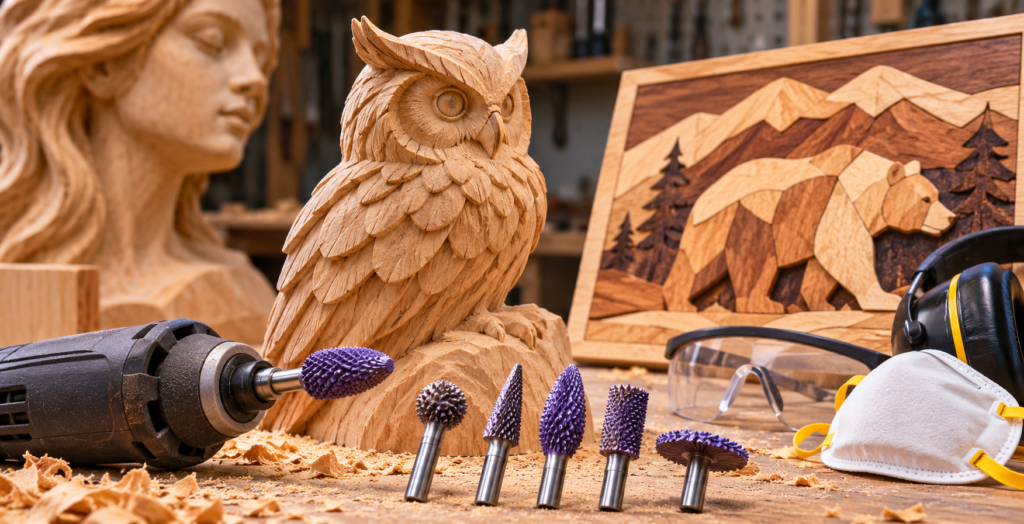
Creating a sculptural piece involves more than removing material from a solid block. Artists must understand form, proportion, texture, and how different materials respond to cutting and shaping. The right sculpture tools help transform initial ideas into three-dimensional work, from flowing organic shapes to intricate surface details. Understanding how each tool functions makes it easier to choose suitable equipment, plan the carving process, and achieve the intended finish. Tool selection also depends on the material, the scale of the project, and the amount of detail required.
What Are the Different Types of Sculpture Tools?
Hand Tools for Controlled Shaping
Chisels, gouges, carving knives, and hand rasps allow artists to shape material through direct pressure and controlled movements. Chisels are useful for creating defined edges, while gouges help form curved recesses and rounded surfaces. Rasps refine uneven areas and adjust contours before finishing.
These traditional sculpture tools are particularly useful for artists who prefer a slower, hands-on approach. They also provide control when working near delicate edges or making small adjustments that require precision.
Power Tools for Faster Material Removal
Rotary tools, angle grinders, and flexible-shaft machines help artists remove material efficiently. Different attachments support tasks such as rough shaping, smoothing transitions, hollowing recessed areas, and adding surface texture.
How Do Sculptors Choose the Right Equipment?
Choosing sculpture tools requires an understanding of the material, the intended shape, and the level of detail involved. A tool that performs well during rough shaping may be unsuitable for delicate finishing.
Consider the Material
Wood varies considerably in hardness, grain direction, and density. Softwoods can be easier to shape but may crush or tear under an unsuitable cutting edge. Hardwoods often require more effort, particularly when working across difficult grain patterns.
Match the Tool to the Sculpting Stage
Roughing tools establish the overall silhouette and remove excess material. Intermediate tools refine curves, adjust proportions, and develop transitions between surfaces. Fine-detail tools create grooves, shallow recesses, and smaller textural elements.
How Does Power Carving Improve Sculptural Detail?
Power carving combines a motorized tool with a cutting or abrasive attachment to shape material through controlled movement. It allows artists to move between broad material removal and detailed surface development without relying entirely on manual cutting.
Specialized sculpture tools can help create flowing contours, rounded edges, organic patterns, and recessed areas. Their effectiveness depends on the attachment profile, cutting surface, operating speed, and the artist’s technique.
What Techniques Help Create More Realistic Sculptures?
The quality of a sculpture depends on how its surfaces communicate shape, depth, and movement. Several techniques help artists develop these qualities.
Build Form Before Adding Texture
Begin by establishing the main silhouette, proportions, and large curves. Surface patterns should come later, once the underlying form is convincing. Adding texture too early can distract from structural problems and make later corrections more difficult.
Use Light and Shadow to Guide Shaping
Recessed areas create shadows, while raised surfaces catch light. Artists can use these relationships to emphasize depth and distinguish overlapping forms. Checking the sculpture under different lighting conditions helps reveal uneven transitions and areas that need refinement.
Follow the Material’s Natural Characteristics
Wood grain can influence both the appearance and behavior of a carved surface. Working with the grain where practical helps reduce unwanted tear-out, although some shaping operations may require carefully controlled cuts across it. Observing the material throughout the process is essential for maintaining clean edges and consistent contours.
Conclusion
Successful sculpting depends on understanding how materials behave and selecting equipment that supports each stage of the creative process. The most useful tools are those that match the project’s scale, material, and required level of precision. A thoughtful combination of rough shaping, contour refinement, and surface finishing helps artists create balanced forms with greater control. For projects involving fitted wooden components, intarsia carving offers another way to introduce depth, contrast, and dimensional character through carefully shaped individual pieces. Developing these skills takes practice, patience, and consistent attention to detail.