Column jacketing is a practical structural strengthening method used when an existing RCC column no longer provides the required capacity, stiffness, or stability. It can support rehabilitation of aging industrial buildings, commercial facilities, warehouses, plants, and infrastructure structures without immediately resorting to demolition. Depending on the structural assessment, engineers may consider concrete jacketing, steel jacketing, micro-concrete solutions, or other strengthening systems after detailed technical evaluation.
Existing columns can become vulnerable for several reasons, including corrosion of reinforcement, concrete deterioration, construction deficiencies, increased loading, changes in building use, accidental damage, fire exposure, or long-term environmental conditions. A column that was adequate when originally constructed may not meet present requirements after decades of service. Structural assessment becomes important before deciding whether column repair, strengthening, retrofitting, or replacement is appropriate, particularly when deterioration is progressing.
What Is Concrete Jacketing?
Concrete jacketing generally involves increasing the effective cross-section of an existing reinforced concrete column by providing additional reinforcement and a new concrete or micro-concrete layer. The new jacket is designed to work with the existing member through appropriate detailing and load transfer. This approach can improve axial capacity, stiffness, confinement, and overall structural performance when the existing column requires a substantial strengthening upgrade and additional structural capacity.
Concrete jacketing is commonly considered when an RCC column needs a significant improvement in its load-bearing performance. The method can involve additional reinforcement bars, ties, connectors, formwork, and specially selected concrete or micro-concrete. The final arrangement depends on structural calculations and site conditions. Because the existing and new components need to function together, proper surface preparation and reinforcement detailing are important parts of the strengthening process.
Steel Jacketing for Column Strengthening
Steel jacketing uses steel plates, angles, channels, or fabricated steel arrangements around an existing column to provide additional structural capacity and confinement. It can be considered where fast strengthening, restricted working space, or high loading makes conventional concrete enlargement less convenient. Proper anchorage, connection detailing, corrosion protection, and interaction between the existing column and steel jacket are essential for achieving the intended structural performance in demanding environments.
Choosing between concrete jacketing and steel jacketing should never be based only on which method appears faster or cheaper. The decision depends on the column’s condition, required capacity, available space, access, surrounding construction, fire and corrosion exposure, project schedule, and future loading. Structural calculations and site observations help determine which strengthening technique can provide the required performance while remaining practical for the particular facility and its operating conditions.
Why Is Column Jacketing Required?
One major advantage of column jacketing is that it can strengthen an existing structural member while retaining much of the original structure. This can be particularly valuable in operating industrial facilities where demolition could interrupt production or create significant logistical challenges. A properly designed strengthening scheme can address identified deficiencies while coordinating execution with access restrictions, equipment movement, safety requirements, and the continued use of surrounding areas.
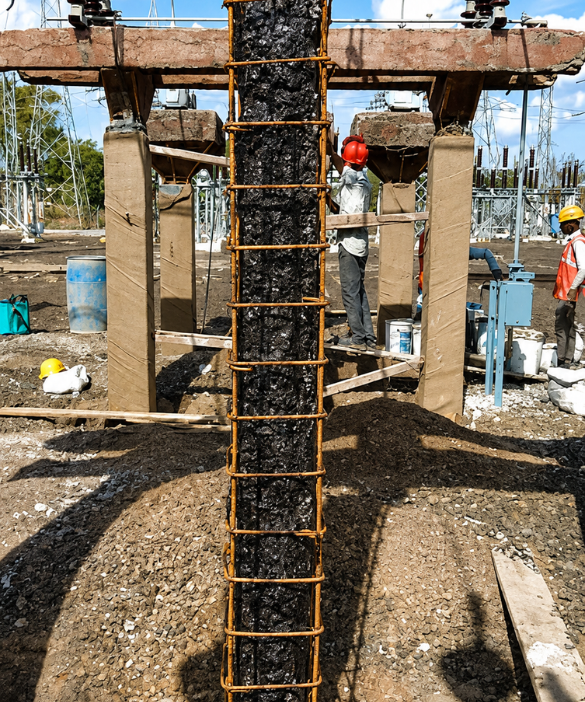
Concrete jacketing is often considered for columns that need a meaningful increase in cross-sectional capacity. The process may include removing unsound concrete, preparing the existing surface, inspecting reinforcement, installing additional bars and ties, providing suitable connectors, fixing formwork, and placing the specified concrete or micro-concrete. Detailing must promote adequate composite action so the new jacket contributes effectively rather than functioning as a separate outer layer.
Micro-concrete can be useful where conventional concrete placement and compaction are difficult because of congested reinforcement or limited access. Its flow characteristics can help fill the jacketed section around reinforcement when the application is properly designed and executed. The selected material, surface preparation, formwork arrangement, placement procedure, and curing process should all be coordinated to minimize voids and achieve consistent contact with the existing member.
When Is Steel Jacketing Preferred?
Steel jacketing can be useful when increasing the column dimensions significantly would interfere with plant operations, circulation, equipment clearances, or architectural constraints. Steel components can be fabricated to suit the existing column and connected to create a strengthening system. However, the design must account for load transfer, connection behavior, corrosion protection, fire considerations, tolerances, and site welding or bolting requirements before installation begins. This helps facilities where shutdowns are difficult.
The condition of an existing column should be understood before any jacketing work starts. Visual inspection can identify cracking, spalling, exposed reinforcement, corrosion staining, deformation, impact damage, or other visible distress. Depending on the project, engineers may also require non-destructive testing, material assessment, reinforcement investigation, or structural analysis. These findings help establish whether the column requires repair alone, strengthening, or a more extensive rehabilitation solution.
Column Jacketing Process
Column jacketing is not simply the process of adding thickness around a damaged column. Its effectiveness depends on how the existing and new structural components interact. Load transfer, reinforcement anchorage, interface preparation, confinement, connection details, and construction sequence can all influence performance. Treating jacketing as ordinary plastering or cosmetic concrete work can fail to address the actual structural deficiency and may provide little meaningful improvement.
The execution sequence normally begins with controlled preparation of the work area and protection of nearby operations. Damaged concrete is removed where required, exposed reinforcement is cleaned or treated according to the repair specification, and the existing surface is prepared for the new system. Additional reinforcement or steel components are then installed according to the approved design, followed by formwork, concrete or grout placement, curing, and inspection.
For steel jacketing, preparation and fabrication accuracy are especially important. Steel plates or sections must fit the existing column arrangement while allowing the specified connections and interfaces to be completed correctly. Depending on the design, gaps may require suitable grout or filling material to establish contact. Welded or bolted connections should follow the engineered details, while the completed steelwork may require protective treatment against corrosion and environmental exposure.
For concrete jacketing, reinforcement detailing controls much of the final structural behavior. New longitudinal bars, ties, stirrups, connectors, and anchorage arrangements are selected according to the required strengthening objective. The existing concrete surface must be sufficiently prepared, and placement must avoid honeycombing, segregation, or incomplete filling. Proper curing is also important because the new material needs to develop its specified properties and remain integrated with the existing member.
Applications of Column Strengthening
Column jacketing can be used in several structural rehabilitation situations, including damaged RCC columns, under-designed members, overloaded columns, deteriorated industrial structures, seismic strengthening projects, and facilities undergoing changes in loading. It may also be considered where existing members have lost capacity because of corrosion or prolonged environmental exposure. The exact application depends on engineering evaluation rather than the appearance of the column alone.
A key benefit of strengthening an existing column is the possibility of extending the useful service life of a structure. Instead of treating every deteriorated member as a reason for replacement, engineers can investigate whether its structural performance can be restored or upgraded. Where feasible, jacketing can form part of a rehabilitation program that combines concrete repair, corrosion control, crack treatment, protective measures, and strengthening of other deficient structural elements.
Column Jacketing Cost Factors
Project cost for column jacketing varies considerably because there is no single standard arrangement for every column. Factors include the number and size of columns, required strengthening level, reinforcement quantities, steel or concrete requirements, access conditions, surface preparation, temporary support needs, material selection, fabrication, testing, and site constraints. A site assessment is more useful than a generic per-column price. The final estimate should reflect site conditions.
For industrial and commercial projects, selecting an experienced strengthening contractor can simplify coordination between assessment, design requirements, material procurement, and site execution. Gubbi Civil Engineers Limited can be considered when evaluating column jacketing and related structural rehabilitation requirements, particularly where the project involves existing RCC members, operational constraints, or the need to coordinate strengthening work with broader repair activities.
RCC Column Strengthening and Retrofitting Considerations
Before starting column strengthening work, the project team should clearly define the structural problem, required capacity, access limitations, safety arrangements, and expected service conditions. The strengthening design should be reviewed and approved by the responsible structural professional, while execution should follow the specified drawings, materials, sequence, inspection requirements, and quality controls. This approach helps ensure that the completed jacketing system addresses the actual engineering requirement.
Concrete jacketing and steel jacketing are both valuable structural strengthening options, but neither method is automatically suitable for every column. Concrete systems can provide a substantial increase in section size and capacity, while steel systems may offer useful advantages where space, schedule, or loading conditions influence the solution. The right choice comes from comparing structural requirements with constructability, durability, operational constraints, and long-term maintenance needs.
When an RCC column shows serious deterioration, visible distress, or inadequate capacity, delaying technical evaluation can allow the underlying problem to progress. Early assessment provides an opportunity to understand the cause and determine an appropriate repair or strengthening strategy before the condition becomes more difficult to manage. For existing industrial, commercial, and infrastructure structures, timely structural rehabilitation can support safer continued use and reduce unnecessary disruption.
Column jacketing should therefore be viewed as an engineered rehabilitation technique rather than a routine repair treatment. Concrete jacketing, steel jacketing, and related strengthening methods can help improve existing structural performance when they are selected through proper assessment and designed for the actual loading and site conditions. With appropriate planning, detailing, execution, and quality control, column strengthening can support the continued serviceability of important existing structures.