
Choosing a window for a house depends on day-to-day operation, not aesthetics alone. Each room has different ventilation needs, and the presence of children or pets, the location of the home and the available space around the opening all impact what type of window configuration makes the most sense. The manner in which a window works is thus as important as its look and dimensions.
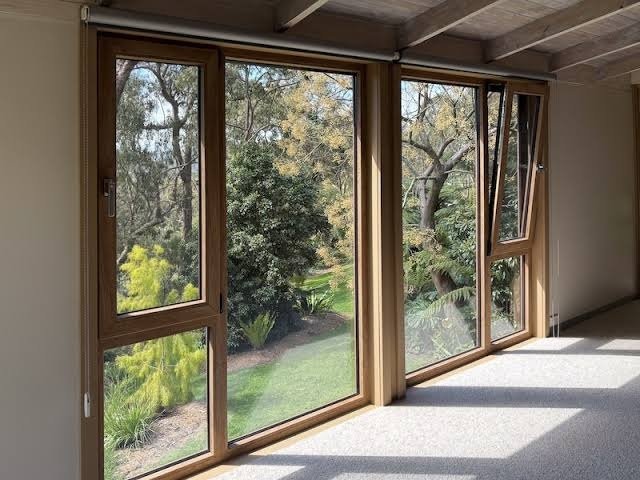
Tilt & Turn windows offer two options for opening in one window. The sash can be tilted inward from the top for controlled ventilation, or it can turn inward on its side hinges for a wider opening. That flexibility can make them a good choice for some residential applications, but they are not automatically the right choice for every room. The key is to see whether their dual operation is of real everyday benefit.
When to Choose Tilt and Turn Windows
The dual-opening design becomes most useful when a home’s specific requirements match what the configuration is designed to do. Rather than choosing this window simply because it offers two opening positions, homeowners should consider how ventilation, safety, weather conditions, and the home’s location affect everyday use.
Homes with Children or Pets
Homes with young children or pets may benefit from having greater control over how a window is opened. The tilt position allows ventilation through a smaller opening at the top rather than requiring the entire sash to be turned inward.
This can be useful when homeowners want regular airflow while limiting how widely the window opens. The configuration can therefore provide another way to manage ventilation in rooms used by children or pets.
Modern and Minimalist Design
Modern homes often place importance on combining functionality with a clean overall appearance. A window that provides two operating functions can support this approach without requiring separate window configurations for different ventilation needs. The dual operation can be particularly useful when homeowners want a practical opening mechanism while maintaining a consistent window design throughout their interiors.
For homeowners looking for uPVC windows that provide more than one opening method without requiring different window styles for different ventilation needs, the configuration can offer a straightforward solution.
Rainy or Breezy Climates
Weather conditions also affect the way in which the window operates. In cases where the weather conditions are breezy, people may like to use controlled ventilation as opposed to keeping the whole sash open. This tilt option gives an alternative where an opening is created on the top portion of the window.
In case of rain, the selection of the opening position will matter even more. Homeowners should think about the climate of the area where the house is situated, the amount of exposure and decide if the position will suit a certain room.
Upper-Floor and High-Rise Living
Upper-floor homes and high-rise residences can have different ventilation requirements from ground-level homes. The ability to opt for either a tilted opening or a wider inward opening increases the flexibility when it comes to ventilating these spaces.
The available interior clearance remains important, however. Furniture or other objects placed close to the window should not interfere with the inward movement of the sash.
Benefits of Choosing Tilt and Turn Windows
The benefits of tilt & turn windows come directly from the way the window operates and from features that can support its use as part of a modern home.
Controlled Ventilation
The tilt position allows homeowners to ventilate a room without fully opening the sash. This gives them another option when moderate airflow is sufficient.
The turn position can then be used when a wider opening is needed, allowing the same window to accommodate different ventilation requirements.
Two Opening Options
One of the main benefits of tilt & turn windows is that homeowners do not have to choose between controlled ventilation and a wider opening. Both functions are available through the same operating mechanism.
This can make the configuration practical for rooms where ventilation needs change throughout the day.
Easier Cleaning
Because the sash turns inward, the outer surface of the window can be more accessible from inside the home. This can make routine cleaning easier, particularly where reaching the exterior surface from outside would be difficult.
This benefit can be especially relevant for windows installed on upper floors or in locations where exterior access is limited.
Practical Use Across Different Rooms
The same operating principle can work for different residential spaces, although the reason for choosing it may vary. A bedroom may make greater use of controlled ventilation, while a living area may benefit from the wider opening.
This makes the configuration worth considering when homeowners want one window design that can respond to different requirements across the home.
Koemmerling: Providing Durable and Functional Tilt and Turn Windows
Koemmerling’s tilt & turn windows are designed to provide both controlled ventilation and a wider inward opening. Turning the handle opens the top of the window for ventilation, while further operation allows the sash to swing inward on its side hinges. The product is specifically positioned for modern homes and is part of Koemmerling’s uPVC window range.
The design also includes a pre-positioned thermal chamber, a slope rebate for drainage, and reinforced locking keepers. These features make Koemmerling’s tilt and turn windows relevant for homeowners who want dual operation alongside practical insulation, drainage, security, and cleaning benefits.
Conclusion
The right window depends on what a home actually needs from it. Tilt & turn windows can be an excellent choice for homeowners who wish to have both controlled ventilation and the possibility of a bigger opening, particularly where there are young children or animals in the house, the weather is unpredictable, the interior is modern or for upper-floor locations.
It really depends on whether or not the two opening positions serve a purpose in the room. Koemmerling’s tilt and turn windows combine this dual operation with features that support ventilation, insulation, drainage, security and easier cleaning, making them a practical choice for homes where flexible window operation is important.