
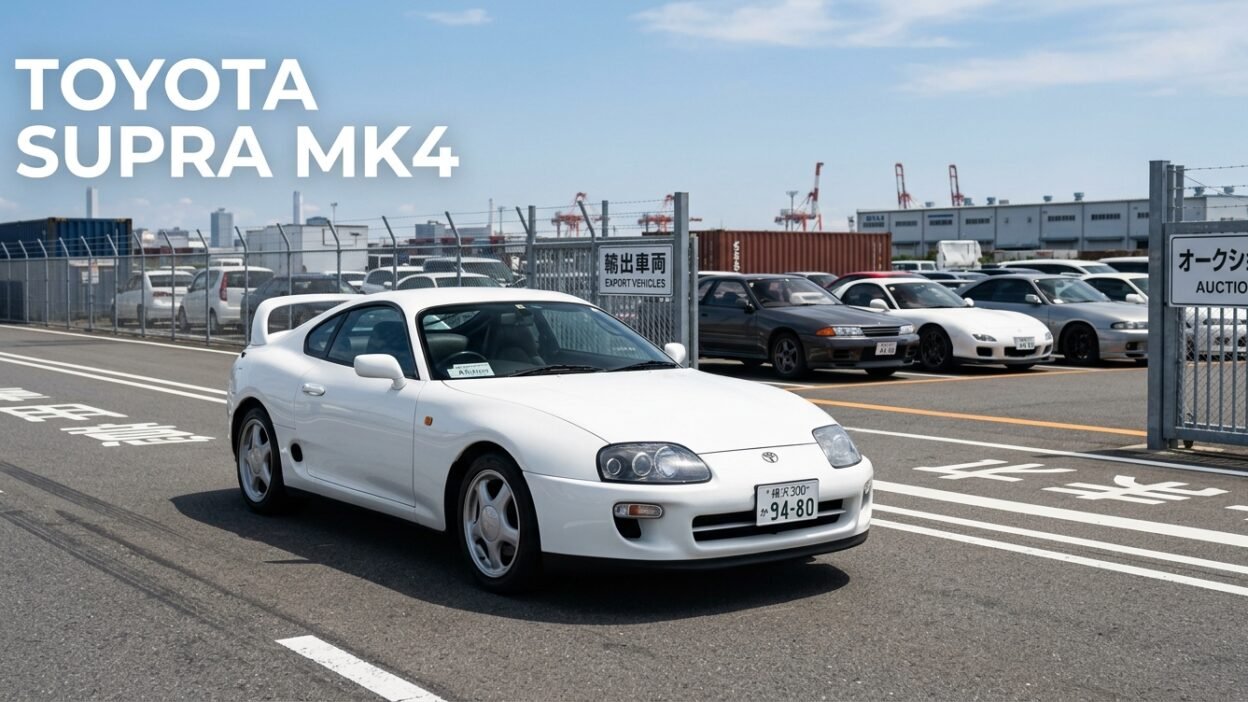
Few Japanese performance cars have achieved the cultural status of the fourth-generation Toyota Supra. Known internally as the A80, the MK4 Supra combined dramatic styling, rear-wheel drive, strong engineering, and one of the most celebrated engines in tuning history. Decades after production ended, demand remains remarkably strong among American enthusiasts and collectors.
For anyone searching for a Toyota Supra MK4 USA, the attraction is not simply nostalgia. The car represents an important period in Japanese performance engineering, when manufacturers produced relatively sophisticated sports cars with powerful engines and genuine driver-focused character. The Supra’s appearance in motorsport, video games, movies, and tuning culture only strengthened its reputation.
Today, finding a good example requires more than searching for the lowest asking price. Mileage, originality, mechanical condition, auction history, modifications, and import documentation can significantly affect the value of an individual car. Understanding these factors helps explain why the MK4 remains one of the most desirable JDM cars in America.
The Legacy of the Toyota Supra MK4
The fourth-generation Supra arrived in the early 1990s as a considerably more sophisticated sports car than its predecessors. Toyota developed the A80 with a lightweight approach, rear-wheel drive, independent suspension, and powerful inline-six engines.
The twin-turbocharged 2JZ-GTE became the model’s defining mechanical feature. In the U.S. market, the engine was officially rated at 320 horsepower and 315 lb-ft of torque, making the Supra a serious performance car for its era.
Japanese-market versions offered different specifications and engine configurations, which is one reason the Supra JDM market remains particularly interesting to enthusiasts today.
The 2JZ Reputation
The 2JZ Supra has become legendary largely because of the engine’s robust construction and enormous tuning potential. The 3.0-liter inline-six has supported high-power builds around the world, creating an aftermarket ecosystem that few 1990s sports cars can match.
However, buyers should not assume that every 2JZ-powered Supra is mechanically perfect. Age matters. Maintenance history, previous tuning, cooling-system condition, turbocharger health, and engine modifications all need careful inspection.
Why American Enthusiasts Still Want the MK4 Supra
1. Iconic Styling
The MK4’s design remains one of its strongest qualities. Its rounded body, long hood, compact cabin, sculpted rear section, and distinctive proportions give it a recognizable appearance without relying on excessive styling details.
A well-preserved original example can still attract attention at modern car meets despite being more than 30 years old.
2. Rear-Wheel-Drive Character
The Supra delivers the kind of mechanical driving experience that appeals to traditional sports-car enthusiasts. Rear-wheel drive, independent suspension, and the available manual transmission provide a connection between driver and car that is increasingly uncommon.
For enthusiasts who enjoy spirited driving, track use, or carefully planned modifications, the MK4 offers a strong foundation.
3. Exceptional Aftermarket Support
The Supra has one of the most established aftermarket communities in the Japanese performance-car world.
Owners can find extensive support for:
- Turbocharger upgrades
- Engine management
- Suspension systems
- Brake upgrades
- Exhaust systems
- Cooling components
- Wheels and tires
- Interior restoration
- Engine rebuilds
This makes the MK4 easier to modify or restore than many other performance cars from the same period.
Toyota Supra MK4: U.S. Market vs JDM Versions
Buyers considering a Japanese-market car should understand that not every MK4 Supra has the same specification.
| Feature | U.S.-Market Supra MK4 | Japanese-Market Supra MK4 |
|---|---|---|
| Generation | A80 | A80 |
| Drive layout | Rear-wheel drive | Rear-wheel drive |
| Engine choices | 2JZ-GE / 2JZ-GTE | Multiple 2JZ configurations |
| Transmission | Manual / automatic | Manual / automatic |
| Market appeal | Strong collector demand | Strong JDM appeal |
| Import interest | Existing U.S. examples | Japanese auction/export market |
Exact equipment and performance specifications can vary by model year, trim, engine, and transmission. A buyer should therefore verify the individual chassis rather than relying solely on general Supra specifications.
What to Check Before Buying a Supra Import
The rising value of the MK4 has created a wide range of vehicles on the market, from carefully preserved collector examples to heavily modified projects.
A serious buyer should evaluate the individual car carefully.
1. Review the Auction and Vehicle History
Japanese auction documentation can provide valuable information about a vehicle’s previous condition. Auction sheets may record body damage, repairs, mileage, interior condition, and other observations.
The chassis number, auction record, inspection information, and export documentation should all correspond to the vehicle being purchased.
2. Inspect Previous Modifications
Modification quality varies considerably. A professionally engineered performance build with complete documentation may be attractive, while an undocumented modified car can create significant future expenses.
Particular attention should be paid to:
- Turbocharger systems
- ECU and engine management
- Wiring
- Fuel delivery
- Cooling system
- Suspension
- Brakes
- Exhaust
- Chassis repairs
3. Verify Mileage
Mileage is especially important for collectible Japanese cars. Buyers should compare the odometer reading against available auction records, inspection history, service documentation, and the physical condition of the cabin and mechanical components.
A low-mileage claim without supporting documentation should be treated cautiously.
4. Inspect for Rust and Structural Damage
Age and previous use can create corrosion concerns even on desirable Japanese imports. The underbody, wheel arches, chassis mounting points, suspension areas, and repaired sections should receive close attention.
Structural damage is considerably more serious than normal cosmetic wear and can affect both safety and long-term value.
Importing a Supra JDM Into the United States
For anyone considering a Supra import, federal eligibility is one of the first issues to establish. U.S. import regulations include specific requirements covering vehicle safety, emissions, customs, and registration.
The 25-year rule is particularly relevant to older Japanese-market vehicles. Eligible vehicles that are at least 25 years old can generally be imported without having to meet certain Federal Motor Vehicle Safety Standards requirements that apply to newer vehicles.
However, import eligibility does not automatically guarantee easy registration in every state. Buyers should also verify EPA requirements, Customs procedures, state title rules, taxes, and other applicable regulations before purchasing.
Finding a Toyota Supra MK4 from Japan
For enthusiasts looking for a specific Japanese-market specification, Japanese auctions can provide access to cars that may not be readily available through the American retail market.
A Toyota Supra MK4 from Japan should be judged on its complete history rather than simply its auction price. Mileage, condition grade, accident history, originality, engine specification, transmission, and documentation can all influence the true value of the vehicle.
This approach is particularly important with collectible models, where two visually similar cars can have dramatically different long-term value.
When a JDM Car Sourcing Service Makes Sense
Not every desirable Supra will appear on a public dealer inventory page. Some buyers are looking for specific combinations of model year, transmission, color, mileage, factory specification, or condition.
In such cases, a JDM car sourcing service can help buyers search Japanese auction inventory for a vehicle that matches their requirements. Instead of limiting the search to cars already available locally, the buyer can establish criteria and evaluate suitable vehicles before committing to an import.
This can be particularly useful for enthusiasts searching for uncommon specifications or well-preserved examples.
A Practical Buying Checklist
Before purchasing an MK4 Supra, buyers should work through a structured evaluation:
- Set the total budget, including purchase, shipping, taxes, and registration.
- Confirm the chassis and engine specification of the exact vehicle.
- Review auction and service documentation for consistency.
- Check accident and repair history carefully.
- Inspect the engine, transmission, turbochargers, and cooling system.
- Evaluate modifications and determine whether they were professionally installed.
- Check the underbody for rust or structural repairs.
- Confirm U.S. import eligibility before making a purchase.
- Research state registration requirements for the destination state.
- Consider future maintenance costs, especially for an older performance vehicle.
Is the MK4 Supra Still Worth Buying?
For the right buyer, the answer can be yes. The MK4 combines collectible status with genuine performance credentials, making it more than simply an old Japanese coupe.
However, buying based purely on the 2JZ name or movie-era nostalgia can be a mistake. Condition and history should take priority over reputation.
A clean, documented, mechanically sound example is likely to be far more rewarding than a cheaper car requiring extensive restoration. The same principle applies to modified cars: quality engineering and supporting documentation matter more than a large horsepower figure.
Conclusion
The Toyota Supra MK4 remains one of America’s most wanted JDM cars because very few vehicles combine its engineering, styling, tuning potential, and cultural significance. The 2JZ engine gave the Supra extraordinary performance potential, while its rear-wheel-drive platform and distinctive design created an enduring enthusiast following.
For anyone searching for a Toyota Supra MK4 USA, the smartest strategy is to evaluate the actual vehicle rather than buying purely on reputation. Auction history, mileage, originality, mechanical condition, modifications, and import eligibility can make a substantial difference.
A carefully sourced MK4 can offer both an engaging driving experience and genuine collector appeal. That combination explains why the A80 Supra continues to command attention among American enthusiasts decades after it first reached the road.