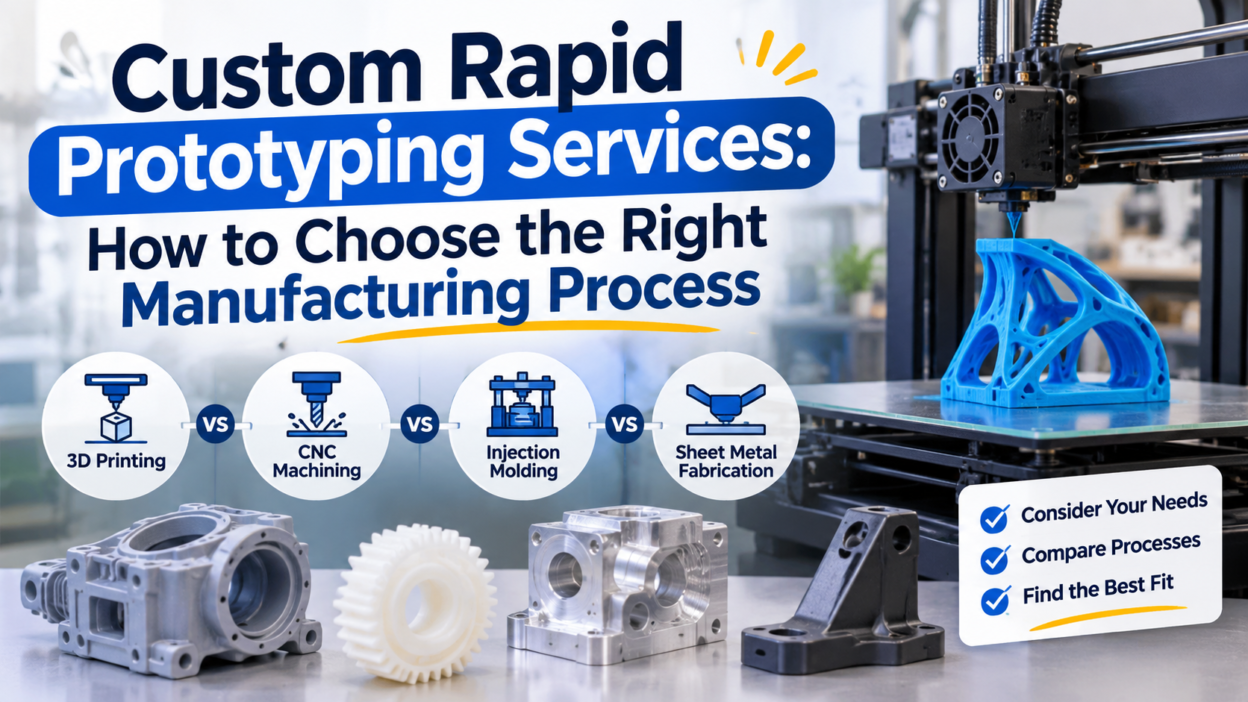
Custom rapid prototyping services can save product developers from an expensive surprise: a design that looks perfect on a computer but fails during real-world testing. Maybe two components don’t fit, a plastic housing cracks, or a moving part doesn’t work as expected. It happens more often than many teams expect.
The solution is to test a physical prototype before committing to larger production orders.
Here are the main areas to check:
- Product fit: Make sure separate components connect correctly.
- Functionality: Test whether the product performs its intended job.
- Material performance: Check strength, flexibility, and resistance.
- Dimensional accuracy: Compare actual measurements with engineering drawings.
- Surface quality: Review finishing, appearance, and visible defects.
- Assembly: Confirm that screws, connectors, and other parts work together.
A little testing now can prevent a lot of redesign work later.
Why Are Custom Rapid Prototyping Services Important for Product Testing?
Custom rapid prototyping services help businesses turn product designs into physical samples that can be tested before production. Instead of relying only on CAD drawings, engineers can examine actual components and identify problems with dimensions, assembly, materials, and performance.
This gives product developers a practical way to check whether their ideas work outside the design software.
Imagine developing a new electronic enclosure. The screen dimensions look correct, the screw positions appear aligned, and the design has passed an initial review. But when the physical components arrive, the internal board doesn’t fit properly.
That’s a frustrating situation.
A prototype helps identify these problems while design changes are still manageable.
The process can support several development stages:
- Concept validation: Check the basic shape, size, and appearance.
- Engineering validation: Review dimensions, material choices, and mechanical design.
- Functional validation: Test whether moving or working components perform correctly.
- Assembly validation: Confirm that different parts connect without unnecessary adjustments.
- Production validation: Check whether the design is ready for a more controlled manufacturing process.
Each stage answers different questions. So, define the purpose of your sample before choosing a manufacturing method.
Which Product Features Should You Test First?
The best testing order starts with features that could prevent the product from working. Cosmetic details matter too, but a beautiful surface won’t fix a component that doesn’t fit.
When planning custom rapid prototyping services, create a testing checklist based on the product’s actual application.
1. Check Product Dimensions
Dimensional inspection confirms whether manufactured parts match their approved engineering drawings.
Pay attention to:
- Overall length, width, and height.
- Hole diameters and positions.
- Wall thickness.
- Slot dimensions.
- Thread sizes.
- Critical mating surfaces.
Don’t assume every measurement needs the same tolerance. Focus on dimensions that affect assembly, movement, and performance.
2. Test Component Fit and Assembly
A prototype should help engineers understand how separate components work together.
For example, a product housing may need to accommodate a circuit board, battery, screws, and external connectors. Even a small dimensional difference can make assembly difficult.
Check these areas:
- Do components align correctly?
- Can fasteners be installed without difficulty?
- Are connectors positioned properly?
- Do moving components have enough clearance?
- Can the product be assembled without unnecessary force?
These checks are especially useful when a product contains several connected parts.
3. Evaluate Material Performance
A prototype material should match the purpose of the test.
A lightweight plastic model may be suitable for appearance evaluation, but it might not represent the strength of the final metal component.
Consider the following properties:
- Tensile strength.
- Impact resistance.
- Flexibility.
- Heat resistance.
- Wear resistance.
- Corrosion resistance.
Material selection should reflect the environment in which the final product will operate.
4. Examine Surface Finish
Surface quality affects appearance, handling, and sometimes assembly.
Check for scratches, machining marks, rough edges, uneven coatings, and visible defects.
If the final component requires anodizing, polishing, painting, or another treatment, evaluate the finished prototype rather than judging only the unfinished part.
Which Manufacturing Processes Are Suitable for Functional Prototype Testing?
Different manufacturing methods produce different results. Choosing the right process depends on the required material, geometry, accuracy, and testing purpose.
Here are four common options.
CNC Machining
CNC machining removes material from a solid block using computer-controlled cutting tools. It works well for prototypes that need actual engineering materials and accurate dimensions.
Typical applications include:
- Aluminum housings.
- Mechanical brackets.
- Precision shafts.
- Connectors and fittings.
- Structural components.
Companies looking for precision CNC machining services should review machining capabilities, available materials, inspection methods, and finishing options before choosing a supplier.
3D Printing
3D printing creates parts layer by layer from digital designs. It is useful for testing complicated shapes and making design changes without preparing traditional production tooling.
It can support:
- Early product concepts.
- Complex geometries.
- Ergonomic models.
- Initial assembly checks.
- Lightweight design experiments.
However, printed materials may behave differently from the final production material. Select the printing technology according to the test requirements.
Vacuum Casting
Vacuum casting uses silicone molds to produce multiple prototype parts from a master model.
It’s useful when teams need several plastic-like samples for appearance reviews, assembly checks, and small-batch evaluation.
Sheet Metal Fabrication
Sheet metal fabrication uses cutting, bending, and forming operations to produce metal components.
It’s suitable for prototype brackets, panels, covers, enclosures, and other structural parts.
The best manufacturing choice isn’t always the most advanced one. It’s the process that produces a meaningful sample for your particular test.
How Do You Test a Prototype for Mechanical Performance?
Mechanical testing evaluates how a component responds to forces, movement, and repeated use. It helps engineers understand whether the design and selected materials suit the intended application.
Before ordering custom rapid prototyping services, identify the loads and conditions the product will experience.
Important Mechanical Tests
Load testing
Apply a controlled load to check whether the component bends, deforms, or fails under the expected conditions.
Impact testing
Evaluate how a part responds to sudden force. This can be useful for protective housings and mechanical covers.
Flexibility testing
Check whether a component bends as intended without developing cracks or permanent deformation.
Movement testing
Test hinges, sliders, rotating components, and other moving interfaces for interference and unwanted friction.
Repeated-use testing
Operate the component through repeated cycles to identify wear or changes in performance.
Not every product needs every test. Select tests according to its function, expected environment, and possible failure points.
For safety-related or regulated products, testing should follow the applicable industry requirements and qualified engineering procedures.
How Can You Choose a Reliable Manufacturing Partner?
A manufacturing partner should understand your product requirements, not simply accept a CAD file and start cutting material.
When comparing custom rapid prototyping services, review the supplier’s technical capabilities and communication process.
Here are the areas worth checking:
- Engineering review: Does the supplier examine geometry, tolerances, materials, and assembly requirements?
- Process selection: Can it recommend CNC machining, 3D printing, or another suitable method?
- Quality inspection: Does it check critical dimensions against approved drawings?
- Material availability: Can it provide the material required for meaningful testing?
- Finishing options: Can it support the required surface treatment?
- Production flexibility: Can it support prototype revisions and low-volume orders?
For US businesses considering overseas manufacturing, communication deserves extra attention.
A china cnc machining service should be able to understand technical drawings, clarify specifications, and explain potential manufacturing limitations before production begins.
Don’t compare quotations without checking what each one includes. Different material grades, tolerances, finishing requirements, and inspection levels can change the final result.
How Can You Reduce Prototype Testing Costs Without Losing Quality?
Prototype testing doesn’t need to involve unnecessary complexity. A clear testing plan can help teams focus their budget on the features that matter most.
Try these practical steps:
- Prioritize critical features. Test dimensions and interfaces that directly affect product operation.
- Use suitable materials. Avoid expensive materials for appearance-only samples when they aren’t required.
- Combine related tests. Check assembly and dimensional accuracy during the same evaluation stage where practical.
- Share complete drawings. Give manufacturers clear dimensions and tolerances before requesting quotations.
- Review problems early. Correct design issues before ordering additional samples.
- Keep revision records. Track design changes so older and newer prototypes don’t get mixed up.
For projects requiring multiple machined components, custom CNC machining services can support the production of parts according to specified materials and engineering requirements.
The key is to spend money on useful information. A prototype should answer a real engineering question, not simply sit on a desk looking impressive.
What Quality Checks Should Be Completed Before Production?
Before moving toward larger manufacturing quantities, review the prototype against the original product requirements.
A structured inspection helps prevent unresolved issues from moving into the next development stage.
Use this checklist:
- Confirm all critical dimensions.
- Review hole positions and thread specifications.
- Check component alignment.
- Complete assembly trials.
- Examine surface finishing.
- Confirm material specifications.
- Test intended mechanical functions.
- Record defects and design changes.
- Approve the updated design before the next build.
Yanmee describes dimensional inspection, assembly evaluation, material assessment, and functional validation as part of its prototype testing approach.
Its engineering team also reviews manufacturing requirements before production, helping identify possible issues with design geometry, materials, and tolerances.
For a china cnc machining service, these checks are useful when prototypes need to move toward repeatable low-volume manufacturing.
How Does Yanmee Support Prototype Testing and Product Development?
Yanmee supports product developers with manufacturing processes that help turn digital designs into physical samples.
According to its website, its capabilities include CNC machining, 3D printing, vacuum casting, sheet metal fabrication, surface finishing, and low-volume production.
These processes can support different product development requirements.
Yanmee’s engineering and manufacturing support includes:
- Design for Manufacturability (DFM) review.
- CAD and engineering optimization.
- Material and process recommendations.
- Prototype manufacturing.
- Dimensional inspection.
- Fit and assembly evaluation.
- Functional testing and validation.
- Support for pilot builds and low-volume production.
This approach gives product developers an opportunity to review their designs before making larger production commitments.
For US companies, sharing complete CAD files, technical drawings, material requirements, and testing priorities can make the initial project review more useful.
Frequently Asked Questions
1. What should you test on a prototype before mass production?
Test dimensional accuracy, component fit, assembly, material properties, surface quality, and intended functionality. The exact testing plan depends on the product’s application and possible failure points.
2. How do custom rapid prototyping services help reduce manufacturing risks?
Custom rapid prototyping services help identify design and manufacturing problems before larger production commitments. Physical samples allow engineers to evaluate dimensions, materials, assembly, and performance while changes are easier to manage.
3. Is CNC machining good for functional prototypes?
Yes. CNC machining is suitable for functional prototypes that require metal or engineering plastic materials, accurate dimensions, and realistic mechanical properties. It is particularly useful for testing components that resemble their intended production parts.
4. What is the difference between appearance and functional prototypes?
An appearance prototype focuses on product shape, size, color, and surface finish. A functional prototype is designed to evaluate how a component or product performs under its intended operating conditions.
5. How many prototypes should be tested before production?
There isn’t one fixed number for every project. The required quantity depends on design complexity, testing results, component revisions, and the level of validation needed before production.
6. What files should I send to a prototype manufacturer?
Send a 3D CAD file, preferably STEP or IGES, along with 2D engineering drawings when specific tolerances matter. Include material, quantity, finishing requirements, and the intended product application.
7. How do I find a reliable china cnc machining service?
Review the supplier’s machining equipment, engineering support, material options, quality inspection procedures, communication, and delivery planning. Ask for clarification about critical dimensions before approving the order.
8. Can rapid prototypes be used for low-volume production?
Yes. Depending on the material and manufacturing process, prototypes can sometimes be produced in small batches for market evaluation, pilot builds, or early product requirements. The manufacturer should confirm whether the selected process suits the intended quantity.
Planning a new product or preparing an existing design for testing? Contact Yanmee to discuss your requirements and identify a suitable manufacturing approach.