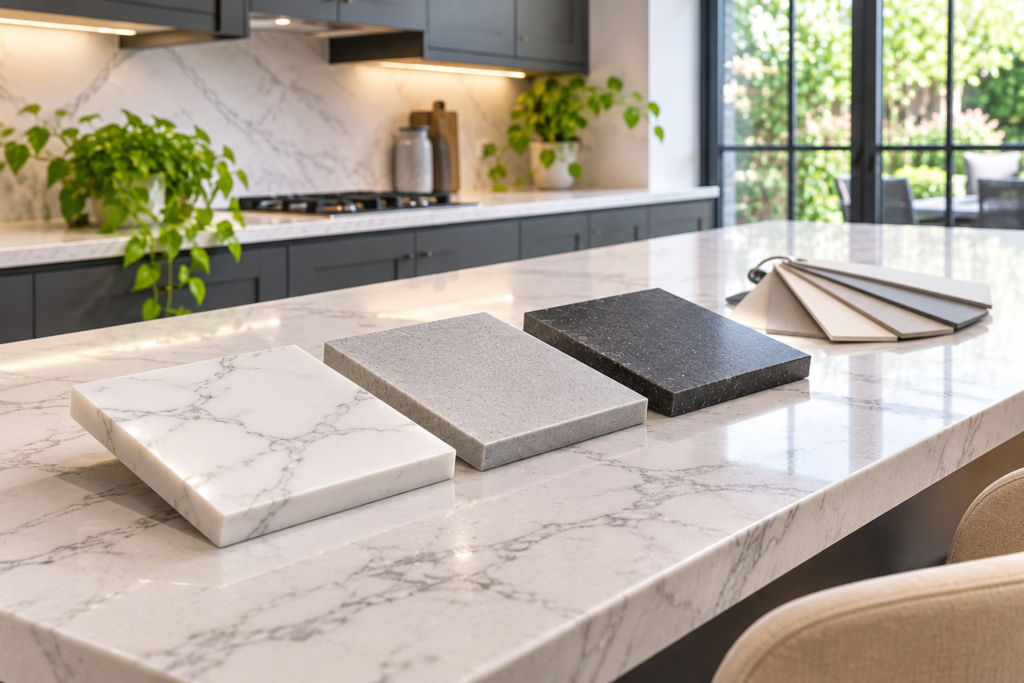
Kitchen worktops need to cope with everyday food preparation, spills, frequent cleaning and the demands of a busy household. Their appearance also influences how cabinets, splashbacks, flooring and appliances work together within the room. Engineered quartz is a popular option because it combines a stone-based composition with a consistent finish and relatively straightforward maintenance. Before choosing quartz kitchen work surfaces, it helps to understand their construction, available designs, practical limitations, and the factors that influence their long-term performance.
What Makes Quartz Suitable for Kitchen Worktops?
Engineered quartz is manufactured using quartz minerals combined with binding resins, pigments and, depending on the product, other materials. This manufacturing process creates a surface with a controlled appearance, allowing manufacturers to produce a variety of colours, patterns and finishes.
Unlike many natural stones, engineered quartz offers greater consistency across slabs, although veining and colour variation can still occur between batches. Homeowners can choose from understated neutral shades, speckled designs and marble-inspired patterns to complement different kitchen styles.
Which Quartz Colours and Finishes Work Best in Different Kitchens?
White and Light-Coloured Quartz
White, cream and pale grey worktops can make a kitchen feel brighter, particularly when paired with darker cabinets or natural wood. Marble-effect patterns introduce visual movement without requiring natural marble. However, the visibility of crumbs, marks and fingerprints depends on the particular colour and finish.
Grey and Neutral Quartz
Grey, beige and other understated shades suit contemporary and traditional kitchens alike. These colours can connect contrasting cabinet finishes and flooring while providing a relatively subtle background for everyday activities.
Dark Quartz Finishes
Charcoal, black and deep brown worktops can create a strong contrast with lighter cabinetry. Polished dark surfaces may show fingerprints, water marks, and dust more readily, so the finish should be considered alongside the household’s cleaning preferences.
Textured and Patterned Designs
Textured surfaces and pronounced veining can introduce depth and character. Their maintenance requirements may differ from those of smooth, polished options, particularly where grease and fingerprints collect more visibly. Viewing a physical sample under the kitchen’s lighting can help you assess the colour and texture accurately.
What Should You Consider Before Choosing a Quartz Worktop?
When comparing quartz kitchen work surfaces, look beyond colour and price. Thickness, edge profiles, cut-outs and installation requirements all affect the finished result.
Worktop dimensions: Measure the kitchen layout carefully, including runs, corners and island units. Professional templating helps account for irregular walls and the exact position of sinks and hobs.
Thickness and edge design: Common thicknesses include 20mm and 30mm, although availability depends on the product. Edge profiles can create a slim, contemporary appearance or a more substantial visual effect.
Seams and joins: Large kitchens may require multiple slabs. The number and position of joins depend on slab dimensions, layout, and fabrication constraints. Discuss seam placement with the fabricator before production begins.
Sink and hob cut-outs: These openings need accurate fabrication and appropriate support. The installer should confirm the manufacturer’s requirements for cut-outs, clearances and support around vulnerable areas.
Total installed cost: Ask whether the quotation includes measuring, fabrication, cut-outs, delivery, installation and any upstands or splashbacks. Comparing complete quotations gives a more realistic picture than comparing material prices alone.
How Do You Maintain Quartz Kitchen Worktops?
Routine maintenance is generally straightforward. For everyday cleaning, use a soft cloth with warm water and a mild detergent, then rinse and dry the surface. Wipe up spills promptly, particularly acidic liquids, strongly coloured foods, oils, and other substances that could leave marks if neglected.
Although quartz is hard-wearing, it is not scratch-proof. Always use a chopping board rather than cutting directly on the worktop, and avoid dragging heavy cookware across the surface.
Heat requires particular care. Direct contact with hot pans can cause thermal damage or discolouration, while sudden temperature changes may lead to cracking. Use heat-resistant trivets or pan stands instead of placing hot cookware directly on the quartz.
Conclusion
Choosing a suitable kitchen worktop involves balancing appearance, durability, maintenance and installation requirements. Quartz Supply UK provides quartz worktop options for homeowners planning kitchen renovations or new installations. Comparing samples, checking fabrication details, and understanding the surface’s limitations can help you select a finish that works with your kitchen layout and daily routine.