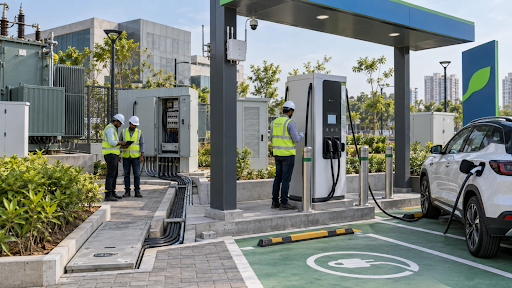
An electric charging station franchise on a highway should let drivers pull in easily, add enough range to reach their next stop and leave without a long queue or detour. Start by driving the corridor in both directions. Check where motorists already stop, how far they must travel to turn around and which nearby chargers could serve them if yours is busy. Then match the charger mix, parking layout and operating plan to the people likely to stop.
What Makes an Electric Charging Station Franchise Viable on a Highway?
Look at the route in terms of actual journeys. Who passes the site, where are they coming from and how far do they still need to go? Passenger cars on a weekend corridor may arrive in bursts around meal times. Taxis may use the same stretch through the working week and care more about quick in-and-out access. Ask restaurants, fuel retailers and other site staff which periods are busy and whether they already see EV drivers looking for a place to charge.
Check the corridor from both directions
Drive the route with a passenger logging the distance and time from each carriageway to the proposed bays. Record service-road conditions, toll or controlled access where relevant, opening hours and whether the navigation app sends vehicles past the entrance. A site may sit close to both carriageways on a map and primarily serve one direction in practice. Confirm property rights, signage options and any access changes with the responsible landowner and road authority before building the layout around them.
Map nearby charging stops by usable approach, vehicle compatibility and hours. Visit a few during your expected peak periods. Note where queues form and whether drivers can wait without blocking through traffic. Ask what would make someone choose your site, such as a shorter approach, a second available bay, late-night access or a clean restroom. Treat answers from staff and observed customer behaviour as separate evidence.
Choose a Charger Mix for Trip Stops
Start with the energy drivers may need during an ordinary stop. In an illustrative case, a driver wants 24 kWh and can spend 30 minutes actively charging. Delivering that energy in half an hour requires an average of 48 kW during charging. The real stop also includes parking, connecting, paying and leaving. Actual charging power depends on the vehicle, battery conditions and how equipment allocates power when several cars are connected. Use a test with representative vehicles to assess the schedule you are planning.
Ask what two cars receive at the same time
When reviewing charging companies in India, compare connector compatibility and simultaneous output at the actual configuration quoted. Two connectors may share a charger’s available power. Ask for the expected output with two charging vehicles, how the system distributes power and whether one fault can take both connectors out of service. A highway layout also needs enough room for cars to line up, depart and turn safely. Ask the electrical and civil teams how additional bays could be added if queue data justifies expansion.
If the location includes a hotel or a long-stay parking area, assess whether those bays need different equipment from the quick-stop bays. NITI Aayog’s charging handbook explains AC and DC equipment, power ratings and site planning.
Design the Stop Around Drivers and Staff
Walk from the charger to the restroom and food counter. Check whether someone can make the trip comfortably after dark and whether customers can reach the services during all advertised charging hours. Establish who opens gates, clears blocked bays and answers questions when businesses on the property close. A paper sign with the charger ID and assistance number can help a traveller at a site with weak mobile coverage. Test the normal start and payment process at the bay with the phones drivers are likely to use.
Ask EarthtronEV and any other shortlisted highway charging operators to explain how they would handle a Friday evening queue or an overnight charger fault at your specific site.
Plan for a Charger or a Site to Go Down
Decide what drivers should see on signs and apps when one connector fails, when both are down and when the whole site closes. Ask the operator how quickly they can update the public listing and who reports a blocked bay or access issue. Check where service engineers and parts are based. If every charger shares the same upstream supply or communications link, ask your project team what service would remain available if that component failed.
Have the team define uptime around the service you expect to provide. Record service hours, the charger or connector measured and what qualifies as unavailable. At a travel stop, a connector showing as online has limited value if payment repeatedly fails or a driver cannot get to it. Review incident logs after launch and use the busy periods to check what happens under load.
Give drivers an alternative before they commit to a detour
Record the nearest practical charging alternative for each direction and confirm the connector and access hours. Decide how staff should share that information if the site is full or unavailable. A traveller may need the name of the next stop, its approach direction and a route that avoids a long turnaround. Review this information whenever another charger opens or a nearby access road changes. Drivers should still check their remaining range and the alternative station’s status before travelling on.
Frequently Asked Questions
Can a site serve both directions on a divided highway?
Measure the approach separately for each direction. A usable junction or turnaround may be farther away than expected. Keep separate demand assumptions for drivers travelling each way.
How much space should I leave for waiting vehicles?
Base it on peak arrivals, session length and vehicle size. Have the layout team show where drivers can wait without spilling into the main road, blocking another bay or crossing a pedestrian path.
Can a highway restaurant close while charging continues?
It can if the property plan supports continued access, lighting and assistance. Publish the separate hours and make clear which amenities remain open during charging hours.
Should a new highway location open with a single fast charger?
Compare the expected queue and what happens if that charger needs repair. One charger can help test demand where an alternative is nearby. A long gap to the next usable site makes downtime harder for drivers to manage.
Which result should I track after opening?
Record how many drivers start and finish a session during peak periods. Log waits, blocked bays and abandoned attempts alongside kWh sold. These observations help you distinguish weak demand from a site unable to handle demand.
Validate the Site Before Building for Peak Demand
Drive the corridor, check both approaches and test the proposed charging window with representative vehicles. Build the first phase around the busiest credible periods and the support your site can provide. Use real queue and reliability data to decide when to expand.