
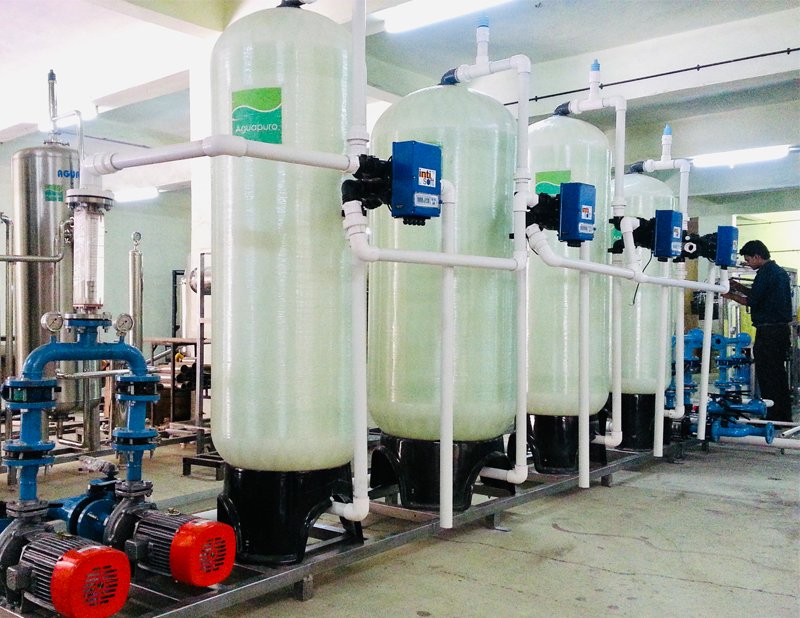
Freshwater availability is an important concern for many coastal regions and industries. At the same time, seawater is one of the largest naturally available water resources. The challenge is that seawater contains a high concentration of dissolved salts and minerals, making it unsuitable for most drinking and industrial applications without treatment.
This is where seawater desalination technology becomes valuable. A Sea Water RO Plant Manufacturer in India can provide systems designed to remove dissolved salts and other unwanted substances from seawater and produce treated water for suitable applications.
Seawater reverse osmosis (SWRO) is a membrane-based desalination process in which high pressure is used to push seawater through semi-permeable membranes. The membranes allow water to pass while retaining much of the dissolved salt and other contaminants.
What Is a Sea Water RO Plant?
A Sea Water RO Plant supplier is a water treatment system designed specifically for desalinating seawater through reverse osmosis technology.
Unlike conventional RO systems used for freshwater or lower-salinity sources, seawater RO systems are designed to handle much higher salinity. This requires appropriate membrane selection, high-pressure pumping, pretreatment, monitoring, and system controls.
A typical seawater RO plant can include:
- Seawater intake system
- Pretreatment system
- Media filtration
- Cartridge filtration
- Chemical dosing systems, where required
- High-pressure pumps
- RO membrane vessels
- Energy recovery equipment, depending on plant design
- Permeate storage
- Post-treatment and disinfection
- Brine handling or disposal arrangements
The exact configuration depends on seawater quality, required production capacity, desired treated-water quality, and site conditions.
How Does a Sea Water RO Plant Work?
The basic seawater desalination process can be explained in a few simple stages.
1. Seawater Intake
Seawater is collected from an appropriate intake source and transferred toward the treatment system.
The intake arrangement needs to consider factors such as suspended solids, marine organisms, turbidity, seasonal variations, and site conditions.
2. Pretreatment
Pretreatment is one of the most important parts of an RO desalination system.
Seawater can contain suspended particles, organic matter, microorganisms, and substances that may contribute to membrane fouling or scaling. Pretreatment helps reduce these issues before water reaches the RO membranes.
Depending on the feedwater quality, pretreatment may include:
- Screening
- Media filtration
- Cartridge filtration
- Coagulation or flocculation
- Ultrafiltration
- Chemical dosing
- Dechlorination
The appropriate combination should be determined through water analysis and system design.
3. High-Pressure Pumping
After pretreatment, seawater is pressurized using high-pressure pumps.
The pressure needs to overcome the natural osmotic pressure of seawater and allow water to pass through the RO membranes.
4. Reverse Osmosis Membrane Treatment
The pressurized seawater enters the RO membrane system.
Water that passes through the membrane is known as permeate, while the concentrated stream containing most of the rejected salts is called concentrate or brine.
5. Post-Treatment
Depending on the final application, the desalinated water may require additional treatment such as pH adjustment, remineralization, stabilization, or disinfection.
The required post-treatment depends on whether the water is intended for drinking, industrial use, process water, or another application.
Why Is Pretreatment Important in Seawater RO?
RO membranes are sensitive to fouling and scaling. If suspended solids or other substances accumulate on the membrane surface, system performance can decline.
Proper pretreatment can help reduce membrane fouling and scaling and may improve system recovery and operating performance.
For this reason, a seawater RO plant should not be viewed as only an RO membrane system. The intake, pretreatment, pumping, membrane system, controls, post-treatment, and concentrate management all need to work together.
Where Are Sea Water RO Plants Used?
Seawater desalination can be useful in locations where conventional freshwater sources are limited or where industries require an additional water source.
Common applications include:
Coastal Industries
Industries located near the coast can consider seawater desalination as an alternative water source where appropriate.
Hotels and Resorts
Large coastal hotels and resorts can use desalination systems to supplement their water supply, subject to local requirements and project economics.
Municipal Water Supply
Desalination can provide treated water for communities in suitable coastal locations. Desalination is already used in different parts of the world for drinking-water supply.
Industrial Process Water
Some industries require reliable water supplies for manufacturing and other processes. Desalinated water can be used where its quality is appropriate for the intended application.
Power and Manufacturing Facilities
Desalinated water can also be incorporated into water treatment systems serving industrial facilities, including applications requiring higher-quality process or boiler feed water.
Benefits of a Sea Water RO Plant
A properly designed seawater RO system can offer several advantages.
1. Uses Seawater as a Water Source
One of the biggest advantages is the ability to use seawater as a source for producing freshwater. This can be particularly relevant for coastal facilities.
2. Effective Salt Removal
RO membranes can reject a large proportion of dissolved salts, making reverse osmosis a widely used desalination technology.
3. Suitable for Different Capacities
Seawater RO systems can be designed for different project sizes, from smaller applications to large-scale desalination facilities.
4. Modular System Design
Depending on the project, RO systems can be configured in stages or modules, allowing the treatment system to be designed around required production capacity.
5. Potential for Water Security
Using alternative water sources such as seawater can help diversify water supplies in water-stressed coastal locations.
What Should You Consider Before Choosing a Sea Water RO Plant Manufacturer in India?
Choosing the manufacturer is an important part of a desalination project. Instead of selecting a plant based only on price, businesses should evaluate the complete technical solution.
Seawater Quality
The manufacturer should understand the characteristics of the available seawater, including salinity, turbidity, temperature, suspended solids, and other relevant parameters.
Required Capacity
Determine how much treated water the facility needs per day. The plant should be sized according to both average and expected peak requirements.
Pretreatment Design
Ask how the manufacturer plans to protect the RO membranes from fouling, scaling, and other feedwater-related problems.
Membrane Selection
Membrane type and configuration can affect water quality, recovery, energy consumption, and operating requirements.
Energy Consumption
Seawater RO requires high-pressure pumping, making energy efficiency an important consideration. Energy recovery systems can be incorporated into suitable plant designs to improve efficiency.
Brine Management
The RO process produces a concentrated brine stream. Proper management and disposal of this stream should be considered during project planning.
Operation and Maintenance
A desalination plant is a long-term investment. Consider membrane replacement, cleaning requirements, energy consumption, chemical use, spare parts, monitoring, and technical support.
How Spring Ion Exchange Can Help With Sea Water RO Plants
Businesses planning a seawater desalination project need a treatment system designed around their actual water source and production requirements.
Spring Ion Exchange can be approached to discuss seawater RO and water treatment requirements for suitable commercial and industrial applications.
Project-Specific Treatment Solutions
Every seawater source and project site can have different characteristics. A project-specific approach helps determine suitable pretreatment, RO configuration, and post-treatment requirements.
Water Treatment System Planning
Spring Ion Exchange can help customers evaluate their water treatment requirements, including feedwater quality, desired capacity, and intended use of the treated water.
RO and Pretreatment Integration
A seawater RO system works as part of a complete treatment process. Proper integration of pretreatment, high-pressure pumping, membranes, monitoring, and post-treatment is important for reliable operation.
Industrial Water Treatment Requirements
Industries may have different requirements for desalinated water depending on their manufacturing or process applications. The treatment system can therefore be planned according to the required water quality.
Support for Water Management Projects
Businesses can discuss their seawater quality report, required production capacity, site conditions, and treated-water requirements with the technical team to explore an appropriate solution.
Note: Before publishing company-specific claims, verify Spring Ion Exchange’s current product range, certifications, installation capabilities, project experience, and after-sales services.
How Much Does a Sea Water RO Plant Cost in India?
There is no single price for a seawater RO plant because project costs can vary considerably.
Factors affecting the overall cost include:
- Plant capacity
- Seawater quality
- Pretreatment requirements
- RO membrane configuration
- High-pressure pump specifications
- Energy recovery system
- Automation level
- Post-treatment requirements
- Civil and installation requirements
- Brine management
- Operation and maintenance requirements
For this reason, businesses should request a project-specific quotation rather than relying on a standard market price.
Conclusion
Seawater can provide an important alternative water source for coastal communities and industries, but its high salt content means that specialized treatment is required. Reverse osmosis is one of the major membrane technologies used for seawater desalination, using pressure to move water through semi-permeable membranes while retaining dissolved salts.
If you are planning a seawater desalination project, you can connect with Spring Ion Exchange to discuss your seawater quality, required capacity, and overall water treatment requirements.