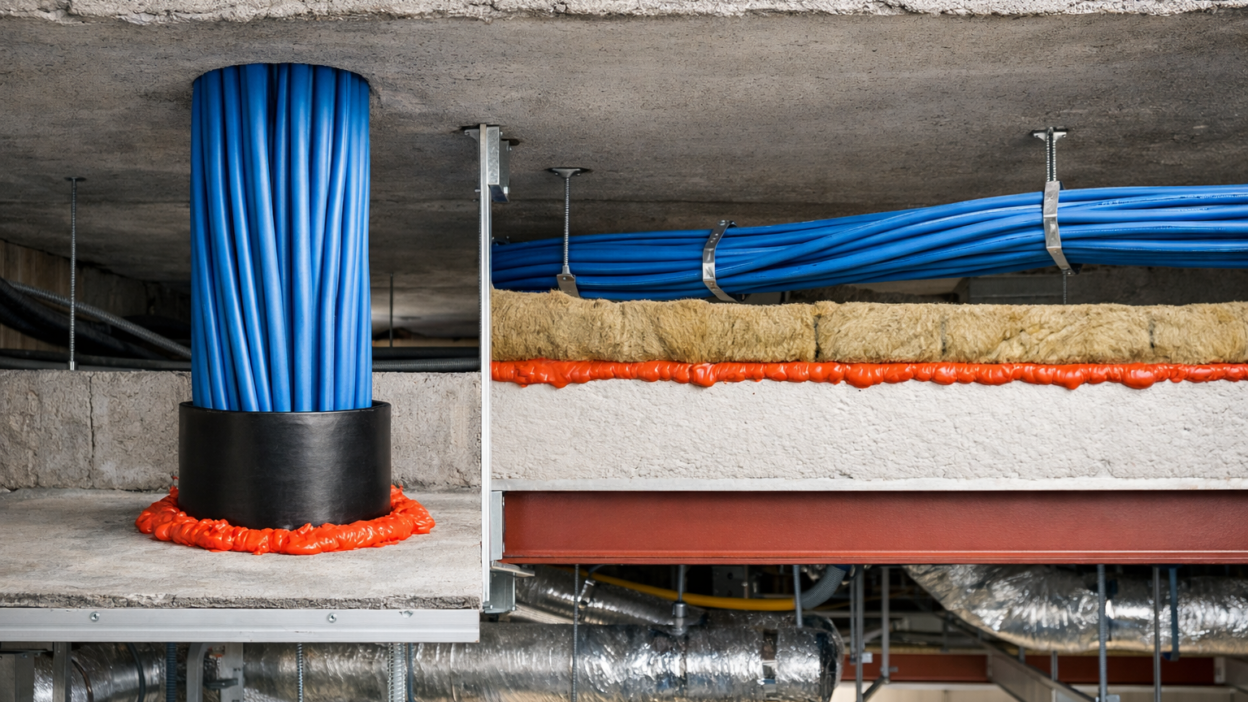
Reliable network connectivity is essential for modern commercial buildings. Offices, schools, hospitals, hotels, warehouses, and retail facilities depend on Ethernet networks to support computers, printers, security cameras, wireless access points, and communication systems. Selecting the correct networking cable is important for maintaining data transmission performance while meeting building safety requirements.
One common decision during commercial network installations is understanding cat6 cable riser vs plenum. Both cable types provide Category 6 networking performance, but they are designed for different installation environments. Their fire ratings, jacket materials, and permitted applications are important considerations when planning structured cabling projects.
In the USA, contractors and building owners must consider applicable National Electrical Code (NEC) requirements, local building regulations, and project specifications. TS Cables recognizes the importance of choosing appropriate networking cable solutions for reliable and safety-conscious commercial installations.
What Is Cat6 Riser Cable?
Cat6 riser cable is a Category 6 Ethernet cable designed for qualifying vertical pathways between floors in commercial buildings. It commonly carries a CMR (Communications Multipurpose Riser) rating.
Cat6 supports transmission frequencies up to 250 MHz and can deliver Gigabit Ethernet speeds of up to 1 Gbps over channel distances of up to 100 meters. It can also support 10 Gigabit Ethernet over shorter distances, commonly up to 55 meters under suitable installation conditions.
Riser cable is frequently used in pathways connecting telecommunications rooms, equipment closets, and network distribution points across multiple floors.
Its CMR rating indicates that the cable has been tested for flame-spread performance in qualifying vertical installations. This makes it an appropriate choice for designated riser pathways when permitted by applicable codes.
What Is Cat6 Plenum Cable?
Cat6 plenum cable is designed for installation in environmental air-handling spaces, commonly called plenum spaces. These areas may include certain spaces above suspended ceilings or below raised floors that circulate air as part of a building’s heating, ventilation, and air-conditioning system.
Plenum-rated cable generally carries a CMP (Communications Multipurpose Plenum) marking. It is manufactured and tested to meet more demanding flame-spread and smoke-generation requirements than standard riser-rated cable.
The jacket material used in plenum cable is selected to meet these requirements. Because air-handling spaces can distribute smoke and combustion products throughout a building, selecting an appropriate cable rating is an important fire-safety consideration.
Like Cat6 riser cable, Cat6 plenum cable supports frequencies up to 250 MHz and can provide Gigabit Ethernet connectivity over standard channel distances.
Cat6 Cable Riser vs. Plenum: Key Differences
Although both cable types support Category 6 networking, their intended installation environments and fire-performance requirements differ.
1. Fire Rating
The primary difference between CMR and CMP cable is their fire-performance classification.
- CMR Cable: Designed for qualifying vertical riser pathways between building floors.
- CMP Cable: Designed for environmental air-handling spaces where plenum-rated cable is required.
CMP cable is generally subject to stricter flame-spread and smoke-generation testing than CMR cable.
2. Installation Environment
Cat6 riser cable is commonly installed in vertical shafts and other approved pathways connecting different floors.
Cat6 plenum cable is used in qualifying air-handling spaces, such as certain ceiling cavities and raised-floor environments.
Using the wrong cable rating can create compliance and safety problems. Contractors should identify the installation environment before purchasing or installing networking cable.
3. Jacket Construction
Riser and plenum cables may use different jacket materials to meet their respective fire-performance requirements.
CMR cable is designed to meet applicable riser fire requirements, while CMP cable uses materials and construction designed to meet plenum flame-spread and smoke-generation requirements.
4. Cost Considerations
Cat6 plenum cable often costs more than comparable Cat6 riser cable because of its specialized construction and fire-performance requirements.
CMR cable may be a more economical choice when the installation is limited to approved riser pathways. However, choosing cable based only on price is not recommended. The required fire rating must always take priority.
5. Application Requirements
Both cable types support Ethernet networking, but they are not interchangeable in every installation.
CMR cable should not be installed in a space requiring CMP-rated cable unless a specific code provision permits an alternative. CMP cable may generally be used in many riser applications, subject to applicable code requirements and installation conditions.
Comparison of Cat6 Riser and Plenum Cable
| Feature | Cat6 Riser | Cat6 Plenum |
|---|---|---|
| Common rating | CMR | CMP |
| Intended environment | Vertical riser pathways | Environmental air spaces |
| Bandwidth | 250 MHz | 250 MHz |
| Gigabit Ethernet | Supported | Supported |
| 10Gbps Ethernet | Shorter distances | Shorter distances |
| Fire performance | Riser requirements | More demanding plenum requirements |
| Typical cost | Generally lower | Generally higher |
Both cable types can provide dependable Category 6 networking performance when properly installed and terminated.
Common Applications in Commercial Buildings
Cat6 riser and plenum cables serve different purposes in commercial networking infrastructure.
Office Buildings: Riser cable can connect network closets between floors, while plenum cable may be used in qualifying ceiling air-handling spaces.
Educational Institutions: Schools and universities use structured Ethernet cabling for classrooms, laboratories, administrative offices, and wireless access points.
Healthcare Facilities: Hospitals and clinics require organized network infrastructure for compatible administrative systems, workstations, and connected equipment.
Hotels and Hospitality Buildings: Ethernet cables support reception systems, office equipment, communication networks, and wireless connectivity.
Retail Properties: Commercial stores use network cabling for point-of-sale systems, inventory management, security cameras, and back-office equipment.
Industrial Facilities: Suitable Cat6 cables provide connectivity for monitoring systems, computers, and compatible network equipment.
The appropriate cable rating depends on the exact pathway and applicable building requirements.
Installation Requirements and Best Practices
Correct installation is essential for maintaining Cat6 cable performance and meeting safety requirements.
First, installers should identify whether the cable pathway is a riser, plenum, or another type of space. This helps determine the required fire rating before installation begins.
Second, cable should be handled carefully. Excessive pulling tension, sharp bends, crushing, and tightly secured bundles can damage internal conductors and affect network performance.
Third, installers should maintain appropriate separation from electrical wiring and other potential interference sources according to applicable requirements. Cable supports and organized pathways also help protect the installation.
For permanent structured cabling, solid bare copper conductors are commonly preferred. Compatible connectors, patch panels, and termination hardware should be used to maintain the required transmission performance.
After installation, testing helps identify wiring faults, excessive crosstalk, and other issues. Proper cable labeling also makes troubleshooting and future maintenance easier.
How to Choose the Right Cat6 Cable
Selecting between riser and plenum cable requires reviewing several specifications.
- Installation Location: Identify whether the cable will pass through vertical riser pathways or environmental air spaces.
- Fire Rating: Select CMR or CMP according to the applicable installation requirements.
- Conductor Material: Prefer properly specified solid bare copper conductors for permanent structured cabling.
- Network Performance: Confirm that the product meets applicable Cat6 performance specifications.
- Cable Length: Choose appropriate spool lengths to reduce unnecessary joints and simplify installation.
- Product Documentation: Review manufacturer specifications, markings, and relevant compliance information.
- Project Requirements: Check local building codes, NEC requirements, and contractor specifications.
Avoid assuming that copper-clad aluminum (CCA) cable offers equivalent performance and suitability to properly specified solid copper cabling.
How TS Cables Supports Networking Projects in the USA
Choosing a dependable networking cable supplier is an important part of commercial infrastructure planning. TS Cables focuses on networking cable solutions for customers throughout the USA who require products for structured cabling and Ethernet installations.
When comparing cat6 cable riser vs plenum, customers should understand the differences in fire ratings, intended installation environments, conductor construction, and technical specifications.
TS Cables emphasizes the importance of selecting suitable products according to individual project requirements. Whether a business is developing a new office network, upgrading an existing commercial building, or installing structured cabling across multiple floors, understanding cable specifications helps support informed purchasing decisions.
By evaluating the correct cable category and fire rating, contractors and businesses can plan more organized and reliable networking installations.
Conclusion
Understanding cat6 cable riser vs plenum is essential for commercial Ethernet installations in the USA. Although both cable types provide Category 6 performance and support frequencies up to 250 MHz, their fire ratings and intended installation environments are different.
CMR-rated cable is designed for qualifying vertical riser pathways, while CMP-rated cable is intended for environmental air-handling spaces where plenum cable is required. Selecting the appropriate rating helps address building safety requirements and supports compliant network installations.
Businesses and contractors can consider TS Cables when evaluating networking cable solutions for their commercial projects. By choosing the correct cable type, using suitable materials, following manufacturer recommendations, and complying with applicable codes, organizations can establish reliable Ethernet infrastructure that supports their current and future networking needs.