
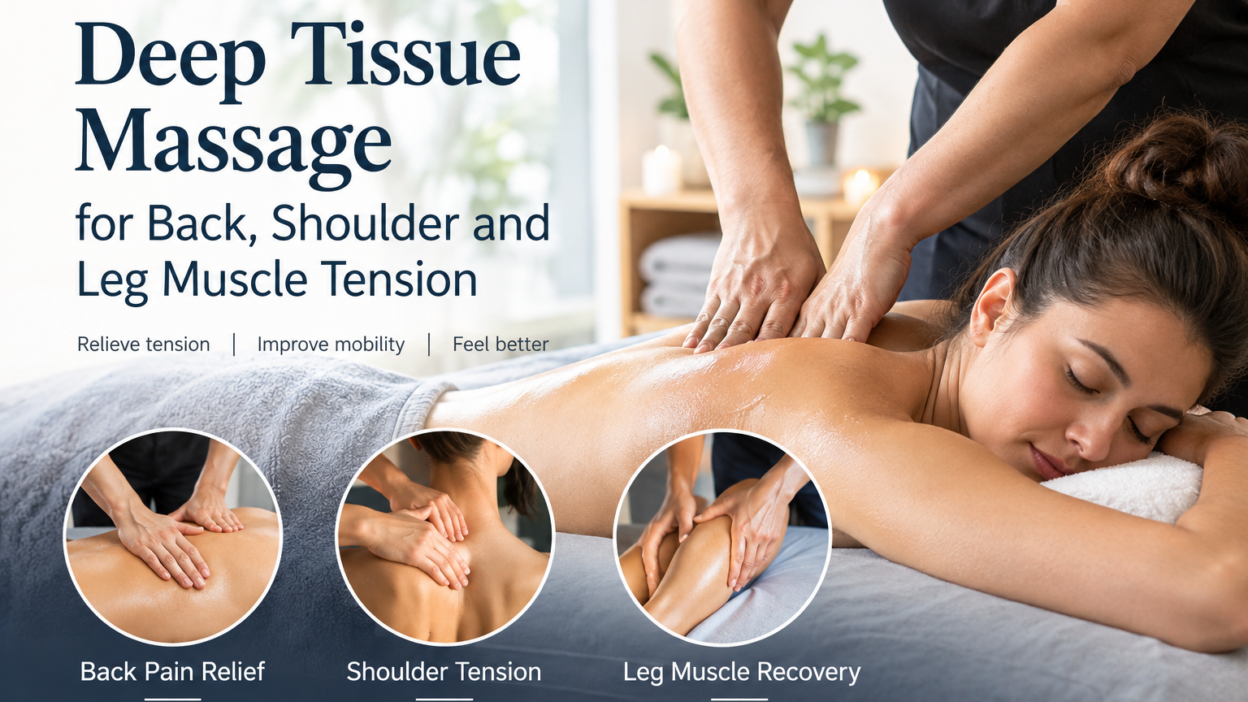
Muscle tension can build quietly. A long day at a desk may leave the shoulders tight, repetitive lifting can strain the back, and exercise can leave the legs feeling stiff for days. When stretching, rest, or a standard relaxation massage doesn’t provide enough relief, deep tissue massage may be worth considering.
Deep tissue massage uses slower, more deliberate pressure to work through deeper layers of muscle and connective tissue. It’s commonly used for areas affected by persistent muscle tightness, overuse, and certain types of chronic discomfort. The goal isn’t simply to apply more pressure. A skilled therapist adjusts the technique to the person’s muscles, symptoms, and tolerance.
For people searching for deep tissue massage near me, understanding what the treatment can and can’t do is useful before scheduling an appointment. Here’s how it works for common problem areas, what a session feels like, and what to consider when choosing a massage therapist.
What Is Deep Tissue Massage?
Deep tissue massage is a therapeutic massage technique that focuses on deeper muscle layers and connective tissues. Rather than using continuous, light strokes, therapists often use slow strokes, sustained pressure, and targeted techniques to address areas of tension.
The treatment is frequently used on the back, shoulders, hips, thighs, calves, and other areas that experience repeated stress.
Deep tissue massage isn’t supposed to be unbearably painful. Some pressure or temporary tenderness can occur, particularly when working on tight muscles, but excessive pain isn’t a sign that the treatment is working better.
The therapist should communicate with you throughout the session and modify pressure when necessary.
How Deep Tissue Massage Helps Muscle Tension
Muscle tension can result from several factors, including prolonged sitting, repetitive movements, exercise, poor movement habits, and physical stress. When muscles remain contracted for extended periods, they can feel stiff, restricted, or tender.
Massage may help by increasing local circulation, reducing perceived muscle tightness, and encouraging relaxation of tense tissues. It can also make certain movements feel easier when stiffness is limiting normal mobility.
The results aren’t identical for everyone. Someone with occasional post-workout tightness may notice a different response than someone dealing with months of recurring discomfort.
That distinction matters when deciding whether deep tissue work is appropriate.
Deep Tissue Massage for Back Tension
The lower and upper back are among the most common areas where people experience muscle tension.
Long periods of sitting can contribute to tightness around the lower back, hips, and surrounding muscles. Physical work, lifting, repetitive movements, and certain exercise routines can also place considerable stress on the back.
During a deep tissue session, a therapist may focus on the muscles alongside the spine, upper back, shoulders, glutes, and hips rather than pressing directly on the spine itself.
What to Expect
A typical session may begin with lighter pressure and assessment of the area before gradually moving into deeper techniques. Your therapist may ask where the discomfort is located, whether it travels to another area, and which movements make it worse.
This information helps determine where treatment should be concentrated.
If back pain is severe, follows an injury, or is accompanied by symptoms such as numbness, weakness, fever, or unexplained weight loss, massage shouldn’t be used as a substitute for medical evaluation.
Deep Tissue Massage for Shoulder Tension
Shoulder tension is particularly common among people who spend much of their day working at a computer or using a phone.
The upper trapezius and surrounding muscles can become tight from prolonged static positions. Stress can also contribute to unconscious shoulder elevation and muscle clenching.
Deep tissue massage may target the upper back, shoulders, neck-adjacent muscles, and surrounding areas. Therapists generally work around sensitive structures rather than applying indiscriminate pressure.
Why Shoulder Tension Can Keep Coming Back
Massage may reduce muscle tightness temporarily, but the underlying cause still matters.
If your shoulders become tense because of your workstation, for example, repeated massage sessions may provide relief while the same posture continues to trigger the problem.
A better long-term approach may combine massage with:
- Regular movement breaks
- Appropriate workstation positioning
- Strength and mobility exercises
- Better sleep habits
- Stress-management techniques
- Professional evaluation when pain persists
Massage can be one part of that strategy rather than the entire solution.
Deep Tissue Massage for Tight Leg Muscles
Leg muscles take a significant amount of daily workload. Walking, running, cycling, standing for long periods, and strength training can all contribute to muscle tightness.
Deep tissue massage may be used on the quadriceps, hamstrings, calves, glutes, and other surrounding muscles.
For athletes, massage is sometimes incorporated into a broader recovery routine. For non-athletes, it may simply help address stiffness associated with physical activity or prolonged standing.
However, sudden leg swelling, significant bruising, unexplained warmth or redness, or severe calf pain should be medically evaluated rather than treated as ordinary muscle tension.
Deep Tissue vs. Swedish Massage
The two techniques have different goals, although a professional massage session may incorporate elements of both.
| Feature | Deep Tissue Massage | Swedish Massage |
|---|---|---|
| Primary focus | Deeper muscle and connective tissue | Relaxation and general muscle work |
| Pressure | Moderate to firm, depending on the area | Usually light to moderate |
| Movement | Often slower and more targeted | Generally flowing and rhythmic |
| Common use | Persistent muscle tightness and localized tension | Relaxation and general stress relief |
| Sensation | More focused and intense | Usually gentler |
| Best approach | Targeted areas of tension | Whole-body relaxation |
Neither approach is automatically better. The appropriate technique depends on why you’re seeking massage and how your body responds to pressure.
What Happens During a Deep Tissue Massage Session?
If you’re booking a deep tissue massage for the first time, the process is usually straightforward.
1. Initial consultation
Your therapist will typically ask about areas of tension, previous injuries, medical considerations, and your goals for the session.
2. Assessment
The therapist may observe movement or gently assess the muscles to identify areas that appear particularly tense.
3. Warm-up
Many sessions begin with lighter techniques to warm the tissues before deeper work begins.
4. Targeted treatment
The therapist gradually applies more focused pressure to the areas being treated. You should communicate if the pressure becomes uncomfortable.
5. Recovery
After treatment, you may feel relaxed or temporarily tender. Drinking water, gentle movement, and avoiding unusually strenuous activity immediately afterward may be sensible if your muscles feel fatigued.
How Often Should You Get Deep Tissue Massage?
There isn’t one schedule that works for everyone.
Someone experiencing occasional muscle tightness may only want a session when symptoms appear. A person dealing with recurring tension may choose a regular schedule alongside exercise, mobility work, or other approaches.
The frequency should depend on your response to treatment rather than the assumption that more frequent massage automatically produces better results.
If soreness lasts unusually long after a session or your symptoms consistently worsen, discuss the situation with your therapist and consider speaking with a healthcare professional.
How to Find Deep Tissue Massage Near Me
When searching for deep tissue massage near me, don’t choose a provider based only on proximity. The therapist’s training, communication style, treatment approach, and experience with your specific concern can make a meaningful difference.
Look for a licensed massage therapist where licensing is required and check whether their experience matches your needs.
Before booking, consider asking:
- Do you offer deep tissue massage for back, shoulder, or leg tension?
- How do you determine the appropriate pressure?
- Can I request lighter pressure if needed?
- How long is a typical session?
- What should I expect after treatment?
- Are there conditions or injuries that would make massage inappropriate?
A good therapist should be comfortable answering these questions without promising a guaranteed cure.
When Deep Tissue Massage May Not Be Appropriate
Massage isn’t suitable for every situation. Certain medical conditions, recent injuries, infections, open wounds, blood-clotting concerns, or other health issues may require medical advice before receiving massage.
If you’re experiencing unexplained or severe pain, don’t assume that the problem is simply tight muscles.
Massage therapists also aren’t a replacement for physicians, physical therapists, or other healthcare professionals when a medical diagnosis is needed.
The Bottom Line
Deep tissue massage can be a useful option for people dealing with tight back, shoulder, or leg muscles. Its value comes from targeted treatment rather than simply using maximum pressure. A qualified therapist can adjust the session according to the location and severity of muscle tension while keeping comfort and safety in mind.
If you’re searching for deep tissue massage near me, take a few minutes to compare therapists, ask about their approach, and explain exactly what you’re experiencing before the session begins. Massage can be helpful, but persistent, severe, or unusual pain deserves proper medical attention rather than repeated attempts to massage it away.
FAQs
Q. Is deep tissue massage painful?
A. It can feel intense, particularly when treating very tight muscles, but it shouldn’t be intolerably painful. Communicating with your therapist allows pressure to be adjusted throughout the session.
Q. How long does a deep tissue massage take?
A. Sessions commonly range from about 30 to 90 minutes, depending on the provider and the areas being treated. A focused back or shoulder treatment may require less time than a full-body session.
Q. Can deep tissue massage help lower back tension?
A. It may help reduce muscle tightness and improve how the area feels for some people. However, persistent or severe lower back pain can have causes that require medical assessment.
Q. Is soreness normal after deep tissue massage?
A. Some temporary tenderness can occur after deeper massage, particularly if the muscles haven’t experienced that level of pressure recently. Significant or worsening pain isn’t something you should simply ignore.
Q. How should I prepare for a deep tissue massage?
A. Arrive hydrated, avoid a very heavy meal immediately beforehand, and tell your therapist about injuries, sensitive areas, medications, or relevant health conditions. Most importantly, communicate your preferred pressure.