
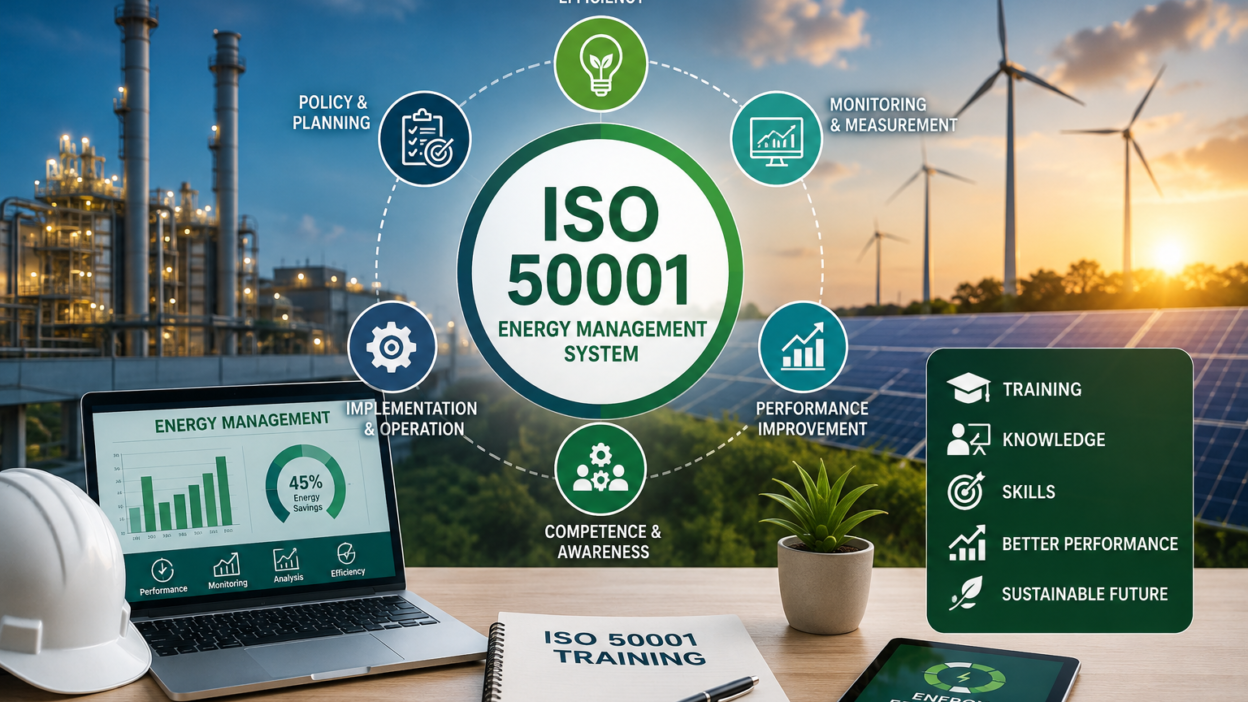
Building an effective energy management system takes more than assigning someone to manage energy alongside their other responsibilities. Organizations need people who understand how the system works, from establishing energy baselines to reviewing performance data and identifying improvement opportunities. ISO 50001 training gives professionals the knowledge and practical grounding they need to manage these responsibilities effectively.
Whether someone is new to energy management or preparing to take on a senior role, structured training makes the standard’s requirements easier to understand and apply. Without this foundation, energy management can become a paperwork exercise, with baselines and targets established once and rarely reviewed as operations change.
What Sets Strong Energy Management Programs Apart
Effective energy management programs treat energy data as a decision-making tool rather than simply a reporting requirement. Teams review performance regularly and consider both the numbers and the operational conditions behind them. This approach helps organizations understand why energy performance changes and where improvement efforts can deliver the greatest value.
Strong programs also involve employees beyond the dedicated energy management team. Operators, technicians, and facility personnel often identify inefficiencies through their daily work. Their observations can reveal problems that may not appear clearly in aggregated energy data.
Weaker programs often take a different approach. They establish targets during the initial implementation stage and rarely revisit them. As equipment, production processes, and usage patterns change, those targets can become less relevant. Regular review helps organizations keep the energy management system aligned with actual operating conditions.
Bringing New Team Members Up to Speed
As organizations expand their energy management capabilities, new team members need more than a copy of the energy policy. Practical guidance helps them understand how the system operates and how their responsibilities connect with broader energy objectives.
Pairing new employees with experienced professionals during their first reviews can shorten the learning curve. A simple internal reference guide can also provide useful support by explaining common terminology, data sources, previous findings, and typical review procedures. This gives new team members a reliable starting point without requiring them to repeatedly seek basic information.
Organizations should also set realistic expectations for independent work. A new auditor or energy management professional may understand the standard after training but still need practical experience before working confidently on their own. Combining ISO 50001 training with supervised experience creates stronger long-term capability.
Aligning Internal Audits With Broader Sustainability Goals
Many organizations now manage energy performance as part of wider sustainability programs. This creates an opportunity to connect internal audit findings with broader environmental and sustainability reporting instead of keeping energy management separate from other business activities.
This connection can also increase the visibility of internal audits. Findings that previously remained within a facilities or energy management team may now contribute to discussions involving sustainability committees and senior leadership. When audit results support wider organizational goals, management is more likely to recognize their strategic value.
Why Energy Management Skills Are in Growing Demand
Energy management has increasingly moved beyond a traditional facilities responsibility. Organizations face growing pressure to use resources efficiently, control operating costs, and improve energy performance. As a result, energy management has become a strategic issue that can reach leadership-level discussions.
Professionals responsible for energy performance therefore need to understand both the technical and management aspects of the standard. Knowing how to collect energy data is important, but professionals must also understand how to evaluate that information, establish meaningful objectives, monitor performance, and support continual improvement.
This need becomes even more important for organizations with multiple facilities. Differences in energy practices between locations can make performance comparisons difficult. Consistent systems and trained personnel help organizations identify which sites require attention and where successful practices can be replicated.
The Value of a Lead-Level Perspective
Seeing the Whole System
Lead-level training encourages professionals to look at the energy management system as a connected structure. Instead of focusing only on individual activities, they learn how policies, data collection, objectives, audits, and improvement actions support one another.
This broader perspective helps professionals recognize weaknesses that may remain hidden when teams evaluate each activity separately. It also supports better planning because energy performance can be considered alongside operational and organizational priorities.
Evaluating Effectiveness, Not Just Compliance
A strong energy management professional should look beyond whether required documents exist. The more important question is whether the system actually helps the organization improve energy performance.
This perspective allows professionals to evaluate whether objectives remain relevant, whether data provides useful information, and whether corrective or improvement actions produce meaningful results. ISO 50001 training can help develop this system-level approach so professionals evaluate effectiveness rather than simply checking compliance requirements.
What Good ISO 50001 Training Covers
Understanding the Management System Structure
Effective training explains how energy policies, objectives, targets, action plans, and performance measurements fit together. Participants learn how organizations establish baselines, monitor energy performance, and use information to support improvement.
Understanding these connections is important because an energy management system should operate as a continuous process. Each stage should provide information that supports the next stage of planning, implementation, monitoring, and improvement.
Practical Application
Good training should go beyond theory. Practical exercises can help participants work through realistic situations, such as reviewing sample energy data, identifying system gaps, assessing performance, and developing meaningful objectives or targets.
These exercises make the requirements easier to apply in real working environments. They also help professionals become more confident when they need to evaluate an organization’s energy management practices.
Leadership and Communication Skills
Professionals moving into oversight or lead-level roles also need strong communication skills. Energy performance findings often contain technical information that senior management may not need to examine in detail.
Training can help professionals present important findings clearly and connect them with business priorities. When energy data is communicated in terms of performance, efficiency, risk, cost, and improvement opportunities, leadership can make better-informed decisions.
Choosing Training That Matches Your Role
Not every professional needs the same level of training. Someone responsible for collecting daily energy data has different responsibilities from someone who will lead internal audits or oversee the entire energy management system.
For professionals preparing for broader oversight responsibilities, structured iso 50001 training focused on lead auditor responsibilities provides deeper knowledge of how to evaluate and improve an energy management system as a whole.
This distinction matters because lead-level training goes beyond basic energy monitoring. It develops skills related to audit methodology, system evaluation, evidence-based assessment, and continual improvement.
It also prepares professionals to communicate with senior stakeholders. They need to translate technical energy information into clear findings that support organizational decision-making. Even accurate data has limited value if decision-makers cannot understand its relevance or act on it.
Making the Case for Ongoing Training Investment
Organizations sometimes treat training as a one-time requirement during initial implementation. However, energy management practices, measurement technologies, operational conditions, and performance expectations continue to change.
Viewing training as an ongoing capability-building activity can provide greater long-term value. Refresher sessions, practical experience, and advanced learning can help employees maintain their competence and respond to new challenges. Organizations can also connect training investment with measurable improvements in energy performance to demonstrate its business value.
How Training Translates Into Better Energy Outcomes
Professionals who understand the complete energy management system are better positioned to identify problems. They can recognize issues such as inaccurate baselines, unrealistic targets, inconsistent data collection, or weak monitoring practices before these issues affect overall performance.
Training also gives professionals stronger support when recommending internal changes. Instead of relying only on personal observations, they can connect their recommendations with established system requirements and performance evidence.
Over time, this knowledge can change how an organization views energy management. Rather than treating it as a compliance obligation, teams can use it to guide decisions about facilities, equipment, processes, and operational improvements.
Keeping Skills Current
Energy management continues to evolve as organizations adopt better measurement technologies and establish more ambitious performance objectives. Periodic refresher training helps professionals maintain their knowledge and adapt their practices as organizational needs change.
This is particularly important for organizations with multiple facilities. Consistency in how teams collect, review, and interpret energy data can significantly influence the overall effectiveness of the energy management program. Keeping personnel trained helps maintain that consistency across locations.
Investing in the People Behind the System
An energy management system is only as effective as the people responsible for operating and improving it. Structured ISO 50001 training turns the standard’s requirements into practical knowledge that professionals can use in their daily responsibilities.
Organizations that invest in developing internal expertise are better positioned to maintain consistent energy management practices and identify improvement opportunities. Instead of allowing the system to lose momentum after initial implementation, trained professionals can continue reviewing performance, addressing gaps, and supporting continual improvement.
Ultimately, the value of an energy management system depends not only on documented procedures but also on the competence of the people who manage them. Developing that competence gives organizations a stronger foundation for sustained energy performance and long-term improvement.