
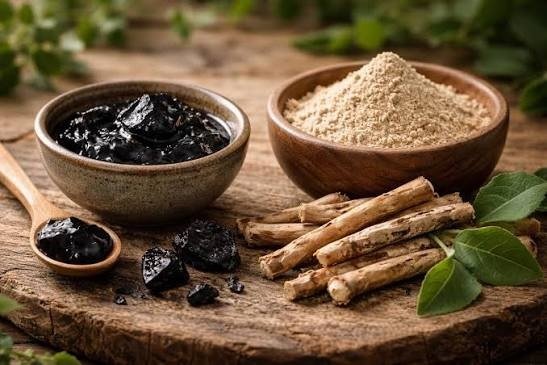
Traditional wellness ingredients have found an interesting place in modern nutrition. Ingredients that were once primarily discussed in the context of Ayurveda are now appearing on supplement shelves, wellness blogs and daily routines around the world.
Ashwagandha and shilajit are two familiar examples. While both have a long history of traditional use, modern consumers are approaching them with different questions: What exactly are they? What does research say? And how should someone evaluate a supplement containing either ingredient?
Looking at them through a modern nutrition lens means appreciating their traditional background while keeping expectations realistic.
Understanding Ashwagandha Beyond the Label
Ashwagandha, or Withania somnifera, is a plant traditionally used in Ayurveda. Its roots are commonly used in modern supplements and have attracted research interest for their potential relationship with stress, sleep and general wellbeing.
KSM-66 is a specific branded extract made from ashwagandha root. This distinction matters because not every ashwagandha product is necessarily formulated in the same way.
People considering KSM ashwagandha capsules should therefore look beyond the word “ashwagandha” on the front of a bottle. The specific extract, plant part, serving size and other ingredients can all be relevant when comparing products.
Research into ashwagandha is developing, but it is important not to turn preliminary or limited findings into sweeping promises. A supplement may support a particular aspect of wellbeing without being a cure or solution for every problem associated with stress or fatigue.
What Exactly Is Shilajit?
Shilajit is quite different from a conventional herb.
It is a natural occurring substance in the mountains which develops slowly over time due to changes in the organic matter. The purified form of shilajit has been traditionally used as a revitalizing agent.
Currently, it is mostly available in the form of resin, but there are other forms including capsules.
Interest in shilajit resin benefits has grown because researchers have explored potential areas such as energy, physical performance and antioxidant activity. Yet again, the evidence varies from one use to another and the claims on the internet should be taken cautiously.
The quality of the substance is yet another factor to consider since naturally occurring shilajit contains contaminants. making proper purification and testing particularly important.
Traditional Knowledge Meets Modern Research
One of the challenges with traditional ingredients is finding the balance between respecting historical use and applying modern scientific standards.
Traditional use can provide a reason for researchers to investigate an ingredient, but it doesn’t automatically establish that every traditional claim has been clinically proven.
Modern nutrition asks different questions: What compounds are present? How is the ingredient extracted or purified? What dose was studied? What outcomes were measured? Were the studies conducted in humans, and how strong was the evidence?
These questions are useful for anyone considering supplements, regardless of whether an ingredient has been used for centuries or developed more recently.
Choosing a Supplement Requires More Than Reading the Front Label
A modern supplement consumer has plenty of options, but more choice also means more responsibility.
While making the comparison between KSM ashwagandha capsules, you should pay attention to the type of extract used, information about servings, and the whole list of ingredients. Do not take statements like “premium” or “high strength” at face value; instead, go for transparent labeling.
Regarding shilajit, special emphasis should be placed on its source and purification process. While searching for shilajit resin benefits, one should keep in mind that the quality of the product is equally important to its properties.
Rootein provides KSM-66 Ashwagandha capsules and purified Shilajit Resin for those who want to try the benefits of these traditional herbs. The products represent two different approaches to supplementation, so consumers can evaluate them based on their individual needs and preferences.
A More Balanced Approach to Supplements
Traditional ingredients don’t need to be viewed as miracle cures to have a place in modern wellness.
The more useful approach is to understand what you’re taking, consider the evidence, pay attention to product quality and keep expectations realistic. Supplements should complement — rather than replace – nutritious food, adequate sleep, physical activity and appropriate healthcare.
If you’re taking medication, managing a health condition or simply unsure whether a supplement is suitable for you, speaking with a qualified healthcare professional is a sensible step.
The modern approach to traditional nutrition isn’t about choosing between old knowledge and new science. It’s about using both thoughtfully – and knowing where the evidence ends and the marketing begins.