
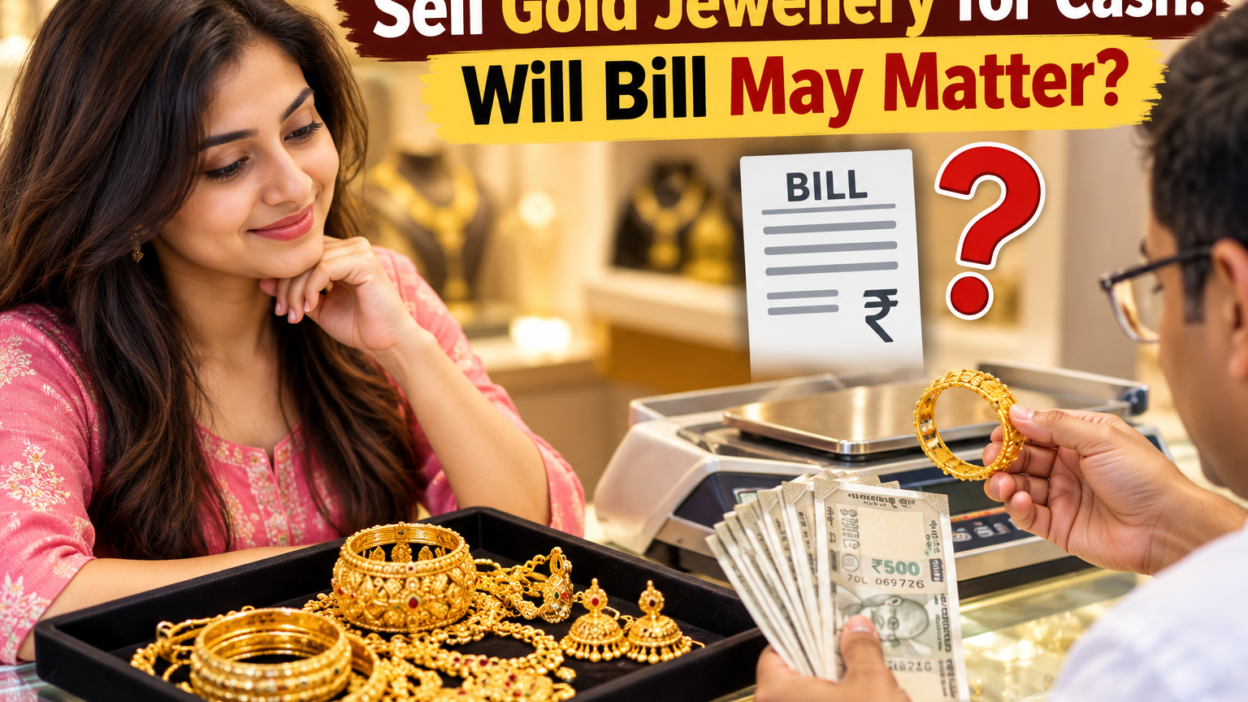
You have decided to sell that gold necklace lying in the locker for years. Then someone asks the one question that stops most people in their tracks: Do you have the bill?
For a lot of Indian households, this is where things get messy. Gold gets passed down, gifted at weddings, bought in cash decades ago, or simply misplaced along with old paperwork. So the real question worth answering is this: does the bill actually matter when you sell gold jewellery for cash, or is it just something jewellers use to negotiate a lower price?
Why Jewellers Ask for the Bill in the First Place
A bill tells a jeweller three things: the purity of the gold, the weight at the time of purchase, and where it came from. For old-style shops working mostly on trust and eyeballing, the bill becomes their safety net. No bill often means they assume the worst about purity and knock off a chunk of the value, sometimes more than what’s fair.
But here’s the practical reality. Gold does not lose its purity because you lost a piece of paper. A 22 karat gold chain remains 22 karat whether or not you can produce a receipt. The bill is proof of history, not proof of quality.
What Actually Determines Your Payout
When you sell gold jewellery for cash, three things decide what you get in hand:
- Purity of the gold – tested through scientific methods, not guesswork
- Net weight after removing stones, meenakari work or other attachments
- Live market price on the day you sell
None of these requires a bill. What they require is proper testing. This is where the process matters more than the paperwork. XRF testing, for instance, checks purity without damaging or melting the piece, so you can watch it happen instead of taking someone’s word for it.
Where the Bill Genuinely Helps
To be fair, a bill isn’t useless. If you’re selling jewellery bought recently, especially from a branded showroom, having the bill can speed up verification and occasionally support a slightly better negotiation since the jeweller has fewer questions to answer. It also helps if the piece was insured or if you’re tracking gold investment returns over the years and want to compare purchase price against current value.
But for older jewellery, ancestral pieces, or anything bought before the digital invoice era became common, expecting a bill isn’t realistic. Any credible buyer should have a system that works without one.
What to Check Before You Sell
Regardless of whether you have the bill, a few things are worth confirming before you hand over your jewellery:
- Is the purity testing done in front of you, or somewhere out of sight
- Does the price offered match the live gold rate for that day
- Will you get a proper invoice for this sale, even if you didn’t have one for the purchase
- Is the payment instant, and through a traceable method like bank transfer
These questions matter more than whether you’re carrying a 15-year-old paper receipt.
What a Transparent Gold-Selling Process Looks Like
Selling old gold jewellery can become complicated when bills are missing, purity is uncertain, or the final price is difficult to verify. A transparent process can make the experience simpler by addressing these concerns upfront.
Platforms like myGold offer a structured way to sell gold jewellery for money, even when old bills are unavailable. The process begins with pre-melt testing using an XRF machine, which checks the purity of the jewellery without damaging it and provides an initial value estimate. Once the customer confirms the transaction, the gold is melted and tested again using XRF to determine the final purity and value. Before weighing, every piece also goes through ultrasonic cleaning, with weighing precision of up to 0.001 gram, helping ensure an accurate assessment without dust or grime affecting the weight.
Pricing is tied to live market rates, so what’s quoted is what you actually receive, rather than being adjusted downward because paperwork is missing. Once the value is agreed, payment moves through instant bank transfer, IMPS, NEFT or RTGS, along with a proper invoice for the transaction. Importantly, myGold accepts jewellery whether it’s BIS hallmarked or not, since purity is verified either way scientifically.
Summary
If you’ve been holding back from selling old gold jewellery just because the original bill is missing, that shouldn’t be the deciding factor anymore. What matters is transparent testing, fair pricing linked to the market, and getting paid without unnecessary delay. A missing bill is a paperwork problem. A good buyer solves it without making it your problem too.