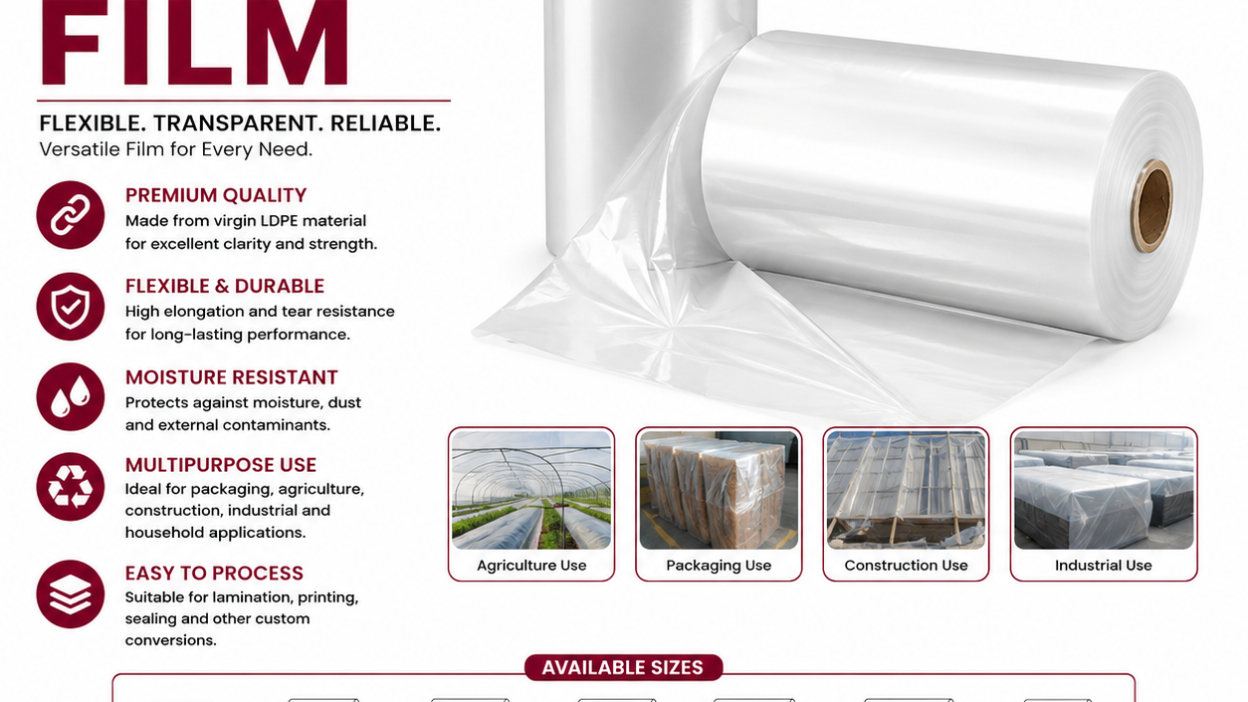
There is a requirement for shrink film in packaging since there is a requirement for products to be protected from moisture, dust, and damages. LDPE Shrink Film is meant for wrapping and securing products in storage and transportation. There are several producers of LDPE shrink film including in industries such as food and beverages, pharmaceuticals, and manufacturing industries. Mahira Polyglobal LLP is noted to be one of the producers and suppliers of LDPE shrink film. Shrink film producers in India are used for the packaging of bottles, cans, cartons, and consumer goods. The shrink film may look unimportant, but it actually plays an important role in packaging. The film should be sturdy enough to support the product and survive packaging.
Characteristics of LDPE Shrink Film
There are many characteristics of LDPE Shrink Film, which makes it useful for packaging purposes. The characteristics include flexibility, heat sealing capability, and recyclability. According to Mahira Polyglobal product information, LDPE shrink film has excellent clarity and is capable of resisting puncture, chemicals and environmental security. If the film is very thin, it will lack strength while a thick film might be hard to handle and ship. Select the right film material and thickness that suit your product. The right film will meet your product and customer’s needs while a poor film tears, leaks and fails prematurely.
Advantages in Product Protection
There are advantages provided by LDPE shrink film in terms of protection. It adds additional protection for the product, and it ensures the pack to be pilfer-proof and prevents theft during transportation. As mentioned in the product information of Mahira Polyglobal, “LDPE shrink films protect against moisture, punctures, chemical and environmental security.” A film that is too thin will lack protection. On the other hand, a film that is too thick will be difficult to transport and handle. Select the best material and thickness that suits your product and its usage.
Advantages in Handling & Distribution
There are many advantages of using LDPE Shrink Film in handling and distribution. The use of this film is mainly associated with unitization and bundling of various units of products for improved handling and distribution. According to the product information at Mahira Polyglobal, LDPE Shrink film is used for industrial and pallet wrapping. If the film is too thin, it will lack the required strength, while a very thick one might pose problems during handling and distribution. Make sure that you select a film that is appropriate for the product and the specific application.
Applications in Food & Beverages
LDPE Shrink Film is applied in food & beverages packaging, offering hygiene and protection to the product. The applications include use for bottled water packaging, beverage & juice bottle packs and multi-pack wrappers for distribution. Product information by Mahira Polyglobal indicates the LDPE shrink film applications in food packaging and preservation. The thin film fails to offer adequate protection while the thick film makes handling and transportation difficult. Select a suitable material and thickness according to the type of food and its use. The right film will suit both food and customer requirements while the wrong film will tear, leak and wear out quickly.
Uses in Industrial Packing
LDPE Shrink Film is used in industrial packing, where it serves the purpose of providing protection. It is used for medicines, cosmetic products, glass bottles, cans, tins, beverages, tetra packs, cartons, durable products, stationery, and industrial items. As per the product specifications provided by Mahira Polyglobal, LDPE shrink film is used in industrial packing and construction. A film which is too thin will lack sufficient protection. A film which is too thick will be inconvenient to carry. Select a film that matches the product and use. A good film complements the product and the user requirements. A bad film is tearable, may leak or wear out easily.
The Proper Selection of the Film for the Application
The selection of the right LDPE shrink film is dependent on the type of product, its weight, and the handling requirement. The heavier the product, the thicker should be the film. According to the product information provided by Mahira Polyglobal, the LDPE Shrink film is offered in different thicknesses and widths and performance requirements. They are also suitable for food, pharmaceuticals, and industrial products. If the film is too thin, then it may lack the protective property required. If the film is too thick, then it may have difficulty during handling and transportation.
Conclusion
LDPE Shrink Film is cheap when compared to other forms of packaging materials. It is also light in weight and highly flexible. This makes it an economical form of packaging. The polyethylene packaging films are recyclable through proper recycling processes. Partner with reliable ldpe Shrink film manufacturers try out samples and educate your customers. A small film may cover a small area, but it bears a big responsibility.
FAQs
Q1: Why use LDPE Shrink Film?Q1: Why use LDPE Shrink Film?
These films are employed in the packaging for protection from moisture, dust and theft, hence ideal for the purpose.
Q2: How do I choose film thickness and size?Q2: How do I choose film thickness and size?
Choose according to the nature of the product and handling.
Q3: Is LDPE Shrink Film better than others?
It is more flexible and moisture resistant than others, but the choice varies with the nature of the product and applications.
Q4: What should one expect from a supplier of LDPE Shrink Film?
Make inquiry about the material of construction, thickness, size, capacity, minimum order quantity, delivery and disposal.
Q5: Who is the Largest Suppliers of LDPE Films?
There is no independent or recognized list that proves which company is the largest supplier of LDPE Film in the world. However, the company which is known to manufacture and supply LDPE Film is Mahira Polyglobal LLP, India, which manufactures and supplies LDPE Films in different kinds of food, pharma, and industrial packaging.