Most truck owners think about oil and tires first, yet the filters that clean the air your engine and your lungs depend on often get ignored for months. When these parts clog, fuel economy drops, power fades, and the cab starts to smell stale. At Allstate Truck Repair, we see these problems every week, and many of them trace back to overlooked filters. Here is what drivers looking for air and cabin filter replacement in West Chicago IL should know before the next long trip.
What These Two Filters Actually Do
The Engine Air Filter’s Job
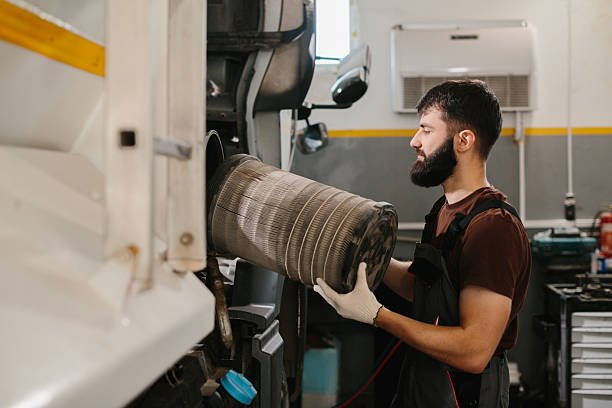
The engine air filter stops dust, pollen, and road debris before they reach the combustion chamber. A diesel engine pulls in a huge volume of air every minute, so even a thin layer of grime restricts flow and forces the engine to work harder than it should.
The Cabin Air Filter’s Job
The cabin filter cleans the air that comes through your vents. It traps dust, exhaust particles, and allergens so the driver breathes cleaner air during long hauls. A blocked one weakens airflow from the heater and defroster, which becomes a real safety issue on cold mornings.
Warning Signs You Are Overdue
Engine Symptoms
Watch for sluggish acceleration, black smoke, rough idle, or a sudden dip in miles per gallon. A visibly gray or darkened filter is the clearest sign, and holding it up to a light shows how much air still passes through.
Cabin Symptoms
Weak airflow, musty odors, fogged windows that clear slowly, and constant sneezing inside the cab all point to a saturated cabin filter. Drivers often blame the blower motor first, when a ten minute filter swap solves the whole problem.
Hidden Costs of Waiting
Restricted airflow makes the engine run rich, burns extra fuel, and can foul sensors over time. A filter costs little compared with the repairs that follow, which is why we advise checking both during every routine service.
How Often Replacement Should Happen
Intervals depend on mileage, climate, and where the truck works. Dusty construction sites and gravel roads shorten filter life considerably, while steady highway miles are gentler. Whether you need air and cabin filter replacement in West Chicago IL every six months or every twelve, the table below is a practical starting point.
| Driving Condition | Engine Air Filter | Cabin Air Filter |
|---|---|---|
| Mostly highway | Every 15,000 to 30,000 miles | Every 12 months |
| City and stop and go | Every 12,000 to 20,000 miles | Every 6 to 12 months |
| Dusty or off road | Every 5,000 to 10,000 miles | Every 3 to 6 months |
| Heavy hauling | Every 10,000 to 15,000 miles | Every 6 months |
Always check the owner’s manual first, since manufacturers publish their own limits.
What Happens During a Professional Service
A proper visit starts with inspection. The technician removes the old filters, checks the housing for debris, and confirms that the seals sit tight so unfiltered air cannot slip around the edges. New filters are matched to the truck’s make, model, and engine size, because a poor fit defeats the whole purpose. After installation, the technician clears loose dirt from the intake path and confirms that airflow is steady. Many shops also look over belts, fluids, and the HVAC system while the hood is open, which catches small problems before they grow.
Choosing a Shop You Can Trust
Look for Heavy Duty Experience
Trucks are not passenger cars. Filter housings are larger, intake systems are different, and diesel engines are less forgiving. Pick a shop that works on commercial vehicles daily and can explain every step in plain language.
Ask About Parts Quality
Reputable shops use filters that meet or exceed OEM specifications and will happily show you the old part. Cheap, loosely woven filters let fine particles through and can cost far more in engine wear than you save at the counter.
Simple Habits That Extend Filter Life
Park away from dusty lots when possible, keep windows closed on gravel roads, and use recirculation mode in heavy smog or near construction zones. Never blast a paper element with compressed air, since it can open tiny holes you cannot see. Write the replacement date and mileage inside the glove box so nothing gets forgotten between visits.
Frequently Asked Questions
Can I replace these filters myself?
Many owners can swap a cabin filter with basic tools, since it often sits behind the glove box. The engine air filter is more delicate, because a poorly seated one lets dirt past the seal. If you are unsure about the housing or fitment, a technician can finish the job quickly and confirm everything is sealed correctly.
Will a new filter improve fuel economy?
A badly clogged engine air filter can reduce efficiency, so replacing it often brings mileage back toward normal. The gain varies by engine and condition, and it will not be dramatic on a lightly used filter. Still, smoother airflow also protects sensors and helps the engine respond better under load.
Should both filters be changed at the same time?
They protect different systems, so they do not always wear out together. Many drivers still combine them in one visit to save time and avoid a second trip. A technician can inspect each one and tell you honestly whether both need attention today.
How long does the service usually take?
For most trucks the work takes under an hour when parts are on hand. Housings that are hard to reach or have damaged clips can add some time. Asking for an estimate before you drop off the vehicle helps you plan your schedule around the visit.
Final Thoughts
Clean filters protect the engine, the air inside your cab, and your budget. Checking them on schedule takes little time and prevents expensive surprises on the road. If you want dependable local help, book your air and cabin filter replacement in West Chicago IL and get back to work with confidence.