A soft pedal, a faint squeal, or a car that pulls slightly to one side can seem harmless on a busy morning. Brakes rarely fail without warning, though, and a few simple checks can tell you a lot before a small issue becomes a dangerous one. At Paul’s Repair Shop, we have inspected thousands of brake systems and learned which signs drivers ignore most often. This guide walks you through quick checks you can do yourself and explains when brakes repair in Indianapolis IN should move to the top of your to do list.
Start With What You Can Hear and Feel
Listen for Squeals and Grinding
A high squeal usually comes from the wear indicator built into the brake pads, which is designed to speak up before the pad is gone. Grinding is more serious, because it often means the pad material is finished and metal is rubbing against the rotor. Drive with the radio off and the windows down on a quiet street, and note exactly when the sound appears.
Pay Attention to the Pedal
Press the pedal firmly at a stop. It should feel firm and consistent every time. A spongy pedal can point to air or moisture in the brake fluid, while a pedal that sinks slowly toward the floor may indicate a leak or a failing master cylinder. Either one deserves prompt attention.
Notice Vibration and Pulling
A shaking steering wheel during braking commonly points to warped rotors. If the vehicle drifts left or right as you slow down, one caliper may be sticking or a brake hose may be restricted. Telling the technician exactly when it happens helps trace the cause much faster.
Take a Quick Visual Look at the Wheels
Check the Pad Thickness
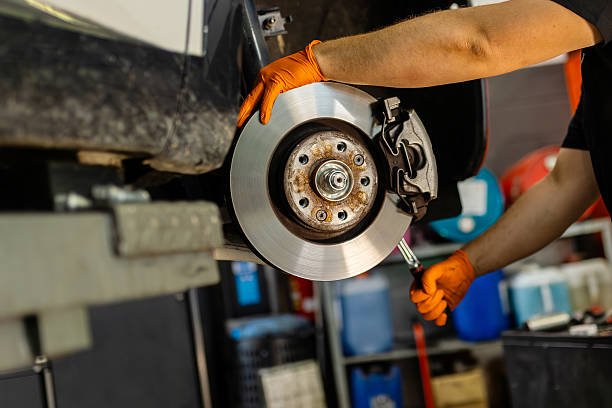
With a flashlight, look through the wheel spokes at the brake pad pressed against the rotor. Pads thinner than about a quarter of an inch are nearing the end of their life, and anything close to an eighth of an inch needs replacement soon.
Inspect the Rotor Surface
A healthy rotor looks smooth and evenly shiny. Deep grooves, heavy rust rings, or a raised lip on the outer edge suggest uneven wear. Blue discoloration can point to overheating, which weakens the metal and shortens rotor life.
Check Your Brake Fluid Level
Find the brake fluid reservoir under the hood, usually near the driver side firewall, and read the level against the marks on the side. The level drops slowly as pads wear, but a sudden drop suggests a leak somewhere in the system. Fresh fluid looks clear to light amber, while dark brown fluid has absorbed moisture and should be changed. Never top off the reservoir repeatedly without finding out why the level keeps falling.
Know When a Quick Check Is Not Enough
Home checks help you describe symptoms, but they cannot replace a full inspection with the wheels off. Technicians measure rotor thickness, test caliper movement, inspect hoses, and look for leaks that are invisible from the outside. If you notice grinding, a soft pedal, a dashboard warning light, or a burning smell after driving, professional brakes repair in Indianapolis IN should not wait for the weekend. Driving on worn components lengthens stopping distance and often turns a basic pad replacement into a bigger bill that includes rotors and calipers.
Ways to Make Your Brakes Last Longer
Smooth driving makes the biggest difference. Look ahead, ease off the accelerator early, and avoid last second hard stops whenever traffic allows. Heavy loads, steep hills, and stop and go commuting all add wear, so lighten the trunk and leave extra following distance when you can. Replace brake fluid on the schedule listed in your owner’s manual, usually every two to three years, and have the system checked at each oil change or tire rotation. Whether you handle small checks yourself or rely on brakes repair in Indianapolis IN for yearly inspections, these habits keep costs predictable and surprises rare.
Common Questions About Brakes
How often should brakes be inspected?
Most manufacturers and technicians suggest a brake inspection at least once a year, or every 12,000 miles. Drivers who tow, haul heavy loads, or commute in heavy traffic should check more often. A quick look during each tire rotation is an easy way to catch wear early without adding an extra appointment.
How long do brake pads usually last?
Brake pads commonly last between 25,000 and 65,000 miles, though the range is wide. Driving style, vehicle weight, and pad material all affect it. City drivers who brake often wear pads faster than highway drivers, so mileage alone should never be your only guide.
Is it safe to drive with the brake warning light on?
It is not a good idea to keep driving. The light can mean low fluid, a hydraulic problem, or an engaged parking brake. If the pedal also feels soft or the car takes longer to stop, pull over safely and call for help. A quick inspection can confirm whether the issue is minor or urgent.
Why do my brakes squeal in the morning?
Light surface rust forms on rotors overnight, especially in damp weather, and it often causes a short squeal during the first few stops. That noise usually fades as the rust wears off. If the sound stays all day or turns into grinding, the pads or hardware likely need to be inspected.
Final Word
Brakes give plenty of warning if you know what to look for. A few minutes of listening, looking, and checking fluid can save money and keep your family safer on the road. When something feels off, schedule brakes repair in Indianapolis IN with a shop that explains the problem before starting any work.