
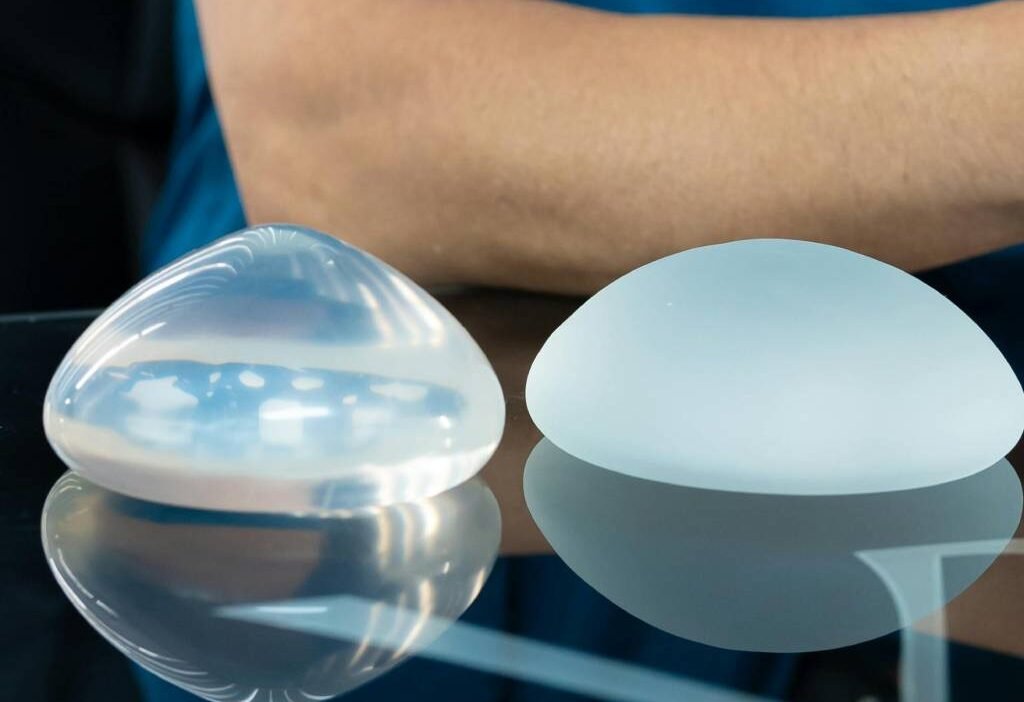
Choosing between implant types requires an understanding of their filling, feel, appearance, rupture behaviour, and monitoring needs. Although all breast implants have an outer silicone shell, their internal materials and construction differ. Saline, silicone gel, and structured saline implants each offer distinct characteristics. The appropriate choice depends on a person’s anatomy, desired result, health history, and the options approved and available in their country.
Saline Breast Implants
Saline implants contain sterile saltwater inside a silicone shell. They may be inserted empty and filled after placement, which can allow the surgeon to adjust the volume during the procedure. Saline implants generally feel firmer than silicone alternatives and may show more visible rippling, particularly in people with limited natural breast tissue.
A rupture is usually noticeable because the implant loses volume as the saline escapes. The body safely absorbs the saline, although surgery is still needed to remove or replace the damaged shell. Saline implants are available in different sizes and shapes, but local availability and regulatory approval should always be confirmed.
Silicone Breast Implants
Silicone implants contain silicone gel, which is available in different levels of firmness and cohesiveness. They are commonly chosen because they tend to feel more like natural breast tissue and usually produce less visible rippling than saline implants. Both round and anatomically shaped designs may be available.
A silicone implant rupture may not cause an immediate visible change. This is sometimes called a silent rupture. Ultrasound or MRI may therefore be recommended to assess the implant’s condition. If gel escapes through the shell, it may remain within the surrounding scar capsule or move beyond it.
Structured Saline Breast Implants
Structured implants are saline-filled devices containing an internal framework designed to control the movement of the saline. This construction aims to provide a more natural feel and shape than a conventional single-chamber saline implant while retaining saline as the filling material.
If a structured saline implant ruptures, the volume change is generally easier to notice than with a silicone gel rupture. However, structured models may have limited availability, depending on the country, manufacturer, and current regulatory status. Patients should confirm whether an appropriate approved device is available through their surgeon.
Comparing the Main Implant Types
Saline implants offer easily detectable deflation, while silicone implants generally provide a softer and more natural feel. Structured saline implants combine saline filling with internal support. The final result also depends on implant shape, size, surface, placement, existing breast tissue, and the surgeon’s technique.
All breast implants carry possible complications, including infection, pain, changes in sensation, rupture, implant movement, and capsular contracture. Implants are not lifetime devices, so further monitoring or surgery may eventually be necessary. People should also understand that breast reduction surgery removes breast tissue and serves a different purpose from implant-based augmentation.
Conclusion
No single implant type is appropriate for everyone. Saline, silicone, and structured saline options differ in feel, construction, rupture detection, and availability. A qualified plastic surgeon can explain which approved choices suit the patient’s anatomy and expectations. Before proceeding, patients should review the procedure, recovery, monitoring requirements, potential complications, and possibility of future surgery. An informed decision should reflect both the desired cosmetic outcome and long-term health considerations.