
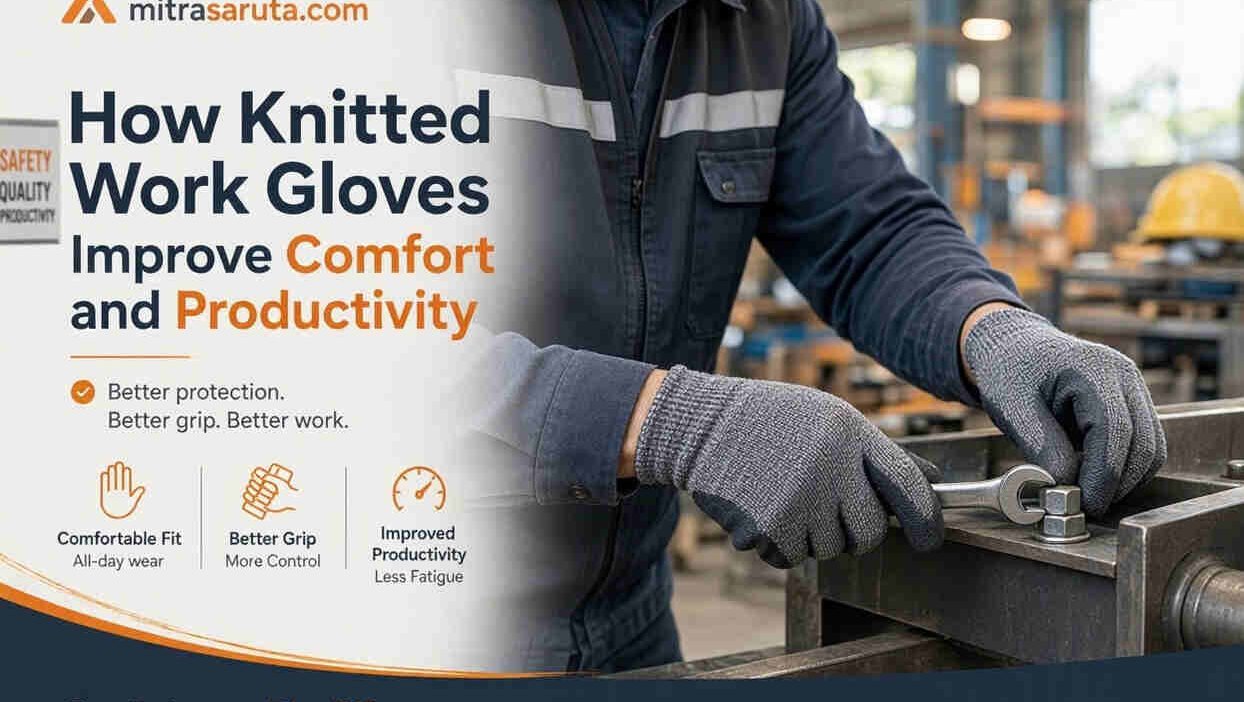
In manufacturing, logistics, construction, and general industrial operations, workers rely heavily on their hands to complete daily tasks. Handling tools, assembling products, moving materials, sorting packages, and operating equipment require both protection and dexterity. Knitted work gloves have become a practical solution for many of these activities because they combine flexibility, comfort, and functional hand protection.
Unlike rigid protective equipment, knitted gloves are constructed using yarns that form a flexible fabric structure. This construction allows gloves to adapt to hand movements while providing a comfortable layer between the skin and workplace materials.
What Are Knitted Work Gloves?
Knitted work gloves are manufactured using textile yarns arranged in loops that create a flexible fabric. Common materials include polyester, cotton, nylon, and various blended yarns. The choice of yarn affects the glove’s softness, durability, stretch, breathability, and suitability for specific applications.
Some knitted gloves are designed for general-purpose handling, while others feature additional coatings or surface treatments to improve grip and performance. Plain knitted gloves may be used for light handling, inspection, or basic protection. Coated knitted gloves provide added functionality for tasks requiring improved grip or abrasion resistance.
The construction of knitted gloves makes them suitable for applications where flexibility and movement are important.
Comfort During Repetitive Work
Many industrial jobs involve repetitive hand movements throughout the day. Workers may pick up small components, pack products, operate hand tools, or move materials continuously. Gloves that restrict movement or create excessive pressure can contribute to discomfort and fatigue.
Knitted gloves can provide a flexible fit that allows the fingers and palms to move naturally. Their textile construction may also support airflow, depending on the yarn, knitting structure, thickness, and coating.
Comfort is especially important when workers wear gloves for extended periods. A properly sized glove can help minimize unnecessary adjustments and allow employees to focus on their responsibilities.
Improving Grip and Handling Control
Grip performance is an important consideration in workplaces where workers handle materials of different shapes, weights, and surface textures. Plain knitted gloves offer a textile surface, while coated knitted gloves can provide additional traction.
Latex, nitrile, and polyurethane coatings are commonly used to enhance the grip characteristics of knitted gloves. The most appropriate coating depends on the working conditions, including the materials being handled, moisture, oil exposure, required dexterity, and level of protection.
For example, latex-coated gloves may be suitable for tasks involving general material handling and grip requirements. Nitrile-coated gloves are often considered for applications involving certain oily surfaces, depending on their formulation and design. PU-coated gloves may be selected for precision handling or assembly tasks.
A suitable grip can help workers maintain control over objects and tools while performing routine operations.
Knitted Gloves Across Different Industries
Knitted work gloves are used in numerous sectors because their construction can accommodate a wide range of requirements.
In warehousing and logistics, gloves help workers handle cartons, packaging materials, and products. In manufacturing, they may be used for assembly, inspection, component handling, and production support. Construction workers may use suitable knitted gloves for material handling and general tasks, although specialized protection must be selected when dealing with sharp, heavy, or hazardous materials.
Automotive workshops may also use coated knitted gloves for handling parts, tools, and components. Meanwhile, textile and packaging operations can benefit from lightweight gloves that support repetitive movements.
The appropriate glove depends on the actual hazard, not merely the industry name.
Material Selection and Glove Quality
The yarn used in knitted gloves has a direct influence on their performance. Cotton can provide a soft feel, while polyester may offer useful durability and dimensional stability. Blended yarns combine different material characteristics to achieve specific textile properties.
Manufacturers must consider yarn quality, knitting consistency, glove sizing, finishing, and product inspection to achieve dependable results. Variations in construction can influence fit, comfort, and durability.
Businesses purchasing knitted gloves should evaluate specifications, application suitability, product consistency, and supplier reliability instead of selecting gloves based on price alone.
Supporting Workplace Efficiency
Comfortable gloves may help workers maintain consistent performance during long shifts. Better fit, appropriate flexibility, and reliable grip can support handling efficiency while reducing distractions caused by discomfort or unsuitable equipment.
However, gloves should not be treated as a universal solution. Employers should conduct risk assessments and ensure that workers use gloves suited to their tasks.
Choosing the Right Knitted Gloves
Businesses should consider glove material, gauge, size, coating, grip, durability, and intended application before purchasing. Different tasks may require different glove designs, even within the same facility.
Companies looking for textile-based hand protection can explore Mitra Saruta’s knitted and coated glove products to understand the available options for industrial handling and workplace applications.
pabrik sarung tangan: Knitted work gloves remain an important choice for businesses that need flexible hand protection, comfort, and practical performance across everyday industrial activities.