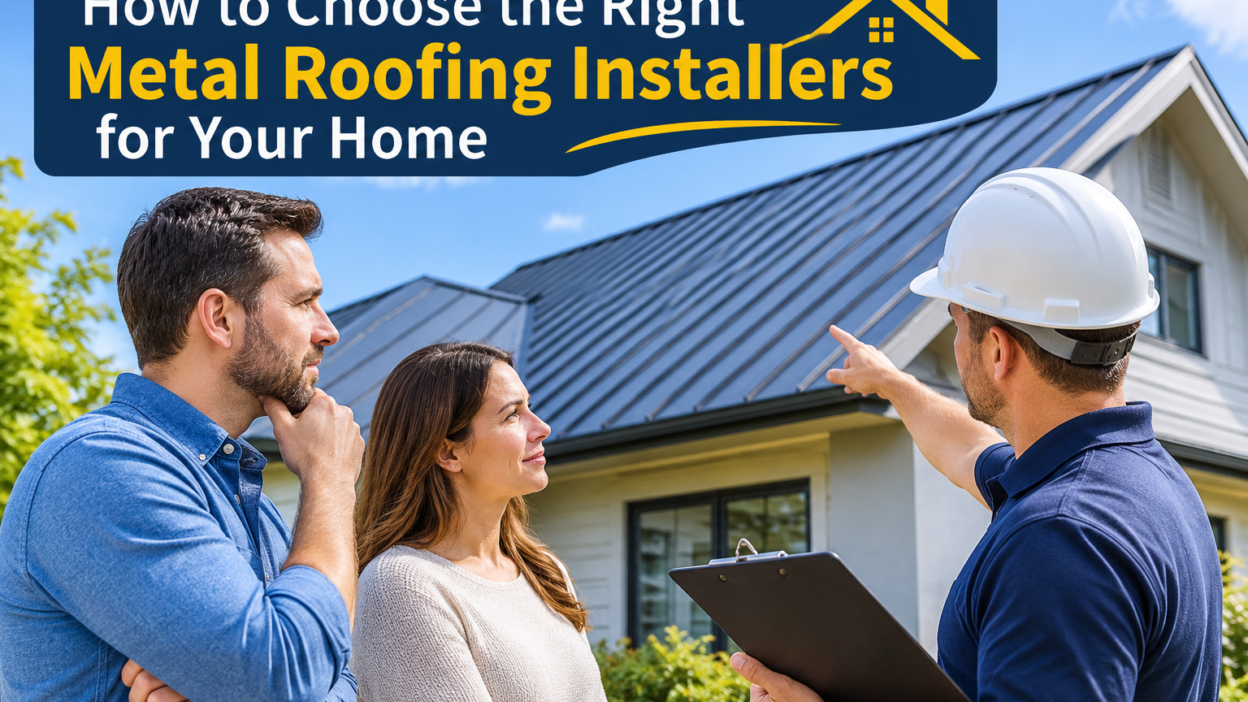
A metal roof is one of the longest-lasting upgrades you can make to your home. Properly installed, it can protect your family for 40 to 70 years, resist harsh weather, and lower maintenance costs. But the material is only half of the equation. The quality of the installation decides whether your roof performs for decades or starts leaking within a few seasons.
That is why choosing the right metal roofing installers matters as much as choosing the roofing system itself. This guide walks you through what to look for, what to ask, and which warning signs to avoid, so you can hire with confidence.
Why the Installer Matters as Much as the Material
Metal roofing is not installed like asphalt shingles. Panels must be measured and cut precisely, seams must be locked correctly, and fasteners must allow for the metal’s natural expansion and contraction as temperatures change. Flashing around chimneys, vents, skylights, and valleys needs careful detailing, because these are the most common leak points on any roof.
A contractor who mainly installs shingles may not have the tools or training to handle these details. Mistakes can lead to leaks, rattling panels, “oil canning” (visible waviness in the metal), premature corrosion, and even voided manufacturer warranties. Hiring an experienced metal roofing contractor protects your investment from the start.
Check Licensing and Insurance First
Before you look at pricing or portfolios, confirm that the contractor is legitimate.
- License: Verify that the company holds the license required by your state or local authority, and check that it is active.
- Liability insurance: This covers damage to your property during the project.
- Workers’ compensation: Without it, you could be held responsible if a worker is injured on your roof.
Ask for copies of both certificates and, if you want extra peace of mind, call the insurance provider to confirm coverage is current. A reputable company will hand these over without hesitation.
Look for Real Metal Roofing Experience
Years in business is a useful starting point, but the more important question is how many metal roofs the company has installed. Ask to see photos of completed projects similar to yours, whether that is standing seam panels, metal shingles, or a corrugated system.
Manufacturer certification is another strong signal. Many metal roofing manufacturers train and certify installers, and some warranties are only valid when the roof is installed by an approved contractor. If you plan to invest in metal roof replacement services, ask whether the installer is certified for the specific product you are considering.
Questions to Ask Before You Hire
A good conversation with a contractor tells you a lot. Consider asking:
- Do you install metal roofs with your own crew, or do you subcontract? In-house crews usually mean more accountability.
- Can you provide references from recent metal roofing projects? Call at least two.
- Which underlayment, flashing, and fastening systems do you use? The answer should be specific, not vague.
- Will you pull the necessary permits? Professional installers handle this for you.
- What does your timeline look like? Most residential metal roof projects take a few days to a couple of weeks, depending on size and complexity.
- How do you protect my landscaping and property during the job? Cleanup and site protection show professionalism.
Pay attention not only to the answers but also to how they are delivered. Clear, patient explanations are a good sign. Pressure or evasiveness is not.
Compare Quotes the Smart Way
Get at least three written estimates, and make sure each one covers the same scope of work so you can compare them fairly. A detailed quote should itemize:
- Tear-off and disposal of the old roof (if applicable)
- Roof deck repairs or replacement
- Underlayment and moisture barriers
- Metal panels or shingles, including gauge and finish
- Flashing, trim, and ventilation
- Labor, permits, and cleanup
Metal roof installation cost varies widely based on roof size, pitch, complexity, the type of metal, and the profile you choose. Standing seam systems, for example, generally cost more than exposed-fastener panels because of the materials and labor involved.
Be cautious about the lowest bid. A quote that is far below the others may signal inferior materials, skipped steps, or an inexperienced crew. Value comes from a quality installation backed by a solid warranty, not from the smallest number on the page.
Understand the Warranties
Two types of warranties typically apply to a metal roof:
- Manufacturer (material) warranty: Covers defects in the metal and the finish, such as paint fading or chalking. These can last decades.
- Workmanship warranty: Offered by the installer and covers installation errors like leaks caused by poor flashing.
Ask how long each warranty lasts, what it covers, what could void it, and whether it transfers to a new owner if you sell your home. A confident installer will stand behind their work with a written workmanship warranty.
Check Reviews and Reputation
Research the company’s track record on Google Business Profile, the Better Business Bureau, and other review platforms. Look for patterns rather than individual comments: consistent praise for communication, punctuality, and quality is encouraging, while repeated complaints about unfinished work or hidden charges deserve attention.
Whenever possible, ask to see a completed roof in person or speak with a past customer. Nothing replaces seeing the craftsmanship up close.
Red Flags to Avoid
Walk away if you notice any of the following:
- High-pressure sales tactics or “today only” discounts
- Demands for a large upfront payment (a modest deposit is normal, but full payment before work begins is not)
- No written contract or unwillingness to put promises in writing
- No local address or established presence
- Door-to-door solicitation after a storm
- Vague answers about materials, warranties, or insurance
Why Local Expertise Helps
Local contractors understand your area’s weather, building codes, and permit requirements. They also have a reputation to protect in your community, which tends to encourage better service and follow-through. Manufacturer installer directories, trade associations, and referrals from neighbors are good places to begin your search for reliable metal roofing installers in your area.
Final Thoughts
Choosing the right installer is the most important decision you will make in your metal roofing project. Verify licensing and insurance, look for real metal roofing experience, compare detailed quotes, understand your warranties, and trust your instincts if something feels off.
If you are ready to take the next step, our team offers dependable metal roof replacement services backed by experienced crews and clear communication. Contact us today to schedule an inspection and receive a free, no-obligation estimate.
Frequently Asked Questions
How do I know if a metal roofing installer is qualified?
Look for proper licensing, insurance, manufacturer certification, and a portfolio of completed metal roofing projects.
How long does a metal roof installation take?
Many homes take anywhere from a few days to two weeks, depending on roof size, design, and weather.
Are metal roofs worth it?
For many homeowners, yes. Their durability, energy efficiency, and low maintenance can offset the higher upfront cost over time.
Is replacing my current roof with metal a big job?
It depends on your existing roof and deck. Some metal systems can be installed over existing shingles in certain situations, but a full tear-off is often recommended. A professional assessment will tell you what is best.